
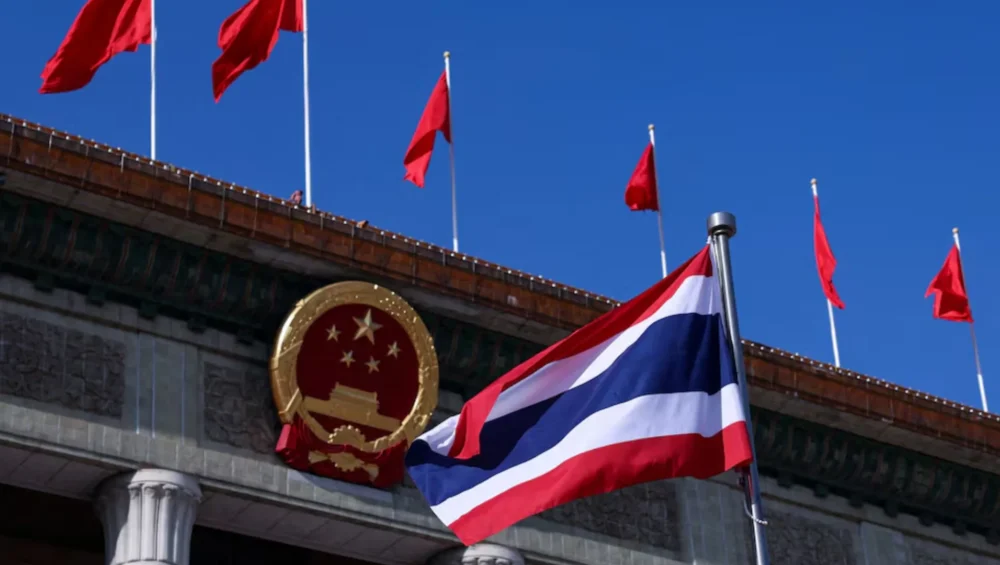
Thailand is facing renewed international scrutiny after human rights groups urged its authorities not to deport Chinese journalist Bai Zhaodong to China, warning that such a move could expose him to grave persecution. The appeal has sharpened attention on Thailand’s handling of dissidents and refugees at a moment when Beijing’s regional influence and Bangkok’s legal obligations are colliding in a highly sensitive case.
The issue goes beyond the fate of one journalist. This case can be seen as a measure of how Thailand will stick to the principle of non-refoulement, a basic principle of international human-rights law that prevents the return of an individual to a place where he may be subjected to torture, persecution, or any form of cruel treatment. The incident is seen by human-rights organizations as another instance where Thailand has been compelled to adhere to the Chinese demands and restrict dissidents from seeking refuge in another country.
Who Bai Zhaodong Is
According to rights groups, Bai Zhaodong (also referred to as Bai Zhaodong in Chinese), is a seasoned investigative journalist who has worked as an investigative reporter for over 25 years, and at one point was an employee of Caixin. The rights organizations claim that he made his name as a journalist by investigating matters of corruption and money laundering in China where in some cases he exposed people who were connected to local government officials and even those connected to the Communist party leaders. This is why the rights groups believe that the return of Bai Zhaodong would put him in harm’s way since the investigation he carried out put him at loggerheads with the Chinese government officials. The case thus, is not being considered as just an ordinary deportation case; it is rather being regarded as a political test of whether Bai Zhaodong will be allowed to be safe abroad.
Why Rights Groups Are Alarmed
Reporters Without Borders and Safeguard Defenders have urged Thailand to stop any forcible return of Bai to China. Their appeal argues that deportation would violate basic protections and could expose him to political persecution, arbitrary detention, torture, enforced disappearance, and other serious human-rights violations. Their concern is that once Bai is in Chinese custody, there would be little practical safeguard against abuse.
Human Rights Watch has echoed the above in another press release, urging Thailand not to forcibly return Chinese dissidents and saying that fulfilling Chinese requests will do further harm to Thailand’s international reputation on human rights. Instead, Human Rights Watch believes that Thailand should grant safe third country resettlement, thereby not putting the detainees at risk of being harmed. The issue at hand falls under the broader trend of Thailand preferring diplomacy over its obligations to protect people.
The key legal argument lies in the concept of non-refoulement. Rights groups believe that Thailand cannot deport any person to a country where he or she runs the risk of being persecuted or tortured irrespective of the fact whether the individual has been recognized as a refugee in the conventional sense. This is significant since Thailand is not a party to the 1951 Refugee Convention.
Detention And Timeline
The detention timeline has become a major issue in the case. Rights groups say Bai has been held at the Suan Phlu Immigration Detention Center in Bangkok since January 2026. They also say he fled China on 29 November 2023 after pressure mounted around his reporting and later faced an arrest warrant issued by the Public Security Bureau in Yulin City in September 2024.
They characterize the charges against him as either fabricated or politically motivated, based largely on accusations of extortion. It is, according to the groups, a tactic routinely employed by the Chinese against journalists, dissidents, and human rights activists considered to be embarrassing or otherwise politically troublesome. The allegation, which the Chinese have denied in other such instances, is one of the key arguments that the rights groups have made as to why Thailand should not repatriate him. Indeed, the time in which the appeal was lodged further complicates the situation diplomatically. As stated by the rights groups, this happened shortly before Prime Minister of Thailand Anutin Charnvirakul’s scheduled visit to China, dated to take place between 16 and 20 July 2026 according to media sources.
Legal Stakes For Thailand
However, the response of Bangkok in this instance may go beyond this particular arrest. Human rights organizations believe that by deporting Bai in view of the risk, it will increase concerns regarding Bangkok’s willingness to send refugees back to oppressive regimes under duress. This will have the negative effect of damaging Thailand’s reputation as a safe haven in the region as well as the country’s commitment to international standards. This legal issue becomes even more pressing considering the fact that Bangkok has been severely criticized previously for its deportation of foreigners including dissidents from China and Uyghurs following their long period of detention. It is due to this history of human rights violations that Bangkok needs to change course and allow the journalist to depart for another country.
At the same time, Thai authorities may argue that immigration and security decisions are matters of sovereignty and domestic law. But rights groups counter that sovereignty does not erase the duty to prevent a return to likely persecution. That clash between state control and international protection is at the heart of the story.
What The Groups Said
The quoted statements from the rights organizations are unusually direct and help explain the urgency of the campaign. Reporters Without Borders and Safeguard Defenders said Thailand should halt the forced return of the journalist because of the grave risk he faces in China. Their intervention presents the issue as one of immediate life-and-safety consequences rather than abstract policy debate.
Human Rights Watch has been equally blunt in its criticism of Thailand’s handling of dissidents.
“The Thai government should not forcibly return detained Chinese dissidents to China,”
Human Rights Watch said, arguing that the authorities should respect the danger these individuals would face if sent back. The group’s criticism is rooted not only in this one case but in what it sees as a repeated Thai pattern of yielding to Chinese demands.
The rights groups’ broader message is that the journalist should be allowed to move to a safe third country instead of being returned to China. They warn that any deportation would amount to a foreseeable transfer into danger, and they frame Thai inaction as a direct failure of protection. Their language is intended to signal that the case should be treated as urgent, not procedural.
China’s Pressure And Regional Context
In addition, the case fits into the broader picture of China’s reach throughout Southeast Asia. According to human rights organizations, China has a vested interest in ensuring that dissidents do not seek asylum in neighboring countries if they continue exposing corruption and criticizing the Chinese government. As a country that enjoys good relations with China and is known for holding dissidents from other nations in custody, Thailand appears to be one of the pressure points. The context explains why the campaign has become a matter of international concern. For human rights activists, the issue is about the ability of a regional government to provide protection to a journalist who is under threat when the powerful government wishes to deport him.
The lack of a clearly public, detailed response from Thai or Chinese authorities in the reporting available so far has only intensified concern. In the absence of direct reassurance, rights groups are urging immediate restraint. They are effectively asking Thailand to choose transparency and protection over quiet compliance.
Background Details
The most important factual points in the case are fairly clear from the reporting available. Bai fled China in late 2023, was later subject to an arrest warrant in 2024, and has been detained in Thailand since January 2026. Rights groups say he is a refugee or at minimum a person at serious risk, while Thailand has not publicly resolved the case in a way that satisfies those groups.
That the accusations are false is one of the arguments made by the rights groups and therefore should be considered as the rights groups’ stance, not as an admission by the Chinese government of any wrongdoing. The same way, the threat of torture and forced disappearance is an assessment of the situation, not an accusation per se. The distinction is important for careful journalism since it differentiates between the established facts and the rights groups’ claims. The other source of the momentum of the story lies in the political season. A visit of the Thai official to China has added some weight since the case gained the connotation of diplomatic pressure which makes the case bigger than the personal fight of one journalist.