
Iran’s use of the death penalty has entered a far more intense and politically charged phase, with the UN human rights chief saying at least 56 people have been executed on national security-related charges since March 19, including 27 in cases linked to protests that erupted at the start of the year.
This number, according to Reuters, is more than a simple statistical datum; it is an indicator of a wider repression campaign in which the government seems to use capital punishment for both punishment and intimidation. The particularly dangerous situation today is the fact that these executions occur in conjunction with large-scale detentions, fast-tracked trials and continuous accusations of torture and denial of due process. Even in the UN report of late April, there were at least 21 individuals executed and 4,000 detained on charges relating to national security since late February.
UN alarm grows
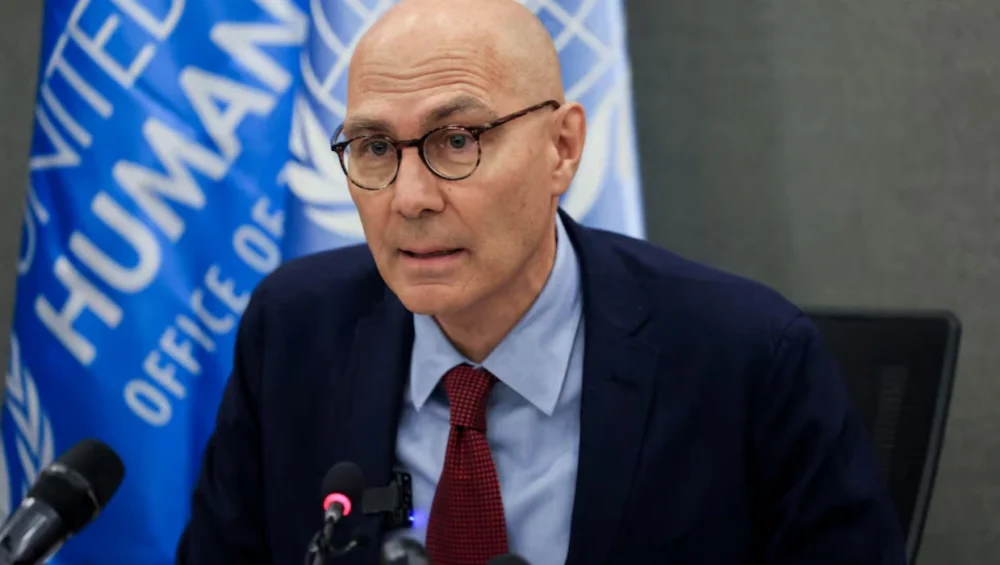
Volker Türk, the UN High Commissioner for Human Rights, has repeatedly framed the situation as a deepening human rights emergency. In April, he said he was
“appalled that – on top of the already severe impacts of the conflict – the rights of the Iranian people continue to be stripped from them.”
That statement matters because it places the execution surge inside a wider political context of war, domestic unrest and escalating state coercion.
The UN’s position has been consistent: executions should stop, and Iran should establish a moratorium on capital punishment. Türk called on authorities to
“halt all further executions, establish a moratorium on the use of capital punishment, fully ensure due process and fair trial guarantees, and immediately release those arbitrarily detained.”
That language reflects not only concern about the number of executions, but also alarm over the justice process itself.
Due process concerns
The main criticism raised by the United Nations is that the manner in which national security cases are tried in Iran is such that they may be considered unfair trials. The arrests and convictions are made based on security grounds whereas the people concerned lack any form of access to lawyers, evidence, and any form of judicial oversight. This is the reason why the UN has linked the question of executions to legal abuses and not punishment rates.news. The UN experts further criticized this in July in respect of 12 young men sentenced due to their participation in the 2026 January protest.
They said,
“Sentencing 12 people to death in one hearing, in a closed courtroom and without clarity as to each defendant’s individual responsibility violates established fair trial standards.”
That quote is especially important because it directly challenges the procedural legitimacy of the cases at the center of the current wave.
Protest-linked cases
The political significance of the new execution statistics comes from their connection to the ongoing unrest. According to Reuters, 27 out of 56 executions carried out since March 19 were associated with protests. This information was complemented by an earlier UN statement regarding the risks of getting the death penalty faced by those involved in the demonstrations. According to UN reports, at least eight people, including minors, had been sentenced to death in connection with the events, with numerous others possibly going to share the same fate. By July, the situation had become even more concrete. The independent UN experts stated that Iran should stop the execution of 10 men from the city of Isfahan, adding that relatives had already been called for their last meeting. It was also reported that in March, three men from Qom had been sentenced to death after the conviction for the murder of members of the security forces.
The investigators reiterated their call for Iran to “immediately halt all executions” and move toward abolition of the death penalty.
Amnesty International, in its late July assessment, said the public execution of two protesters marked a further escalation in what it described as arbitrary state violence. Amnesty said the authorities had intensified their use of the death penalty against people arrested in connection with the January 2026 uprising after the 28 February attacks on Iran by the US and Israel, arguing that the state was using wartime conditions as cover for domestic repression.
Public fear and warning
The public character of some executions has also contributed to the intimidatory environment. Amnesty International noted that the execution of the protestors in July was a part of an intensifying trend. Another piece of news indicated that public executions and highly securitized trials in Isfahan were a clear signal for the entire society. It affects not only those defendants that are executed but their relatives, communities and other detainees that could be afraid of the same destiny. Such an intimidating aspect can also be seen in the language used by the judiciary and state media, when defendants are characterized as threats to the public order, national security or rebellion. It is important because it turns participation in protests into a capital crime.
Amnesty’s warning
Amnesty International has made perhaps the most outspoken stand on the matter, saying that Iran is politicizing the death penalty to punish opposition. According to Amnesty’s statement, Iran is using the death penalty to silence political opposition and is speeding up executions amid a “wartime” rhetoric. Amnesty’s view is clear – these are not individual judicial punishments, but a repressive trend. Amnesty also ties the current trend to the larger problem of the lack of protection of protesters, dissidents, and political prisoners. Amnesty reports that at least 52 politically-motivated executions have been committed by Iranian authorities since the crackdown on protesters began, at least 26 of them related to the protests. This number does not exactly tally with the Reuters/UN figures, but points to the same overall tendency.
National security label
The phrase “national security-related charges” is central to understanding this story. It is broad enough to cover alleged espionage, alleged cooperation with hostile states, terrorism accusations, “enmity against God,” and “corruption on earth.” In practice, rights groups say the label is often used to convert political or protest-related conduct into a capital crime.
This matters because the legal wording creates a veneer of legitimacy while masking what critics view as political punishment. The state presents the cases as public security matters, but the pattern of arrests, the speed of hearings, and the prominence of protest-linked defendants suggest a parallel goal: deterrence. The death penalty is being used not only to sentence individuals, but to shape public behavior.
Wider crackdown
The execution process can be understood as part of the wider suppression of dissenters. The United Nations stated that more than 4,000 individuals had been detained on national security charges by late April, implying that there is an extensive program of detentions beyond just executions. The scale of such operations shows that executions are simply the tip of a large iceberg of the whole process of repression. In addition, the United Nations Office for Human Rights noted that individuals are being held under “shocking conditions,” and sometimes even charged and executed without following any legal procedures. This statement by the UN Multimedia briefing reflects the nature of the situation: the issue is not punishment but denial of any legal procedure.
Political and legal stakes
Iran’s authorities continue to insist that many of these cases involve serious crimes and threats to state security, but the international response shows that those explanations are not convincing to human rights bodies. For the UN, the key issue is not whether the state has laws on its side, but whether those laws and trials meet international standards of fairness, transparency and proportionality.
There is also a considerable political implication in this case. Each execution in connection with the protests makes the price of dissent higher, and increases the gap between the state and those who consider law a way of intimidating. In this way, the executions are not only a form of punishment; they are also a strategy used by the government to show its power during times of domestic and regional unrest. The latest Reuters statistics matter here because they provide a new indicator of how fast the situation changed since March 19. In comparison with the previous UN statistics, the trend is obvious: the number of executions is increasing, protests are becoming the main reason for them, and there is growing international condemnation.