
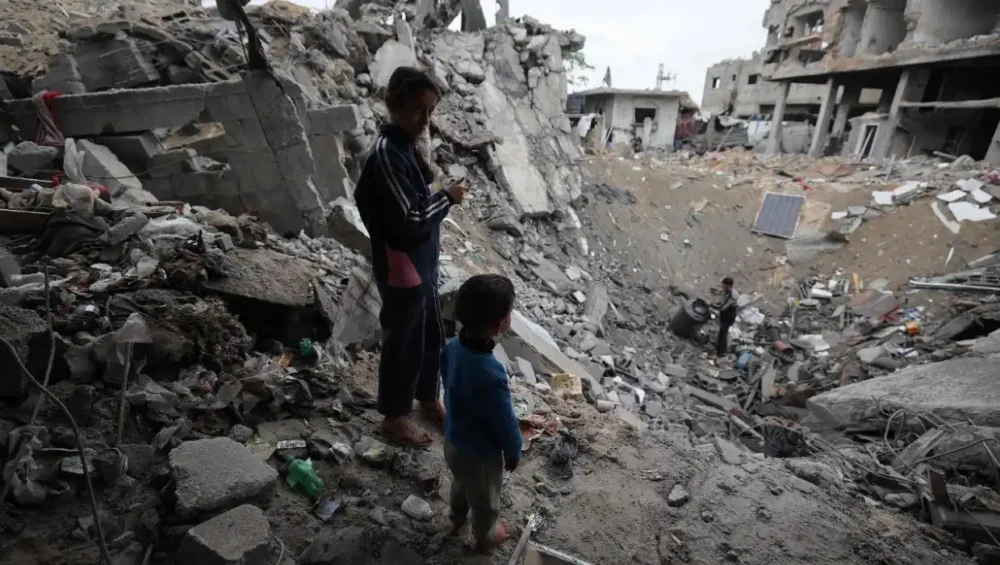
The Gaza Strip’s cumulative death toll since 7 October 2023 has reached at least 73,381 reported fatalities, with 174,231 injured, according to the Gaza Health Ministry’s latest update in early August 2026. These figures are not just statistics; they are the sum of daily hospital bulletins, morgue logs, and civil defense reports from an enclave where health infrastructure has been repeatedly targeted and where many bodies remain trapped under rubble.
What is noteworthy about this time period is that the killings have persisted despite the signing of a ceasefire accord on 10 October 2025, where 11 October 2025 marks the first day of the ceasefire. As of the early part of August 2026, Palestinian health officials estimate that at least 1,250 individuals have been killed and over 4,100 wounded during the time of the ceasefire. In other words, the ceasefire has failed to stop the bloodshed; it has only managed to reduce its pace to a deadly trickle.
A child killed every day: UNICEF’s stark warning
At the center of this story is a statistic that has shocked aid workers and diplomats alike: at least 300 children have been reportedly killed in Gaza in roughly 300 days since the ceasefire began last October, according to the UN Children’s Fund (UNICEF). UNICEF’s phrasing is deliberate and damning:
“At least 300 young Gazans have been reportedly killed in as many days since a ceasefire agreement came into effect last October.”
This is not a new pattern. Earlier UNICEF updates, as far back as January 2026, already warned that
“over 100 children have lost their lives in Gaza”
since the ceasefire began, noting that many deaths were linked to drone and quadcopter attacks, airstrikes, tank fire, and gunfire. UNICEF spokesperson James Elder told a UN briefing that
“Since the early October ceasefire, over 100 children have perished in Gaza,”
adding that the majority of fatalities were attributed to military operations.
By November 2025, UNICEF was already reporting that children were being killed at a rate of two a day during the fragile truce, with at least 67 children dead in the first weeks of the ceasefire. The latest figure of 300 children over 300 days suggests that, on average, one child is being killed every day despite the supposed suspension of major military operations and the promised full entry of humanitarian aid.
How the totals are compiled—and why they matter
The Ministry of Health of Gaza Strip, run by the Hamas-led government, continues to be the main body providing statistics on the number of casualties. The ministry collates information received from different hospitals, mortuaries, and emergency medical centers in Gaza Strip, releasing updated information on almost a daily basis.
In its most recent statements, the ministry has been explicit about the ceasefire-period toll:
“Since the ceasefire with Israel came into effect on 11 October, 1,250 people have been killed and 4,110 others wounded.”
This data is consistently used by the UN bodies, OCHA and WHO included, with the caveat that methodology should be noted. In an early August briefing citing the information provided by the health authorities of Gaza, OCHA estimated that there were 1,209 casualties and 3,943 wounded during the period of ceasefire, which is in line with ministry’s data. Additionally, WHO pointed out the wider picture of attacks against health, and reported almost 1,000 incidents of attacks against healthcare facilities in Gaza since October 2023, which resulted in more than 1,000 deaths and 1,700 injuries of the patients and health staff. The death count provided by the ministry is normally considered to be reliable for any order of magnitude assessment, with the caveat that in the early stages of the conflict not all data could reliably distinguish between civilians and combatants.
July 2026: The deadliest month of the year—during a truce
Even as the truce aimed to ensure calmness, the statistics of July 2026 show the opposite. According to the Gaza Health Ministry, there have been 152 deaths in July, the highest monthly number of fatalities since the start of this year. As stated by the ministry, data from the Health Information Center indicated a significant increase in deaths in the Gaza Strip in the recent month; there have been killings in several governorates. It resulted in the general tendency of violence during the truce. As of 3 August 2026, there have been 1,250 deaths and over 4,100 injuries in total since the start of the truce in October 2025, according to various sources. The conclusion to be made is obvious – even in the “deadliest month of the year,” mechanisms of war continue to work effectively.
What the ceasefire was supposed to do—and what actually happened
The ceasefire declared on 10 October 2025 is expected to halt military activity between Hamas militants and Israel Defense Forces as well as provide a passage for humanitarian assistance and relief. The truce itself, despite being declared by all parties involved, is regularly violated by both sides with the highest number of casualties among civilians. According to the information provided by UN and media, Israel continues to conduct strikes, shelling and shooting in the Gaza Strip during weekends and weekdays with dozens of people dying within a short period of time. The weekly news of Al Jazeera states that the strikes of Israel in Gaza become more aggressive after signing of the agreement regarded as a “breakthrough” deal.
On the ground, this has translated into near-daily casualty reports. The Health Ministry has repeatedly stated that bodies and injured people continue to arrive at hospitals, even when the political narrative suggests a pause in fighting. For families in Gaza, the ceasefire has often meant not safety, but a different rhythm of danger.
The human cost behind the figures
Behind every number is a family, a neighborhood, a school class erased. The UN and aid agencies have stressed that the published child-death figures often reflect only cases with sufficient detail to confirm, implying the real number could be higher. UNICEF has explicitly warned that
“The figure of 100 only represents cases where enough details were available to confirm the incidents, meaning the actual number of child fatalities is likely much higher.”
The issue of undercounts is further amplified by the destruction of healthcare facilities and the breakdown of record-keeping in many places. The fact that WHO documented almost 1,000 attacks against health infrastructure illustrates how the very structure responsible for documenting and treating victims has become an object of attack itself. When morgues get destroyed, when ambulances cannot access some neighborhoods, and when whole blocks lay in ruins, the official death count becomes the lowest estimate.
International reactions and the struggle over accountability
The global reaction to these figures has been swift but disjointed. UN bodies have been quick to condemn the killing of civilians and children during the period of ceasefire. The WHO has condemned attacks on civilians and health facilities, noting the magnitude of damage to the healthcare sector and number of victims among patients and healthcare professionals. The Palestinian health authority explains the figure as the product of continued Israeli aggression and violations of the ceasefire, giving out daily updates with breakdowns of the ceasefire casualty figures. In contrast, the Israelis have been quick to justify the actions as part of a targeted mission against militants while blaming Hamas for any civilian casualties. The exact statement on this issue by the Israeli officials regarding the August 2026 ceasefire figures is not available.
What is missing, so far, is a robust mechanism to independently verify each incident during the ceasefire and to assign responsibility in a way that could deter future violations. Instead, the world is left with parallel narratives: one of a truce that never truly held, and another of a necessary, ongoing campaign against armed groups embedded in civilian areas.
In terms of significance, the death toll of the Gaza Strip being at least 73,381 is not just a statistic to be remembered; rather, it represents a point of reference to be discussed in court rooms, political and humanitarian discourse for many years to come. It will become part of UN Security Council Resolutions, war crime investigations, compensation requests, and of the collective memory of a whole generation raised under the shadow of bombings, military operations, and a ceasefire that did not end the killing. As long as the ceasefire remains a ceasefire on paper only, the death toll of the Gaza Strip will rise, and the number “at least 300 children killed since the ceasefire” will stay very real.