
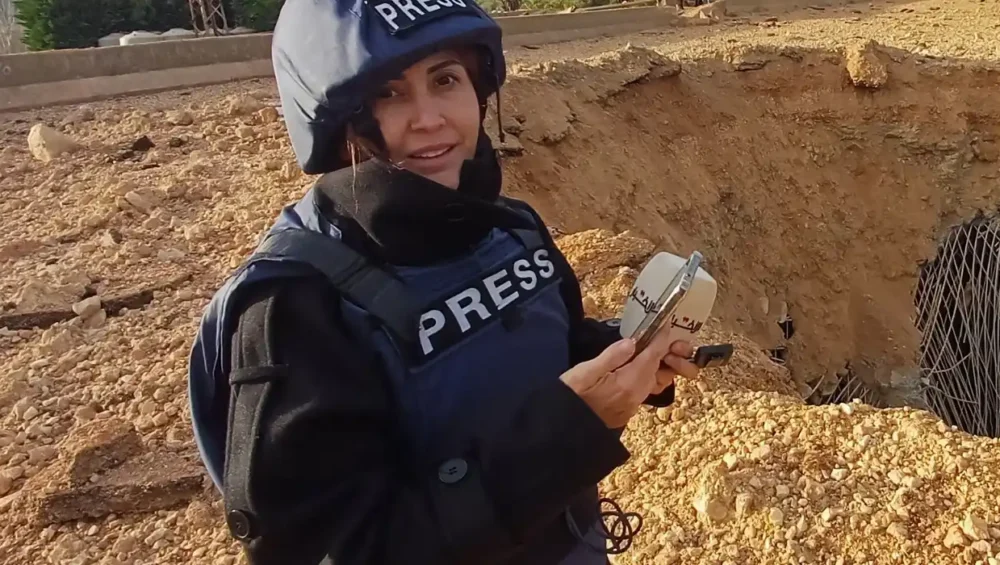
On April 22, 2026, an Israeli airstrike in the southern Lebanese town of al‑Tiri killed Amal Khalil, a 42‑year‑old reporter for the Lebanese daily Al‑Akhbar, and gravely injured her colleague Zeinab Faraj, a 21‑year‑old freelance journalist and camera operator.
Three months later, on Thursday, August 6, 2026, three rights organizations—Human Rights Watch (HRW), Amnesty International, and Legal Agenda—released a joint conclusion: the attack was a war crime. Their investigations, based on photo and video evidence, witness accounts, and a deconfliction request sent to the Israeli military, indicate that Israel deliberately and directly attacked two civilians it knew or should have known were journalists.
The timeline that rights groups reconstruct
The chronological order of what happened, according to the analysis by HRW, Amnesty, and the Lebanese media freedom campaigners, starts with an attack on a civilian vehicle on the main road in al-Tiri that killed two civilians. Khalil and Faraj were assigned to document the effects of the war on southern Lebanon. They went into hiding in a building after this attack. About an hour later, another attack occurred against the building where they were hiding, resulting in the death of Khalil and serious injuries to Faraj. The Lebanese Red Cross made a deconfliction request to the Israeli armed forces stating the presence of journalists in the area about 90 minutes before the deadly attack.
Amnesty’s reconstruction adds that drones were flying low over the area after the first strike and while the journalists were trapped, and that the Israeli military “knew or should have known” that two civilian women had taken refuge in the building.
“Despite this, it continued its strikes, which gives us reasonable grounds to believe this was a direct attack on civilians, revealing a shocking disregard for international humanitarian law,”
said Heba Morayef, Amnesty International’s regional director for the Middle East and North Africa.
Why this is being called a war crime
In accordance with international humanitarian law (IHL), journalists are civilians except for those who take direct part in hostilities and thus have to be treated as such. Deliberate and reckless attacks against civilians and civilian property are prohibited under IHL and can be considered acts of war crimes. According to HRW, Amnesty, and Legal Agenda, all these facts taken together—deconfliction request, drone surveillance over the period of time, and the fact that the attack was carried out even though journalists were seeking refuge—prove that the Israeli army did have the necessary information to distinguish civilians from others.
HRW goes further, stating that the April 22 attacks included
“apparently deliberate attacks on civilians and civilian objects,”
which would make them war crimes if done with criminal intent. The organization also alleges that Israeli forces prevented paramedics from rescuing Faraj and Khalil for hours, compounding the harm to wounded civilians.
“The evidence is clear that the Israeli military knew or should have known that Faraj and Khalil were civilians, but attacked them anyway, and then prevented paramedics from rescuing them for hours,”
said Belkis Wille, HRW’s crisis and conflict director.
The no‑return zone does not erase civilian protection
Israel has designated parts of southern Lebanon as forward defense or no‑return zones, barring civilians from returning. Amnesty explicitly rejects the notion that this designation strips civilians of protection.
“The fact that the two journalists were in what Israel has designated a no‑return zone does not make them lawful targets,”
Morayef said, adding that
“all parties to a conflict are under a clear obligation to always distinguish between civilians and military objectives and to direct attacks only at military objectives.”
In other words, being in a restricted area does not convert a civilian into a lawful target.
Conflicting narratives: Israel’s account versus investigative findings
According to the Israeli military forces, their target was Hezbollah and they “regret any damage to journalists.” In reply to Amnesty, the IDF has argued that the April 22 attack took place during an operation where two operatives of Hezbollah were “neutralized.” But HRW and Amnesty have contended that all the facts, including the deconfliction request and timing of the attack, indicate that the attack was not an accident but a deliberate attack against civilians.
Lebanese officials have rejected the IDF’s narrative outright. Prime Minister Nawaf Salam condemned the strike as a war crime, saying,
“Targeting journalists, hindering their access by rescue teams, and even striking their locations again once these teams arrive constitutes war crimes as described.”
He accused Israel of a pattern of attacking media personnel in southern Lebanon and pledged to pursue the matter in relevant international forums.
The human cost: a family’s demand for justice
For Khalil’s family, the legal arguments are secondary to the loss. Her sister, Zainab Khalil, has said publicly that Amal is among nine media professionals killed by Israeli attacks in Lebanon this year, and that the family has been left to grieve without accountability.
“We won’t be silent about this, and we won’t back down,”
Zainab Khalil told The New Arab, adding that Israeli forces killed her sister “because they didn’t want Amal to show the truth.” She described how the journalists were trapped under rubble for around seven hours and how direct fire by Israeli forces at ambulances prevented rescue operations from reaching the site.
The forensic pathologist’s report listed Khalil’s time of death as 7 p.m., caused by
“cardiac arrest due to a head trauma and severe bleeding.”
The detail underscores the urgency of the medical need and the gravity of the delay in evacuation.
The wider pattern: journalists under fire in Lebanon
Amal Khalil’s murder cannot be looked at in isolation from the context of the larger conflict. Groups advocating press freedom and journalist associations have recorded that she was one of the nine journalists murdered as a result of Israeli attacks in Lebanon in 2026, a number which has become commonplace in press releases made by the Union of Journalists of Lebanon and the International Federation of Journalists. The IFJ, along with its affiliate, UJL, called the murder of Khalil a “targeted assassination” and re-emphasized that it was a war crime.
The Committee to Protect Journalists (CPJ) has framed the denial of timely medical care as a potential war crime in its own right.
“Israel’s failure to allow medical crews access to injured Lebanese journalist Amal Khalil in time to save her may constitute a war crime,”
CPJ said on April 23, 2026, adding that willfully denying medical care to wounded civilians can amount to a grave breach of the Geneva Conventions.
Legal stakes: what an investigation would entail
The organizations HRW, Amnesty, and Legal Agenda have demanded a speedy, objective investigation of the April 22 attacks as war crimes. The provisions of international humanitarian law provide for the criminal prosecution of anyone who commits grave breaches of international humanitarian law, with criminal intent, as well as anyone who helps or aids such violations. HRW has called upon countries to stop supplying arms to Israel and also impose targeted sanctions on Israeli officials committing war crimes.
Amnesty’s statement is categorical:
“This attack must be promptly, independently and impartially investigated as a war crime.”
The organization situates the incident within a broader pattern since October 2023 of unlawful Israeli air strikes in Lebanon affecting civilians, including journalists and medical personnel, and warns that without accountability, such attacks will continue.
What this means for press safety and accountability
For the journalists working in conflict areas, the case of Amal Khalil is symbolic of the two major worries – that the target will be them even though they are non-combatants and that even after being targeted they will not be rescued. The dual targeting of the safe zone along with obstruction of the ambulances in carrying out rescue operations is exactly the sort of situation in which the press freedom activists argue that all the safety of the reporters covering the region of southern Lebanon gets compromised. The decision of Lebanon to put the matter before the international community is part of a wider strategy of shifting the debate from the issue of whether it was an accidental or deliberate act and who to blame for that, if it was deliberate.
As Sara Qudah, CPJ’s Middle East and North Africa regional director, put it,
“The deliberate obstruction is a war crime and requires an international investigation.”