
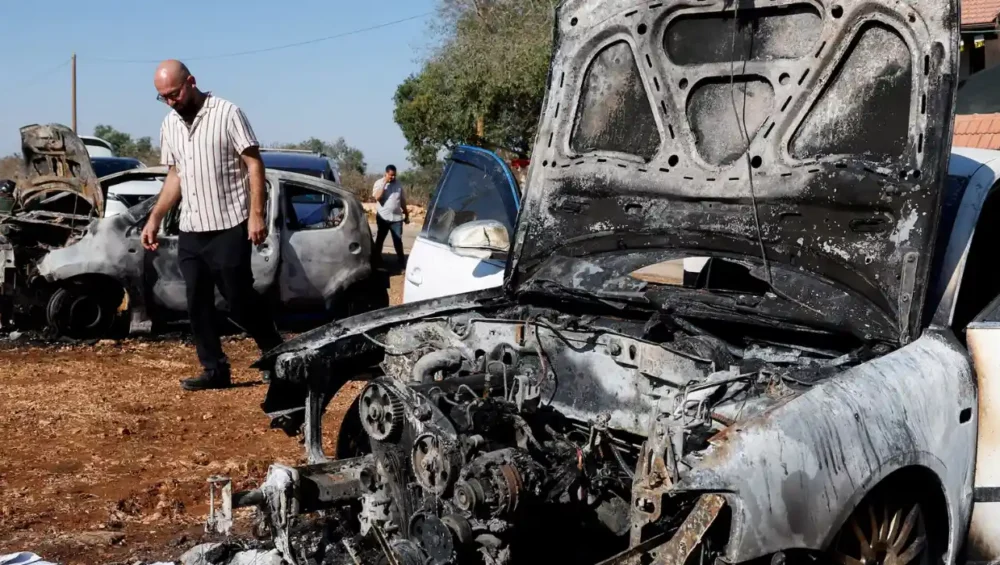
The killing of two Palestinian teenagers during a raid on the village of al‑Mughayyir, northeast of Ramallah, has reignited urgent concerns over the scale and nature of human rights violations in the occupied West Bank. On 2 September 2026, Omar Mohammad Na’ssan (19) and Khalil Abu Alia (16) were shot with live ammunition and died while being evacuated to hospital, according to Palestinian health officials and emergency responders.
At the heart of the matter, this case is not merely a statistic in a prolonged war; it is indicative of a larger trend whereby Palestinians, especially minors, have become more susceptible to death by force in situations where the boundaries between policing, military conduct, and settlement aggression are ambiguous.
A village under siege: what happened in al‑Mughayyir
The little village of al-Mughayyir located northeast of Ramallah turned into a place of armed conflict on 2 September 2026. In the opinion of local authorities, Israeli settlers accompanied by Israeli troops entered the village and tried to steal sheep from two houses there. As reported by the head of the village council, Amin Abu Alia, when villagers tried to prevent the theft, the Israeli army blockaded the village and launched a raid into the center of the settlement. It was announced by the Palestinian Red Crescent Society that its medical workers transported out two Palestinians injured with live fire – one in his neck and the other in his back – in the process of attack of the settlers and the Israeli troops; both were killed during transportation to the hospital. Witnesses in the village said that the Israeli snipers had taken up firing positions in the buildings in the center of the village and opened fire against the gathered residents.
The legal and human rights framework at stake
In accordance with the international humanitarian law, the West Bank is regarded as an occupied territory, where the occupying power – Israel is expected to perform certain duties related to protecting the civilian population and maintaining public order and safety within the legal framework. The use of force by the security forces is highly restricted and must be strictly necessary and proportionate, as well as can be resorted to solely as the last means of protecting lives. Arbitrary executions, collective punishments, and disproportionate use of force are banned. Human rights organizations repeatedly pointed out that the performance of military operations in Palestinian villages, especially when associated with the actions of settlers, does not meet these requirements. Among the aspects to pay attention to in the al-Mughayyir case, there will be the participation of settlers along with uniformed troops, the siege of a civilian village, the alleged usage of snipers in urban areas, and the killing of two teenagers with live ammunitions during the alleged confrontation concerning the theft of some belongings.
Children and teenagers on the front line
The deaths of Omar and Khalil are not isolated tragedies; they fit into a wider pattern of child and adolescent fatalities in the West Bank since the escalation that began in October 2023. According to B’Tselem, an Israeli human‑rights group, 235 children and teenagers have been killed by Israeli forces in the West Bank between 7 October 2023 and June 2026, including five killed by Israeli settlers. The Palestinian Authority’s Colonisation and Wall Resistance Commission has reported around 250 such deaths over the same period, suggesting even higher figures.
These figures represent not just the losses sustained in the course of combat but also the reality wherein Palestinian young people are habitually subjected to military raids, settler attacks and encounters that quickly turn deadly. The use of lethal force in a context where other options may have been viable is one of the aspects cited by rights activists that show a lack of restraint and accountability on the part of the Israeli military. The killing of minors in the al-Mughayyir incident makes the human rights issue even more pressing. According to international law, the situation of armed conflict and occupation requires that all measures be taken to protect children, and the deaths of minors at the hands of state and non-state armed actors alike make this imperative even stronger.
Settler violence and the erosion of accountability
The al‑Mughayyir raid also highlights the increasingly entangled relationship between settler militancy and state security operations. International and regional media have reported an intensified wave of violence by settler militants following high‑profile incidents such as the August 2026 siege of Qusra village, which drew widespread condemnation. Rights groups and journalists note that settler outposts and expanded settlements on the edges of Palestinian villages are seen as part of efforts to seize more land and shrink the territory available for a future Palestinian state.
In this context, operations like the one in al‑Mughayyir—where settlers are reported to have entered a village alongside army units—raise concerns about the normalization of settler presence in security operations and the potential for impunity. When settlers act with the backing or tolerance of state forces, the risk of abuses against Palestinian civilians increases, while the prospects for independent investigation and accountability diminish.
The investigation question: will accountability follow?
A central element of any credible response to alleged human rights violations is the promise of a genuine, independent, and effective investigation. The IDF has stated that the al‑Mughayyir incident is “under investigation,” but past experience in the West Bank has often shown that military investigations rarely result in prosecutions or meaningful sanctions against soldiers or settlers.
The Palestinian families and human rights organizations often criticize investigations as being unclear, long-lasting, and biased in favor of the narrative offered by the military. Moreover, in cases involving the settlers, there is a lack of accountability and a lack of prosecutions in cases involving attacks on Palestinians and their property. This lack of accountability perpetuates a pattern of non-deterrence and leaves communities like al-Mughayyir exposed to repeated attacks. The case of al-Mughayyir is a test for the international community and donors, who need to decide if their claims about human rights and international norms are mere words and not action. Without an independent investigation and international monitoring of this case, the killings will continue as an inevitable side effect of an endless conflict.
Regional and international implications
The killing of two Palestinian teens in a settler‑army raid reverberates beyond the immediate locality. It feeds into broader debates about the viability of a two‑state solution, the future of the West Bank, and the role of the international community in upholding humanitarian norms. As settlement expansion continues and settler violence intensifies, the space for a contiguous, sovereign Palestinian state shrinks, while the human cost of occupation becomes more visible in the form of civilian casualties, including children.
For regional stakeholders, each such incident strengthens narratives of injustice and deepens grievances that can have ramifications beyond their immediate impact. For European and other international partners, it presents questions about the nature of their arms exports, diplomacy, and the congruence of their human rights language and policy. Thus the al-Mughayyir raid was both a tragedy in its own right and a test case for the capacity of the international system to apply pressure for accountability in one of the longest-running occupations in the world.
The deaths of Omar Mohammad Na’ssan and Khalil Abu Alia should not be dismissed as yet another news story. They serve as a grim reminder of the daily reality of occupation in the West Bank, which means living at risk of lethal force in circumstances of low accountability and high impunity. The conflicting accounts provided by Palestinian witnesses and the Israeli army make a clear case for independent investigation and for an assessment of compliance with international humanitarian and human rights law.
Unless there is a decisive shift toward genuine accountability and restraint, incidents like the al‑Mughayyir raid will continue to occur, and the cycle of violence and violation will deepen. For the international community, the question is whether it will treat these deaths as an aberration or as evidence of a systemic crisis that demands a stronger, more consistent response.