
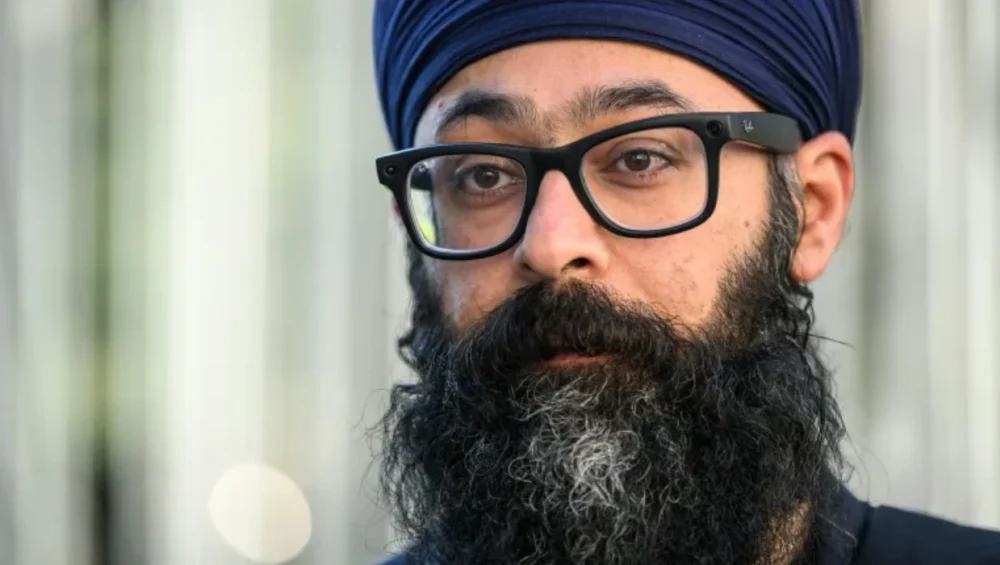
United Nations human rights experts have urged Canada to “accelerate” investigations into threats against Sikh activist Moninder Singh, in a case that has sharpened scrutiny of alleged transnational repression and Canada’s duty to protect human rights defenders. The intervention is significant not only because it comes from five UN special rapporteurs, but because it places Canada’s response under an international human rights lens at a moment when Sikh activists say intimidation has become persistent and cross-border in nature.
At the center of the case is Moninder Singh, a Canadian national and Sikh activist living in Canada, who has repeatedly been warned by Canadian authorities about credible threats to his life. The UN experts say the warnings themselves show the danger is real, but they also suggest the state’s protective response may not yet be sufficient.
What the UN experts said
In a letter dated June 3 and made public two months later, the experts said they had raised “concerning allegations of foreign intimidation and reprisals” against Singh. They urged Canada to
“take all feasible measures at its disposal to protect Mr Moninder Singh and his family, as well as similarly-situated individuals on Canadian soil”,
and to speed up investigations, hold perpetrators accountable, ensure remedy for victims and prevent recurrence.
The experts hors also stated that if the allegations are true, then it would be retaliatory action because of Singh’s human rights advocacy. The threat, according to the reporting on Global News, could be a part of the pattern of transnational repression practiced by Indian authorities against the Sikhs around the world, including in Canada. It is important what they have specifically said. They did not make a general recommendation to be cautious but explicitly alleged that it might be the intimidation for his public criticism of India and the use of the UN mechanism concerning the issues of the Sikhs’ activism.
Why Singh matters
Singh’s profile plays a pivotal role in the plot. He is not just any individual getting an anonymous warning but an identifiable Sikh activist who has publicly condemned the actions of the Indian government and has been actively involved in global advocacy work. According to the article, Singh has traveled to Geneva and has spoken before the United Nations Human Rights Council regarding the persecution of Sikhs globally.
That context is important because the experts said they were deeply concerned that Singh may have been targeted directly before or after his cooperation with UN bodies.
“We are deeply concerned at the allegations that Mr. Moninder Singh appears to have been targeted directly before or after instances of cooperation with or reporting to United Nations entities,”
the letter said, according to Global News.
“These allegations, if true, may constitute unlawful intimidation and reprisals,”
it added.
In other words, the issue is not just whether Singh is under threat. It is whether the threat environment itself is being shaped by retaliation for speech, activism and international human rights engagement. That is the key reason the case has drawn UN attention.
Four warnings since 2022
One of the more shocking things is the frequency with which Singh has been warned by the police. As per the letter from the UN, Canada has issued him four “duty to warn” notices since 2022; in each case, the threat to his life was considered credible and imminent. The most recent one was issued in February, just before he left for Geneva. In the French media reports, it is noted that the UN experts were concerned at how Canadian authorities did not seem to have taken any known new security measures since issuing the notice.
This is a relevant detail, as it indicates that there was a disconnect between recognizing the threat and making it disappear. Furthermore, it is an unsettling detail that the threats have occurred over time. It suggests that the activist continues to be threatened despite previous ones.
Canada’s response under scrutiny
The UN experts acknowledged that investigations and security operations can require confidentiality. But they said that cannot become an excuse for inaction or a lack of visible protection. They wrote that they were concerned Canada had not taken any known additional protective or monitoring measures after the February warning.
That point places Ottawa in a difficult position. On the one hand, security services may not want to reveal protective tactics publicly. On the other, the UN is essentially asking whether Canada is doing enough behind the scenes to prevent a possible assassination attempt or intimidation campaign. The disagreement is therefore less about the existence of a threat than about the adequacy and urgency of the response.
The letter also suggested Canada should not treat this as a one-off file. It called for broader protection for “similarly-situated individuals on Canadian soil,” implying that other Sikh activists could face analogous risks. That widens the policy implications from one man’s safety to a larger question of community protection and foreign interference.
India angle and transnational repression
Perhaps the most politically delicate aspect of the tale relates to the possibility that India might be responsible for issuing the threats. As per Global News, the experts had advised that the threats might well be a reflection of a larger trend of transnational repression against Sikh activists by the Indian government. As per the report, the experts believed that Singh could have been threatened for his cooperation with the UN and due to his activism. According to them, this was more than just a criminal offense, but intimidation backed by political pressure from across the borders by a state entity. This particular accusation fits into the larger conflict between Canada and India, where there has already been an assassination attempt and diplomatic tensions. While India might not be held responsible in every single instance, the pattern itself has made Sikh activists wary.
Why this story is bigger than one activist
The importance of this case goes beyond the safety of Singh personally. It also highlights the capacity of diaspora activists to speak up without fear of repercussions outside of the borders of their new state. If there are activists who know that making remarks concerning foreign governments may provoke reprisals against them or their relatives in Canada, the implication is clear. This is why the UN experts considered the case in a human rights context. Their references to “reprisals” and “foreign intimidation” place the case in the context of an already-existing problem in the international arena – whether states are able to safeguard their residents against such pressure campaigns carried out by powerful foreign individuals or organizations.spcommreports.
There is also the symbolic component. Singh’s involvement in the work of the UN brings the issue into the context of whether the international human rights mechanisms are capable of protecting people who appeal to them.
The larger question is whether Ottawa sees this as an isolated threat case or as evidence of a wider pattern requiring a stronger policy response. For Sikh activists in Canada, and for human rights defenders watching this case globally, the answer will matter far beyond one letter from Geneva.