
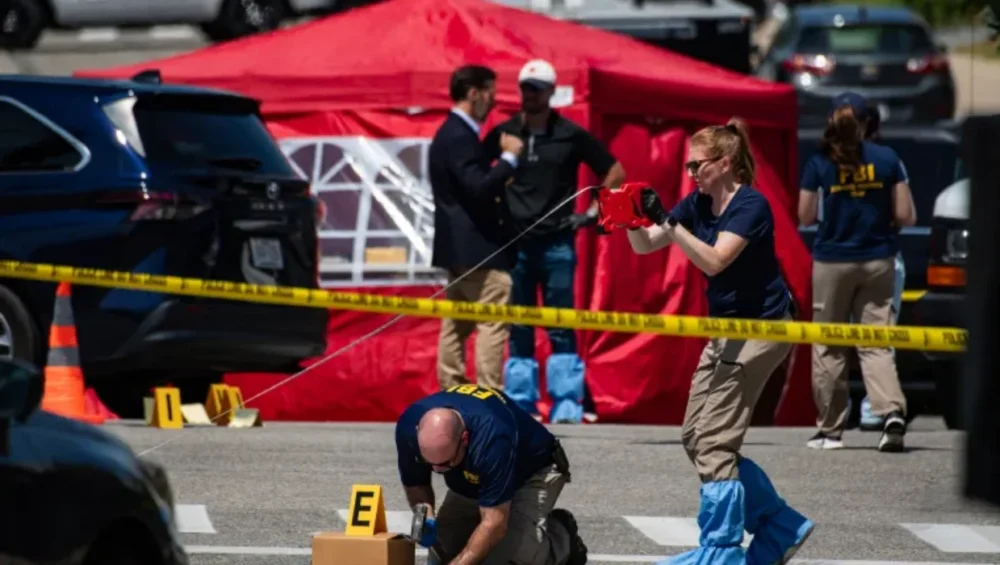
The growing death toll tied to Trump’s immigration enforcement campaign has become one of the most politically sensitive consequences of the administration’s hard-line border and interior enforcement agenda. What began as an aggressive promise to restore order has now turned into a broader legal and human rights controversy after at least nine people died in incidents connected to immigration operations across the United States.
The most recent death, which was an attack in Biddeford, Maine, has been considered the most recent incident in a series of fatalities that have brought into focus the manner in which the federal immigration agents are enforcing themselves. The issue has put into perspective issues of the use of force, the conditions under which the detained individuals have been handled, and the increasing costs of the deportation drive.
What the figures show
The figures that are arising from the recent reporting are crucial since they indicate that the problem is not only an issue regarding one incident but a much broader problem. The latest reporting by AP shows that the shooting in Maine is the ninth death in connection with the immigration raids under the ongoing enforcement effort by Trump. In another reporting, Mexico claims that the number of its nationals who have lost their lives during or in connection with ICE detention or ICE operations is 17. Based on Mexico’s data, 14 of the deaths have been in ICE custody while 3 others happened during ICE operations. Mexico also claims that it has raised 11 diplomatic protest notes to Washington regarding the deaths. What makes these figures crucial is the fact that they clearly show that the disagreement goes beyond one controversial arrest and one deadly shooting.
The Maine shooting
The fatal shooting in Biddeford, Maine, is the event that pushed this issue back into national focus. According to the reporting, the death is now being counted among the immigration-enforcement fatalities linked to Trump’s crackdown. That alone makes it politically explosive, but the deeper significance is that it came after several earlier deaths had already triggered concern among advocates and foreign governments.
This is why the Maine case is being read not only as a criminal or disciplinary matter, but as part of a systemic pattern. Critics argue that the cumulative effect of these incidents points to an enforcement culture where the threshold for force has become dangerously low. Supporters of the administration, by contrast, continue to argue that officers are operating in difficult, high-risk situations and must be allowed to respond decisively when confronted with resistance.
Mexico’s escalating response
Mexico’s reaction has been unusually strong and increasingly organized. President Claudia Sheinbaum’s government says it will seek criminal complaints in the US over the deaths of Mexican nationals in immigration operations, signaling that diplomatic protests alone are no longer seen as sufficient. Mexican officials have also said they intend to push for legal action in US courts and pursue the matter through international human-rights forums.
Foreign Minister Roberto Velasco has said the government will move beyond routine diplomacy and seek criminal investigations into the deaths. In coverage of the issue, Sheinbaum has described the deaths as “homicides” and “violations of human rights”, language that reflects how sharply the dispute has hardened. Mexico is also planning to appeal to the Inter-American Commission on Human Rights and the UN human rights chief, which would internationalize the dispute and put the US under additional scrutiny.
The Houston case at center
Among the factors contributing to the widespread outrage are, for instance, the death of a Mexican man who was shot to death in Houston, as it is reported by Reuters-style and CNN in a manner implying that he was not the intended target of the ICE raid. Indeed, Lorenzo Salgado Araujo was shot dead by an ICE officer who had apprehended him, and this became one of the main reasons for Mexico’s increased reaction through legislation. The reason why this particular detail is worth mentioning is that it negates the idea that the death was just a natural consequence of a risky mission to catch a dangerous criminal. As it has been claimed by the US government through media, the officer acted in his own defense when the Mexican tried to run him over while being arrested. It is the key argument of the government in this case as well as others.
ICE and the force debate
The debate has also reignited past complaints about ICE and Border Patrol enforcement methods. Outside analysis and watchdog organizations have long pointed out that the agency’s work has been getting increasingly militant, violent, and deadly. Not only is the issue of deaths, but also the context in which those deaths take place: at home, in neighborhoods, during traffic stops, and at detention centers where the use of force can swiftly turn fatal. While the Department of Homeland Security has sought to defend its officers, claiming that detainees receive due process and appropriate treatment, and that the ICE officers use only minimum force necessary, this is a typical response whenever there are such incidents. Now, however, it comes up against the factual record of deaths as well as mounting criticism from rights organizations and other countries’ governments.
Human rights concerns
Human rights organizations and immigration advocates see the deaths as evidence of a policy failure rather than isolated tragedies. Their argument is that when enforcement is designed around speed, intimidation, and mass removals, the chances of deadly mistakes rise sharply. The fact that some of the dead were citizens, some were migrants, and some were targeted during operations rather than detained afterward makes the issue broader than immigration status alone.
Reporting earlier in the year showed that 2026 had already begun with a troubling number of deaths in ICE custody, suggesting the trend did not begin with the latest shooting but had been building for months. The Guardian’s January reporting said eight people had already died in ICE-related situations by then, which makes the current nine-death figure less like a spike and more like a continuation of a worsening pattern. That chronology matters because it shows how quickly the issue moved from a warning sign to a national controversy.
Political stakes for Trump
To Trump, there is a dilemma arising from this issue as far as politics is concerned. The president’s base expects a ruthless deportation force and many have come to regard such an attitude as a necessary remedy to the problem caused by years of lax border enforcement. However, as the body count increases, it is getting increasingly difficult to convince his critics that the White House is willing to sacrifice oversight, discretion and humanity in its zeal to generate numbers for political reasons. This is dangerous since immigration has always been the hallmark of Trump’s policies. From an issue that showed how tough he was, it is now becoming dangerous as well as legally and diplomatically risky.
Why Does It Matter?
The problem of the deaths is significant because it has evolved from sporadic cases to the recognized pattern with diplomatic implications. First, the fact that there are nine deaths reported now is not only a statistic; these deaths have become the proof for the Mexican government and the opponents of the policy that this campaign has gone too far. Second, the fact that Mexico seeks criminal proceedings against the United States proves how seriously this case is considered by Mexico and the amount of tension that this policy generates in the bilateral relationship. Third, it is unlikely that the administration is ready to change its position in the nearest future, and hence, there is a high possibility of conflicts in the future.
The latest death in Maine has become a symbol of a larger crisis surrounding Trump’s immigration enforcement operations. The accumulation of fatalities, Mexico’s legal push, and the official US defense together show a dispute that is now moving from the streets and detention centers into courtrooms and diplomatic channels. What was once marketed as enforcement strength is increasingly being judged through the lens of accountability, restraint, and the human cost of mass deportation.