
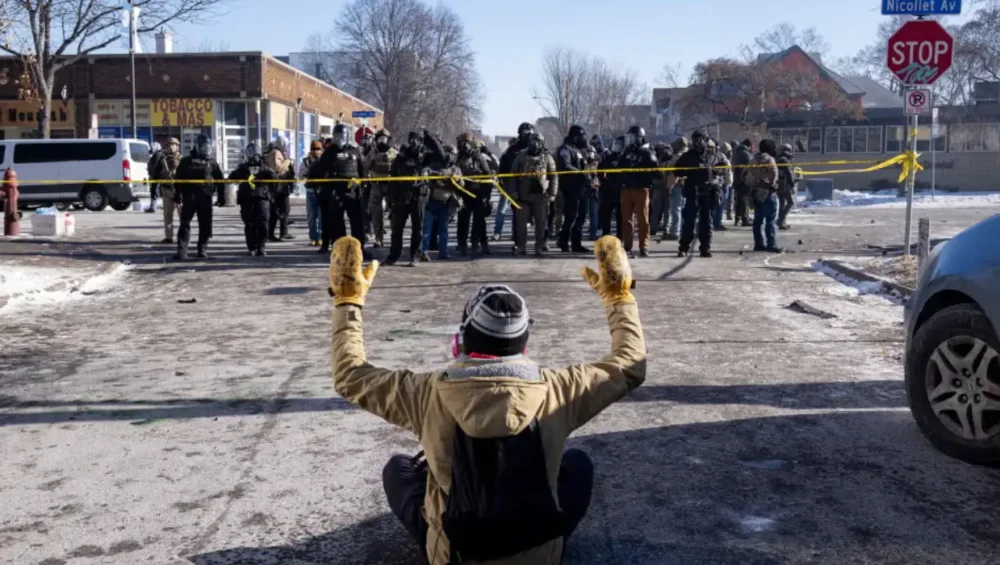
In a damning report released on June 17, 2026, Human Rights Watch has declared that the federal government orchestrated what it calls a human rights crisis in Minnesota, terrorizing communities through Operation Metro Surge. The comprehensive investigation, titled
“A Manufactured Crisis: Minnesota Communities Terrorized by the Federal Government,”
documents unprecedented violations during the second Trump administration’s largest immigration operation ever deployed in American history.
Based on over 130 interviews with immigrants, lawyers, healthcare practitioners, and educators, along with forensic analysis of 52 confirmed videos and photos, this report highlights the abuse committed against Somali immigrant groups and groups of color in Twin Cities. According to Human Rights Watch, these rights violations by the administration had reached unprecedented levels requiring the investigation of federal leaders involved in this human rights crisis.
Operation Metro Surge: The Federal Deployment That Changed Minnesota
Operation Metro Surge started in December 2025, after the announcement made by the Trump administration about the immigration crackdown in which the biggest immigration raid was executed on January 6, 2026. As part of this immigration crackdown, the federal government placed 3,000 ICE Enforcement and Removal Operations and Homeland Security Investigations Officers, and 1,000+ Customs and Border Patrol officers in Minnesota instead of the regular 190 officers in Minnesota.
The operation targeted Minnesota’s Twin Cities—Minneapolis and St. Paul—before expanding statewide, lasting approximately three months from December 2025 through April 2026. During this period, federal agents arrested and detained more than 4,000 immigrants, along with numerous U.S. citizens, fundamentally altering the daily lives of Minnesota residents. The scale of deployment represented a sixteen-fold increase from normal federal immigration presence in the state.
Fatal Shootings Spark Nationwide Outrage and Protests
The most destructive impact of the operation resulted in the deaths of three individuals who were shot by federal ICE officers, resulting in mass demonstrations in Minnesota and international criticism. Renee Good, a U.S. citizen, was killed by federal ICE officers, an event which immediately provoked national indignation.
Alex Pretti, another citizen of the United States, was shot dead by federal agents in the same area of south Minneapolis known as Eat Street on January 24, 2026, after he had been beaten severely in front of people. This is the second shooting incident in which a person has been shot dead by the federal agents on the same day in the same area of Eat Street, January 23, 2026.
Apart from deaths, there were also many others who were injured using the techniques such as use of chemical weapons, flash bang weapons, and even use of force. Federal agents broke many car windows, pushed people down, and pointed their guns at more than 50 people during the raid, according to the Human Rights Watch reports. Use of force in these cases was a very important aspect of the report.
Statistical Evidence: The Numbers Behind the Human Rights Crisis
The statistics collected by Human Rights Watch provide disturbing facts on how the process was conducted and what results were achieved. According to Human Rights Watch, 77.1% of arrestees did not have any criminal conviction, and almost two-thirds of those arrested did not have any criminal record in the United States at all. The above-mentioned statistics completely disprove the allegations of the government regarding its actions.
The financial cost was enormous for the residents of Minnesota. As much as $203 million wage loss was recorded in the state of Minnesota in just the month of January 2026. The total wage loss for the whole period stood at almost $700 million, leading to the closure of several businesses. The repercussions of this action went way beyond the immigrants themselves.
The survey found out that 28% of the population of Minneapolis or more had encountered the federal agents at least once in the course of the operation, showing the extent of involvement of the federal government in the operation. This shows that the operation involved many more people apart from those who were arrested.
Detention Conditions and Systematic Human Rights Violations
According to Human Rights Watch, there were serious issues concerning violation of international human rights law in relation to detention. Inmates were kept in overcrowded, unclean cells where they were shackled continuously, exposed to bright lights 24/7, and forced to sleep on the floor in the absence of beds. There was an inadequate provision of healthcare for the inmates, many of whom could not receive proper treatment for their illnesses or injuries.
It turned out that the agents of the federal government intentionally did not allow inmates to consult lawyers, thus depriving them of their rights. The agents used masks that concealed their identity, which prevented any form of accountability on the part of victims of abuses.
Racial Profiling and Targeted Harassment of Somali Communities
The findings revealed racial profiling in a systemic manner, mainly focusing on the immigrant Somali community and communities of color within the state of Minnesota. The human rights group, Human Rights Watch found out that the agents had been involved in the surveillance and harassment of protesters and legal observers who were against the program.
The operation’s focus on Somali communities aligned with documented patterns of racial discrimination in federal immigration enforcement. Community members reported that agents specifically targeted neighborhoods with high Somali populations, conducting raids and arrests based on perceived ethnicity rather than individual criminal history. This discriminatory approach violated fundamental principles of equal protection under the law.
Community Impact: Chilled Rights and Disrupted Daily Life
The human rights crisis extended beyond direct arrests and detentions, fundamentally altering how Minnesota residents lived their daily lives. The report documented that freedom of expression and assembly was severely chilled, with residents too afraid to protest or observe federal activities publicly. Thousands of children missed school during the operation, with many families switching to virtual learning to avoid federal agent encounters.
Access to health care services was greatly affected since the residents postponed getting medical attention or were unable to seek medical care for the needs of their prenatal and postnatal care as well as chronic diseases. The tension and fear caused by the raid affected the ability of the children to learn, as the teachers noticed interruptions to their education process.
The mental well-being of the people was heavily impacted by anxiety and fear as well as trauma suffered by them. The Human Rights Watch had stated that these mental problems would be costly and would leave an impact on the lives of the affected persons for many years to come. Most of the residents stayed back at their homes and did not venture out at all.
Official Responses: Community Groups Demand Accountability
Minnesota labor organizations and more than 50 community groups issued strong statements condemning the federal operation as political repression. Labor leaders declared that federal indictments of 15 Minnesotans represented weaponization of the Department of Justice to intimidate political challengers. They’re not prosecuting organizing because organizing failed. They’re prosecuting organizing because organizing worked, said Minnesota labor representatives defending the indicted individuals.
CAIR-Minnesota became a co-signatory to the letter from Free Speech For People that was asking Minnesota’s governor, the state’s attorney general, the county attorneys, the mayors, and chiefs of police to open up criminal investigations against the federal agents. This letter accused the federal agents of committing unlawful attacks, unlawful arrests and detentions and political retribution against citizens of Minnesota. The Minnesota branch of Council on American-Islamic Relations came together with Free Speech For People in this matter.
Federal Prosecutors Counter with Charges Against Protesters
A direct consequence of the public’s outcry, federal prosecutors indicted 15 suspects in December 2025 in relation to obstructing federal officials who were carrying out the immigration raids. According to Daniel N. Rosen, U.S. Attorney of the Minnesota, at a press briefing, the probe was on two anti-fascist organizations based in Minneapolis that were trained in surveillance and fast deployment.
The federal charges created a legal battle pitting the government against community defenders. Twelve individuals were arrested, two remained at large, and one was already in custody when prosecutors announced the charges. This prosecution represented the federal government’s counterattack against community opposition to Operation Metro Surge.
Human Rights Watch Recommendations and Call for Investigations
Human Rights Watch concluded that senior administration leadership responsible for these abuses must face investigation and accountability. The organization called for federal leaders to be investigated for creating a human rights crisis and urged local leaders to step up support for those impacted. The report recommended comprehensive investigations into the coordinated criminal conspiracy that Human Rights Watch alleged was directed by President Trump himself.
The international watchdog group’s findings represent one of the most comprehensive human rights documentation efforts focused on federal immigration enforcement abuse in recent American history. Based on interviews, forensic video analysis, FOIA data requests, and legal documentation, the report provides extensive evidence supporting its conclusions about systematic rights violations.
Current Status: Operations Ended but Accountability Remains Absent
By June 2026, the official end to the operation was in sight, however, there were no accountability measures for the people behind those responsible for this operation. The residents have continued to feel afraid of the risks involved in this operation and its lasting effects on them. As of March 2026, the governor of Minnesota has set up a council in the whole of Minnesota to look at all the human rights implications of the operation at the federal level.
There is no federal investigation that has been launched following the murder of Renee Good and Alex Pretti despite the calls for the launch of such an investigation. The indicted people in Minnesota are still under federal investigations and there are ongoing legal defense fundraisers for them.
The report’s release on June 17-18, 2026, came amid continued federal prosecution of community organizers and ongoing calls for accountability from Minnesota’s political leadership. The federal government’s terrorization of Minnesota Communities remains a defining example of immigration enforcement excess in the second Trump administration, with consequences that will likely persist for years.