
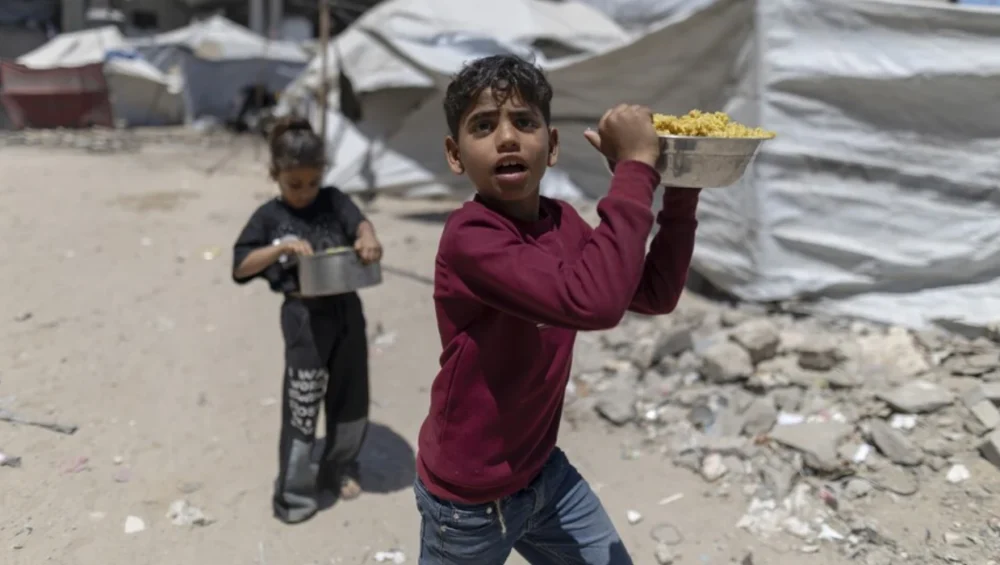
For the third year in a row, the Israeli army has been featured in the United Nations’ “shame list” for severe violations against children caught in armed conflicts. This signifies a looming crisis regarding the protection of children amid increasing instances of violence within Israel, Gaza, and the West Bank. The inclusion of the Israeli army in this list has basis on concrete statistics and accounts by humanitarian groups operating in these places.
The inclusion of South Sudan in the report again indicates that the UN has failed to ensure protection for children from violations of international humanitarian law, as the country continues its armed conflict. The report issued by the UN annually is not only an instrument to keep an eye on such countries but also a way to ensure that these parties take the necessary steps to protect the interests of children.
What the UN Blacklist Actually Means
“The list of shame” refers to the blacklist maintained by the UN in its report that is prepared by the Secretary-General every year on children and armed conflict. The list identifies parties, both State and non-State, that have been found guilty of committing serious violations of rights of the children through actions such as killings, recruitment, and abductions.
Though the list is not intended to punish the listed parties from a legal perspective, it serves a reputational and political purpose. The intention behind the listing is to embarrass the listed party into changing its ways, formulating a child protection policy and allowing humanitarian access to be easier. Every year, the UN releases statistics, regional analysis, and case studies as a basis for listing particular groups on the annual Watch List. This year’s Watch List features the Israeli Defense Forces among those who have continued to violate international law by way of military actions in Gaza and the West Bank regions.
Key Statistics and Verified Figures
The UN’s latest data reveals alarming trends. In 2024, violence against children in armed conflict reached extreme levels, with a shocking 21 percent increase in grave violations compared to 2023. This surge was driven largely by intensified operations in Gaza, where the majority of recorded incidents occurred.
Over 8,554 grave violations were documented against 2,959 children across Israel and Palestine in the past year alone. These violations include:
- Killings and injuries from direct military engagement
- Detentions and arrests without due process
- Denial of access to food, water, medical care, and education
- Displacement from homes due to airstrikes or ground operations
- Psychological trauma from exposure to constant violence
The West Bank and East Jerusalem also saw elevated numbers, though far fewer than Gaza. The UN emphasized that children in Gaza face multiple, overlapping violations simultaneously, compounding their vulnerability.
The Human Cost: Children at the Frontline
In this particular dispute, the children are not only victims but active targets in some cases. According to the report from the United Nations, there have been countless numbers of children who have been killed or maimed because of the attacks by the Israelis; other cases include those where the children were arrested or displaced.
One field worker in Gaza described the situation as
“a generation being erased before it can even grow up.”
Another humanitarian coordinator noted,
“Every day, we lose children who should be in school, playing, or dreaming of the future. Instead, they are buried under rubble or trapped in hospitals without medicine.”
The psychological toll is equally devastating. The UN Children’s Fund (UNICEF) estimates that nearly all children in Gaza suffer from severe trauma, with many exhibiting symptoms of post-traumatic stress disorder, anxiety, and depression. access to mental health services remains critically limited.
Israel’s Stance and Official Responses
There has been an unwavering refusal by Israel to be added to the list by the UN. The Israeli authorities have maintained that the document is politically driven and does not adequately address their situation considering the militant organizations such as Hamas that they are up against.
In a statement following the 2024 listing, an Israeli diplomat said,
“We are being punished for defending our citizens against terrorists who use children as shields.”
Another official added,
“The UN ignores the reality of asymmetric warfare and the threat posed by groups that intentionally target Israeli civilians.”
In addition to the above, Israel claims that it makes efforts to reduce civilian casualties by warning the target before an attack and providing humanitarian access routes. On its part, the UN and other human rights bodies have found these efforts insufficient as the attacks continue to cause massive civilian deaths, especially children.
UN and Human Rights Organizations’ Positions
The UN Secretary-General, Antonio Guterres, has repeatedly emphasized the urgency of protecting children in conflict zones. In this year’s report, he stated,
“Violence against children has hit unprecedented levels, and the world must act now to stop the carnage.”
He called for immediate accountability, humanitarian access, and the implementation of child protection protocols by all parties.
Human rights groups, including Human Rights Watch and the Center for Constitutional Rights, have supported the UN’s decision. A Human Rights Watch spokesperson said,
“This listing is fully justified. The Israeli armed forces have committed systematic abuses against children, and the UN’s action is a necessary step toward accountability.”
Other organizations have urged the UN to go further, recommending sanctions, arms embargoes, or legal action through the International Criminal Court (ICC). They argue that repeated listings without consequential measures weaken the UN’s credibility and fail to deter ongoing violations.
Comparison with Previous Years
The military forces of Israel were listed in the UN blacklist for the first time ever in 2024. The forces were again listed in 2025 because of their violation of rules in Gaza and the West Bank. Currently, in 2026, they have been blacklisted again as part of a recurring trend.
| Year | Key Developments |
| 2024 | First inclusion; 21% rise in violations reported |
| 2025 | Retained; focus on Gaza; denial of aid cited |
| 2026 | Third consecutive year; unprecedented levels of violence |
Each year, the UN has documented worsening conditions, with Gaza consistently bearing the highest burden. The West Bank and East Jerusalem have seen rising incidents, but the scale remains far below Gaza’s.
Regional and Global Implications
The listing of the Israeli army on the UN black list time and again has led to diplomatic conflicts. There are various nations across the world who have criticized Israel’s behavior and demanded sanctions on Israel. However, there are western nations such as the US, which have told the UN to consider security aspects along with holding Israel accountable.
This list has implications for international humanitarian assistance flows as well. The donor countries and organizations utilize UN assessments to determine risk and resource allocation. In light of the severe malnutrition, lack of health care, and displacement that the children are suffering from, more humanitarian funds have been allocated.
What Needs to Change: Recommendations
To address the crisis, the UN and human rights organizations have outlined several key recommendations:
- Immediate cessation of military operations targeting civilian areas
- Unrestricted humanitarian access to Gaza and the West Bank
- Accountability mechanisms for verified violations, including ICC investigations
- Implementation of child protection protocols by all armed parties
- Investment in mental health services and education for displaced children
Without these measures, the UN warns that the cycle of violations will continue, with children bearing the brunt of the conflict.
Final Thoughts: A Call for Urgent Action
The fact that the Israeli military was included on the blacklist in the third year should not be taken lightly; it is indicative of a growing humanitarian crisis. Children who live in Gaza, the West Bank, and in Israel are now witnessing a level of abuse, neglect, and violation that goes beyond anything that has been seen before.
As one UN official warned,
“If we do not act now, we will lose a generation of children who deserve safety, education, and a future.”
The world must move beyond rhetoric and ensure that accountability, protection, and justice are prioritized for the most vulnerable.