
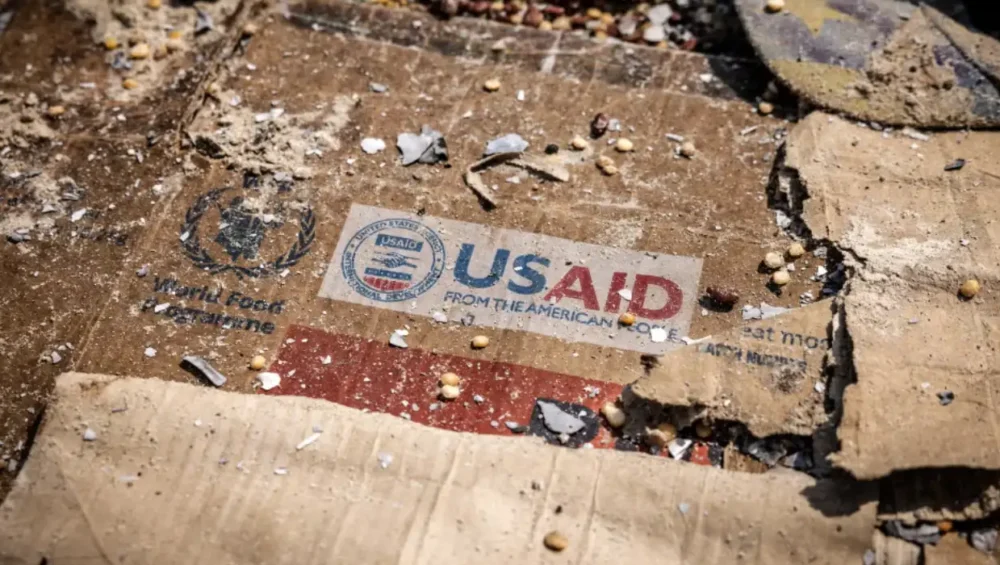
Following the reelection and inauguration of President Donald Trump in January 2025, the U.S. has made sweeping changes to its foreign aid structure. Executive Order No. 14169 was signed on January 20, 2025, which placed an immediate halt to all foreign aid programs, requiring a full review over a period of 90 days. The result was the shutdown of USAID and its integration into the State Department.
The consequences were clear by March 2025: 86 percent of USAID grants and 41 percent of State Department grants totaling about $80.5 billion were canceled. The OECD has reported that this caused a record 23 percent cut in American foreign aid in 2025, despite increasing humanitarian crises across the globe caused by wars, natural calamities, and disease outbreaks.
This strategy was portrayed by the administration as being a vital adjustment to focus on domestic concerns and reduce any wastage, but it is claimed to have reversed decades of bipartisan efforts geared toward maintaining global stability. Implementation of the strategy was marred by its hasty execution without transitional financing or any consultations, causing many aid organizations to be caught off guard. Almost half of those affected indicated experiencing budget collapse, resulting in staff retrenchments, shutting down offices and abandoning fieldwork in all corners of the globe.
Women’s Rights Associate Director at Human Rights Watch, Heather Barr, on X said,
“The US govt’s withdrawal of support from the global human rights movement was music to the ears of autocrats. The foreign aid cuts have made it harder to document human rights violations, protect communities at risk, and hold rights abusers to account.”
Human Rights Under Siege: Lives Lost and Rights Violated
The human toll of these US foreign aid cuts harms human rights globally in ways that reverberate far beyond balance sheets. Amnesty International issued a scathing report in late May 2025, warning that the
“chaotic and abrupt cuts to foreign aid put millions of lives at risk”,
emphasizing how programs supporting refugees, women, girls, and survivors of sexual violence were shuttered without notice. These cuts directly imperiled fundamental rights to life, health, and dignity, as enshrined in international law.
“US foreign aid cuts threaten human rights globally,”
Amnesty declared, calling for immediate restoration to avert a cascade of crises.
UN officials raised their alarm even further in July 2025 when they accused the U.S. administration of “fueling a global humanitarian catastrophe” because of its lack of transparency in decision-making and zero consultation with stakeholders. The UN estimates were rather gloomy, as they predicted around 100 people dying within an hour immediately after the event, with the number soaring to more than 350,000 deaths by mid-2025, with 200,000 being children under the age of five. Most of the budget cuts were for democracy, human rights, and good governance (DRGP) funding programs, where 70 percent of all the grants, totaling over 1,600 grants worth $14 billion, had been terminated in more than 120 countries.
The degradation goes beyond this sector, as highlighted in an OHCHR report dated September 2025. It destabilizes the human rights ecosystem, compromising monitoring systems, legal aid programs, and advocacy platforms globally. In areas such as sub-Saharan Africa and the Middle East, where US aid had acted as a buffer against oppression, there was a marked increase in cases of arbitrary arrests, media intimidation, and election rigging. An IDEA-hosted conference in December 2025 under the theme
“When Aid Vanishes: Consequences and Strategies for the Global Democracy Ecosystem”
provided insight into how the decline catalyzed democracy reversal.
Health Crises Amplified: From HIV to Maternal Mortality
The adverse impacts of the reduction of the US foreign aid program on human rights cannot be better demonstrated anywhere else but in public health care, where vital health care programs were instantly dismantled. Programs fighting HIV/AIDS, malaria, polio, and tuberculosis, which had been a fundamental part of the PEPFAR and Global Fund programs, were brought to an abrupt end, thus depriving millions of their medications or vaccinations. According to the United Nations Population Fund, 32 million individuals were expected to become inaccessible to reproductive health services, thereby increasing the number of deaths among pregnant women or newborn babies. The same was stated by the UNHCR regarding 12.8 million refugees.
According to projections released in a December 2025 update by analysts at the Center for Global Development, “Lives Lost from USAID Budget Cuts” would amount to 500,000 to 1 million in 2025 alone due to cuts in humanitarian aid and food aid, reaching as many as 9.4 million by 2030 if current trends continued. Food insecurity, the result of these budget cuts, sparked violent conflict among refugees due to scarcity of food. Hunger and malnutrition in countries such as Yemen, Sudan, and Haiti led to cases of child wasting being doubled within a few months.
These issues were further emphasized by the May 2026 report of the Better World Campaign, which tied aid cuts to a rise in preventable diseases and displacements. Similarly, in their briefing of July 2025, the researchers from the European Parliament found that developing nations became more vulnerable to climate change and economic volatility. “The Impact of Foreign Aid Cuts,” they concluded, was not an abstract notion but rather reflected in overcrowded hospitals and orphaned preventative measures.
Vulnerable Populations Hit Hardest
The women and girls, who formed 70% of beneficiaries in gender-targeted aid, bore the brunt of the cuts. The sexual and gender-based violence units that provided assistance, counseling, and shelter to the victims shut down, providing the militias and traffickers the opportunity to exploit them. Children were also at risk of being eliminated from society. This was due to the cancellation of the polio immunization campaign and the school feeding programs.
Geopolitical Ripples: Power Shifts and Instability
In addition to the direct pain and suffering, the cuts in American foreign aid have affected human rights worldwide by altering the geopolitical landscape. The likes of China and Russia were able to take advantage of the situation, extending their reach by way of the Belt and Road Initiative and the Wagner Group in Africa. In a study conducted by Pew Research Center in February 2025, it was found that despite being only 1% of the budget of the U.S., foreign aid carried a lot of weight in terms of soft power and allies.
Tensions escalated as money ran out on peacebuilding efforts. In the Sahel, there was no more counterterrorist training, which paralleled success by jihadists. The African nations cited doubled insurgencies according to Al Jazeera’s April 2026 report on the OECD. Increased migration stresses resulted in Europe preparing for migrants from the affected regions. At home, U.S. non-governmental organizations highlighted the irony of disappearing American jobs in aid programs amid escalating global instability.
Key Figures Paint a Dire Portrait
To quantify the devastation, consider these benchmarks integrated into the narrative fabric. The $80.5 billion slashed represented 86% of USAID’s portfolio and 41% of State’s, per detailed audits. DRGP losses alone hit $14 billion across 1,600 grants. Death tolls: 350,000+ in 2025, with 490,000 annualized from humanitarian gaps. Affected: 32 million in reproductive health, 12.8 million refugees. The 23% aid plunge in 2025 was the steepest on record.
| Impact Category | Scale of Loss | Projected Deaths |
| Humanitarian Aid | $80.5B cut | 490K/year |
| Health Programs | 32M affected | 200K children |
| Democracy Funding | $14B, 1,600 grants | N/A |
| Refugee Support | 12.8M | Included above |
International Outcry and Calls for Reversal
The calls against the global community have been relentless.
“Report: Foreign aid cuts endanger global human rights ecosystem,”
the OHCHR said in September 2025, calling on multilateral action to remedy the situation.
“Lives at Stake: Chaotic and Sudden Reductions in Foreign Aid Threaten Lives of Millions of People,”
claimed Margalida Ramis, speaking on behalf of Amnesty International. Special UN Rapporteurs condemned the United States for failing to uphold their international obligations under the UN Charter.
By May 2026, there were signs of reflection in light of the growing evidence, but not yet of rectification.
“Unless reversed, US foreign aid cuts to human rights worldwide will stain generations to come, damaging both our country’s moral high ground and our national security,”
argues the Better World Campaign among many other advocates.