
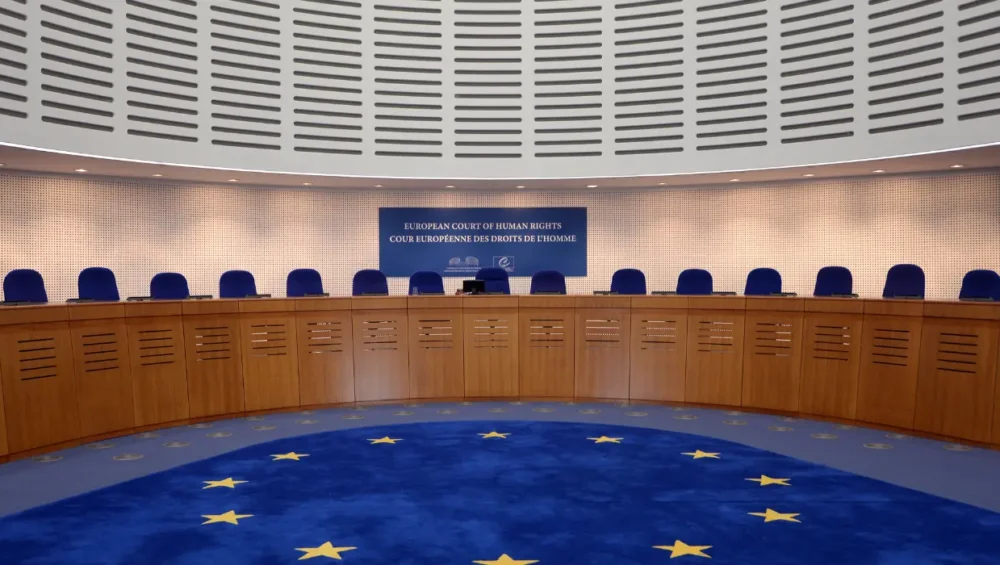
In a landmark move that reshapes the legal and political landscape of migration across the continent, the 46 member states of the Council of Europe adopted the Chisinau Declaration on May 15, 2026, fundamentally clarifying how the European Convention on Human Rights (ECHR) applies to migrants. This declaration comes amid surging anti-migration sentiment and the political rise of right-wing populist movements that have capitalized on public anxiety over border control, national security, and cultural identity.
The declaration, written while under great pressure from Italy and backed by the UK and other countries, aims at reconciling human rights requirements with state sovereignty in relation to migrants. The Declaration’s framers claim that this reinterpretation is not an abridgment of the rights in question, but merely a “clarification” that enables states to take tough action against migrant abuse without infringing upon the ECHR.
In a post on X, Jonatan Pallesen policy analyst focused on immigration/demographics, said:
“This is great news!
The Chisinau Declaration will mean that Denmark can go ahead with our plans of enacting a law that makes deportation mandatory for foreigners who get a prison sentence (Bill L180).
Previously this would be ruled as being against the human rights of the criminal foreigners. But (likely) not after the Chisinau Declaration.
Other European countries may follow suit, and we can get far more deportations of criminal foreigners.”
The Core Legal Shift: Reinterpreting Articles 3 and 8
Revised articles of the ECHR form the core of the Chisinau Declaration. They include Articles 3 and 8. The first of them guarantees no torture and inhuman and degrading treatment, while the second ensures the right to privacy and family life.
As the document reiterates, the ban against torture has an absolute character. Nonetheless, it puts forward a new strategy for evaluating the level of severity of ill-treatment in case of deportations. It emphasizes that such assessment “is relative and depends on all circumstances”. As a result, deportations may become less difficult in terms of the safety of deportees to the country of origin due to the implementation of necessary risk mitigation measures by respective states.
More significantly, the declaration reframes Article 8 to give states greater latitude. It asserts that states may expel foreigners even if it disrupts family life, so long as the action is balanced against legitimate aims such as national security or public order. Crucially, it instructs courts to require “strong or valid reasons” before overturning a state’s decision to deport.
These legal clarifications are not binding in themselves, but they are expected to guide the European Court of Human Rights (ECtHR) and national judiciaries in shaping future rulings. Legal experts warn that this could significantly reduce the number of successful asylum challenges based on family ties or fear of return.
Italy’s Model Takes Center Stage
The declaration has been largely regarded as a diplomatic win for Italy’s far-right Prime Minister Giorgia Meloni, whose administration has advocated for the divisive pact with Albania, which calls for establishing processing centers in Albania where intercepted migrants will undergo evaluation and eventual repatriation, rather than the long legal process that Italy faces in courts.
“We have championed the Italian model, and today the Council of Europe recognizes that nations are legitimate in pursuing innovative solutions like third-country repatriation hubs,”
Meloni declared following the adoption of the declaration.
The Chisinau Declaration unequivocally recognizes the value of repatriation centers in third countries, so long as those countries comply with ECHR criteria. This is a marked shift from earlier EU/Council objections to the use of processing facilities overseas as a human rights issue. The Italian system has been lauded and maligned in equal measure. Proponents claim it expedites deportations and discourages dangerous attempts to cross borders. Detractors see it as simply offloading responsibility on other nations and potentially breaching the doctrine of non-refoulement.
The Populist Pressure Cooker
It is impossible to comprehend the implementation of the declaration without taking into account its political context. Right-wing populist political parties have grown in popularity over the last two years through winning elections based on their stance against immigration. Populist political parties in France, Germany, the Netherlands, and Sweden have won seats in the government or opposition.
The mainstream political parties fear losing popularity and are forced to adopt more stringent migration policies. This declaration is meant as a counter measure to prove that compliance with human rights standards does not negate stringent migration policies.
The political calculus is evident: 27 Council of Europe nations previously issued a separate statement advocating a less restrictive interpretation of migrant rights, signaling deep internal divisions. The Chisinau Declaration represents a compromise that tries to satisfy both liberal and conservative factions within the Council.
Critics, however, argue the move is a political maneuver rather than a genuine legal clarification. They warn it could erode decades of human rights jurisprudence and embolden governments to push the boundaries of lawful deportation.
UK’s Role and Starmer’s Push for Deportation Hubs
Nevertheless, the United Kingdom continues to be part of the Council of Europe and is known to have taken a central position in supporting the declaration. The prime minister of Britain, Keir Starmer, who assumed power in 2024, has prioritized immigration reforms as one of his key priorities.
Before the declaration was passed, he had been advocating for the revision of British human rights law in order to enable the deportation of immigrants. This, according to him, would ensure that the country could exercise jurisdiction at its border due to decisions of the ECHR against deporting people to Rwanda.
“The UK has been pushing for this exact political declaration by spring 2026, so we can return illegal migrants more effectively and protect our national security,”
Starmer’s office stated in early 2025.
The declaration aligns closely with the UK’s domestic agenda, giving legal and political cover to its planned returns policy. It also sets a precedent for other European nations seeking to implement similar schemes.
Council of Europe’s Balancing Act
The Secretary General of the Council of Europe, Marija Pejčinović Burić, pointed out the politically sensitive nature of the declaration, but claimed that its adoption was imperative for updating the 75-year-old Convention. She insisted that the ECHR is the pillar of European human rights, but that states have a right to safeguard their
“national vital interests such as security”.
Burić attempted to downplay concerns about human rights erosion, stating that the declaration
“does not weaken protections but clarifies how they apply in complex migration contexts.”
However, human rights organizations remain skeptical.
A statement from Amnesty International and Human Rights Watch stated that the declaration would create a bad precedent, and that the process for evaluating torture claims as “relative,” in conjunction with broad discretion by the states under Article 8, might result in the abuse of asylum seekers’ rights.
What This Means for Migrants and Asylum Seekers
For migrants and asylum seekers, the practical implications could be profound. The declaration may:
- Accelerate deportations to countries previously deemed unsafe, if states implement advanced risk assessments.
- Reduce successful appeals based on family ties, as courts are instructed to defer to state decisions unless “strong reasons” exist.
- Expand external processing centers, increasing the number of migrants held outside EU borders while their claims are assessed.
- Create legal uncertainty for vulnerable groups, including unaccompanied minors and victims of trafficking, who may face removal despite risks.
Legal experts caution that while the declaration aims to streamline migration management, it could also undermine the spirit of the ECHR, turning it into a more flexible tool that prioritizes state interests over individual rights.
The Road Ahead: Legal Challenges and Political Fallout
Though not binding, the Chisinau Declaration carries significant political weight, but it will be up to the European Court of Human Rights to rule on just how much deference the court will give to migration policy in upcoming cases.
There is no doubt that legal challenges will follow. Immigration advocates intend to take action based on the premise that the Chisinau Declaration runs contrary to the basic tenets of the ECHR, namely non-refoulement and the right to family life. The political ramifications will be felt equally. Right-wing populist parties might use the declaration as justification for their tough policy positions, while opposition parties can accuse governments of selling out human rights in exchange for votes.