
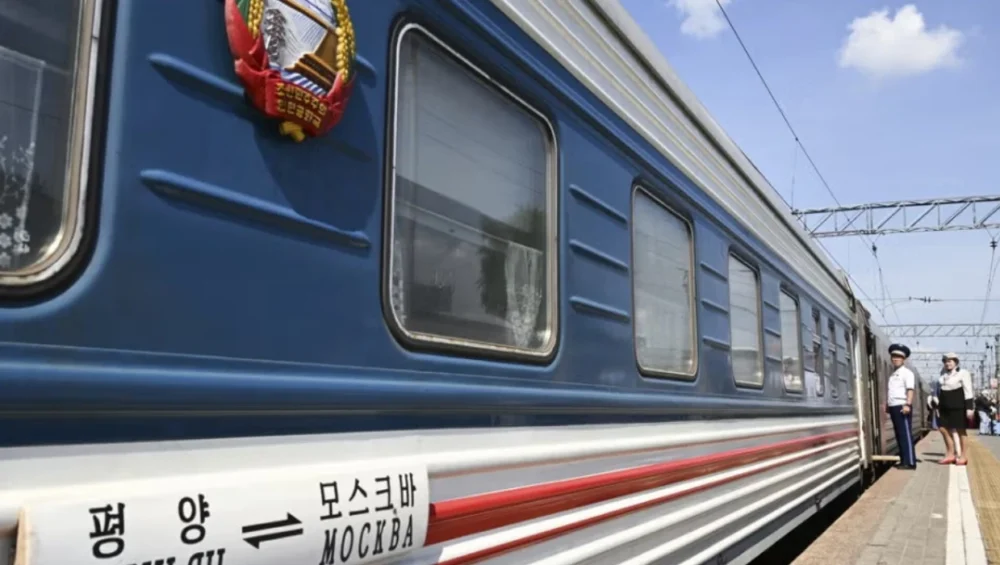
In an alarming expose, showing just how far North Korea’s human rights violations have spread around the world, a report released by Global Rights Compliance has documented the entry of North Korean labor, which is forced by the state, into EU supply chains. Published on June 4, 2026, the report reminds us that goods that are produced through such exploitation do not end up in distant Asian markets, but are brought directly into the European economic environment.
Over 100,000 North Korean individuals are thought to be working abroad, spanning 40 different nations, mostly in Russia and China. Under what human rights groups call working conditions similar to slave labor, these workers earn barely enough to afford basic sustenance costs, which go straight into the pockets of dictator Kim Jong-un as a means to finance his nuclear weapons program in the face of international sanctions against his regime.
It is found that the seafood processing factories in China that exploit the North Korean workers in a systematic manner are an important gateway through which their products enter the supply chains in Europe. This was discovered by the Outlaw Ocean Project’s investigation in 2024, showing how such goods made through forced labor find their way to customers in Europe, the US, and Canada.
The Mechanics of State-Sponsored Exploitation
The North Korean forced labor system utilizes a well-coordinated and multi-layered structure that, according to the United Nations Human Rights Office, is deeply entrenched. The workers do not consist of individuals voluntarily looking for work outside the country; rather, they are laborers employed by the regime whose movement, pay, and living standards are dictated by the North Korean Government. This coordinated process has seen the regime earn anywhere between $1.2 and $2.3 billion annually through the use of labor abroad based on a UN report from 2015.
The work environment faced by these workers is nothing less than harsh. The workers are forced to work long hours of between ten and sixteen hours daily, six days a week, in conditions where they have little to no protection from occupational risks. In the shipbuilding yards, construction sites, and agricultural farms of Poland, where it is believed that about 400 to 800 workers from North Korea are employed, the workers get only their basic needs met as most of their pay is withheld by the North Korean government.
This exploitation is not limited only to withholding of pay. The total amount earned by each of these workers per month averages at around €800, which is the total income of the worker which is paid to the DPRK government. This leaves the worker with just enough to cover his basic needs.
Europe’s Direct Connection to North Korean Labor Abuse
One of the most troubling aspects about the forced labor problem is the fact that goods made by means of forced labor have even entered European Parliament cafeterias. The supplier, who was found in the Global Rights Compliance report, was providing food products for consumption in the EU Parliament’s cafeteria. This means that those products which were produced using forced labor have been able to make their way right into the center of European politics.
Poland acts as an important link for North Korean forced labor in Europe. At least 32 firms, such as shipyards, intermediaries, and horticulture firms, that employ North Korean laborers have been discovered. In some cases, these companies have received millions of euros from European Union loans for regional development projects, thus setting up a bizarre scenario where forced labor is subsidized by European money.
Exploitation is not limited to Poland alone. North Korean laborers have been found employed in leisure and clothing firms in Malta and in other sectors in Germany, Italy, Austria, and the Netherlands.
Michael Glendinning of the European Alliance for Human Rights in North Korea highlighted the absurdity of this situation, stating,
“They are literally sending their human rights abuses to the EU and we’re tolerating it.”
The Role of Chinese Seafood Processing in Supply Chain Penetration
The Chinese seafood processing plants become a vital link in the chain of supply connecting the North Korean forced laborers to their final destination, that is, to the consumers based in Europe. According to the investigation conducted by the Outlaw Ocean Project in 2024, the North Koreans are being exploited within such processing plants as they produce the seafood meant for exportation to international markets.
Such processing centers function in an environment that was referred to by VICE in its 2024 report as an atmosphere “in which North Koreans are working themselves to death in Europe.” It is noteworthy that the money received by the laborers in such processing plants goes directly into Kim Jong-un’s pockets in form of foreign currency. Such is the reason why the seafood industry, being characterized by its complex structure including many intermediaries in the process of production and distribution, becomes an effective means of bringing in money even under sanctions.
It must be stated that forced labor products can penetrate into the supply chain in Europe through official trade channels, which are used by the distributors and importers who do not know anything about the labor situation in processing centers.
UN Condemnation and International Human Rights Responses
The international community has responded to North Korea’s forced labor system with increasing urgency and condemnation. The UN Human Rights Office, in a July 15, 2024 report, described the use of forced labor by the DPRK against its citizens as “deeply institutionalised” and raising “a broad range of serious human rights concerns.” The report characterized these practices as constituting “grave violations of human rights” that demand immediate international attention.
A further UN report in July 2024 described the “extensive, multi-layered” forced labor regime in North Korea and suggested that stringent due diligence obligations be placed on all business dealings with the DPRK. These proposals recognize the importance of screening measures to ensure that goods produced through forced labor do not become part of the global supply chain, especially the European one.
According to Human Rights Watch, the EU Forced Labor Regulation must be immediately implemented to exclude any product manufactured through forced labor from EU markets. The organization is asking the EU Commission to provide implementation guidelines for the regulation and develop a risk database that identifies the high-risk supply chains.
Michael Glendinning emphasized the urgency of this situation, noting that
“They are literally sending their human rights abuses to the EU and we’re tolerating it.”
Academic Investigations Revealing Systematic Abuse
Academic research has played a crucial role in exposing the systematic nature of North Korean forced labor in Europe. A research team headed by Leiden University Professor of Korean Studies Remco Breuker and employment lawyer Imke van Gardingen conducted extensive investigations into North Korean labor operations in Poland. Their findings revealed that companies in Poland employ North Korean forced labourers on a large scale, with some of these companies receiving support from the European Union itself.
Professor Breuker emphasized the gravity of the situation, stating,
“This is a case of forced labour in Europe and we have to put a stop to it as quickly as possible.”
The study, which remains ongoing, has identified specific companies and industries involved in this exploitation, providing concrete evidence that can inform policy responses and regulatory actions.
The academic community’s involvement has been critical in maintaining independent, evidence-based analysis of this crisis. Researchers have documented working conditions, wage structures, and the financial flows that benefit the North Korean regime, creating a comprehensive picture of how forced labor operates within European economic systems.
The EU Forced Labor Regulation and Regulatory Challenges
EU Forced Labor Regulation is an important legislative measure for tackling forced labor cases but faces major issues when it comes to implementation. The regulation bans any goods manufactured using forced labor from entering into the EU market; however, there is no effective process of enforcing this legislation at present. NGOs such as Human Rights Watch and Global Rights Compliance have called on the European Commission to issue implementation guidelines quickly.
Global Rights Compliance believes that the acknowledgment of state-imposed forced labor as a unique problem, one that will require specific measures of due diligence, is crucial for regulatory success. Specifically, Global Rights Compliance believes that any regulatory framework must acknowledge the state-sponsored labor program that operates within North Korea both domestically and abroad in order to achieve proper implementation of any screening programs.
The inherent complexity involved in the global supply chain, especially in industries such as seafood processing, represents an immense challenge for any regulatory body seeking to enforce regulations on forced labor. The involvement of several intermediary parties and numerous processing facilities, not to mention re-exportation practices, makes it very difficult to determine the origin of goods and the labor employed in the process.
Corporate Responsibility and Supply Chain Transparency
As per the Global Rights Compliance report, companies are expected to undertake stringent due diligence practices for their supply chain. Firms operating in Europe need to understand that their supply chain can be composed of products that are produced by the forced labor system of North Korea, regardless of the fact that such products seem to come from credible trade routes.
Corporate responsibility extends beyond direct suppliers to include intermediaries, distributors, and importers throughout the supply chain. The seafood industry, in particular, faces unique challenges due to its complex processing structure and multiple reexport points. Companies must implement comprehensive screening mechanisms that trace products from their origins through all stages of processing and distribution.
The discovery that forced labor products have reached EU Parliament cafeterias demonstrates that even institutions with high standards for ethical procurement can inadvertently incorporate forced labor products into their operations. This finding underscores the importance of universal supply chain transparency and the need for comprehensive screening processes across all sectors of European commerce.