
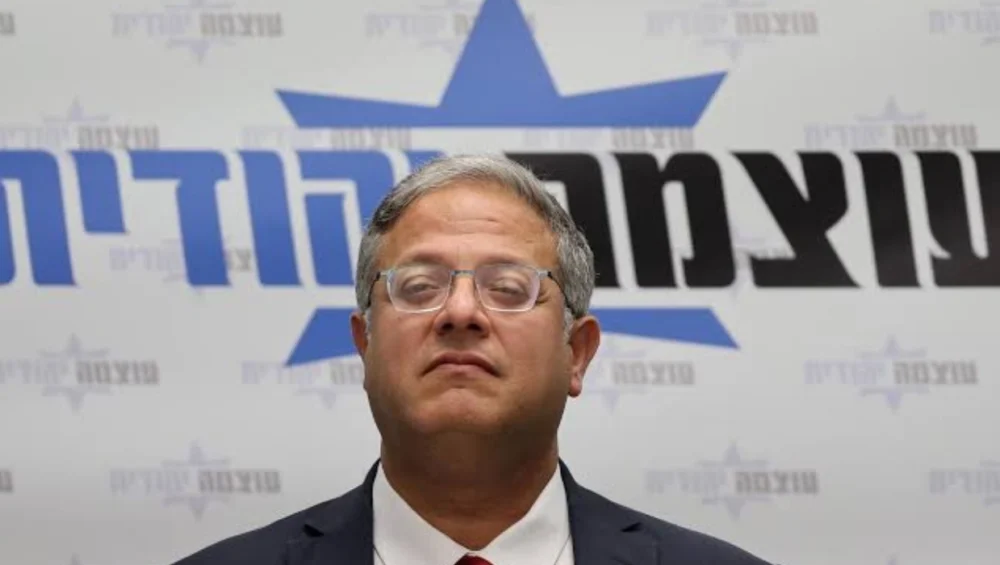
The far-right Israeli Minister of National Security, Itamar Ben-Gvir, sparked a new controversy regarding the situation in Gaza by declaring publicly his intention of carrying out a daily pre-emptive killing of many Palestinians, including those who are not a direct threat. The speech, made on a popular podcast and instantly spread via both regional and international media, exposed the existing gap between some representatives of the security cabinet of Israel and allegations of the incitement to genocide from Israeli authorities.
The statement that broke the silence
Ben‑Gvir made the comments during an interview with former Gaza hostage Rom Braslavski on the podcast “The 8 October,” recorded on August 15 and circulating widely from August 16, 2026. In that conversation, he did not couch his position in the cautious language often used by senior officials. Instead, he spelled out a routine of violence as a matter of policy.
He said:
“It’s no secret, I disagree with the prime minister. I think targeted assassinations should be carried out in Gaza, taking down 30 to 40 every night. Not just those who pose an immediate threat — there are people there who are not worthy of life. They shouldn’t live. They’re not even people,”
Itamar Ben‑Gvir told Braslavski. Other outlets paraphrased the core line as:
“We should take out 30–40 people every night… not only those who endanger us in that moment,”
Itamar Ben‑Gvir said.
The numerical specificity—“30 to 40 every night”—transformed what might otherwise have been read as rhetorical bluster into something resembling an operational quota. That framing, combined with dehumanizing language about Palestinians in Gaza, immediately drew condemnation from rights groups and regional actors who said the remarks crossed from hardline security rhetoric into incitement to mass killing.
A policy vision beyond “immediate threat”
The idea proposed by Ben-Gvir far exceeds the conventional understanding of targeted killing as provided under international humanitarian laws that stipulate that targeted killing is a justified use of force only when it is directed against persons who have posed an immediate threat to others. Itamar Ben-Gvir made his position very clear by demanding that Israelis must “kill not just those who pose an immediate threat” to others.
In the same interview, he expanded this into a broader political vision for Gaza. He said:
“I see all of Gaza as ours… settlements not just in Gush Katif but throughout Gaza, encouraging as much emigration as possible, sending them to their countries, and for the terrorists, no emigration, nothing, just to kill them one by one,”
Itamar Ben‑Gvir stated. This triangulation—mass displacement (“emigration”), expanded settlements, and systematic killing of those labeled “terrorists”—reads less like a narrow security measure and more like a blueprint for demographic and territorial transformation of the Strip.
The latter is in conflict with the publicly declared terms of the October 2025 US-backed truce, designed for the purpose of bringing down hostility and facilitating humanitarian relief efforts. In this regard, Ben-Gvir clearly made his stand against such self-restraint by disagreeing with Prime Minister Benjamin Netanyahu on reducing strikes and calling for night-time strikes.
Where this fits in Israel’s power structure
Ben‑Gvir is not a backbench provocateur; he is Israel’s National Security Minister and a member of the security cabinet that helps shape war and security policy. His portfolio gives him direct influence over internal security forces and a powerful platform in debates over the use of force. That institutional weight makes his call for
“targeted assassinations… taking down 30 to 40 every night,”
as Itamar Ben‑Gvir put it, more than a personal opinion; it is a policy bid from inside the government.
At the same time, his remarks underscore a well‑documented rift within Netanyahu’s coalition between hardline ministers who favor maximalist military pressure and a prime minister who, under international scrutiny, has at times opted for more calibrated operations. Ben‑Gvir’s explicit statement—
“I disagree with the prime minister,”
Itamar Ben‑Gvir said—frames his nightly‑killings proposal as a direct challenge to the current trajectory of Gaza policy.
Legal red lines: incitement, genocide, and war crimes
The most explosive dimension of Ben‑Gvir’s comments is how they intersect with ongoing international legal proceedings. The Gaza Rights Center (GRC) issued a statement condemning the remarks as explicit incitement to genocide and evidence of intent to displace and eradicate Palestinians. The group argued that the comments
“clearly align with the international legal definitions of incitement to genocide,”
the Gaza Rights Center said, and cited the 2024 International Court of Justice (ICJ) ruling that identified Israeli participation in genocide in Gaza.
In a January 2024 decision concerning South Africa’s case alleging genocide, the ICJ ordered Israel to prohibit and punish any incitement to commit acts of genocide and to take all necessary steps to prevent and prohibit any act falling within Article II of the Genocide Convention such as “killing members of the group and causing deliberately conditions of life calculated to bring about its physical destruction.” Subsequently, a commission of inquiry appointed by the UN found in 2025 that there were reasonable grounds to believe that Israel had committed genocide in Gaza because of systematic killings, serious bodily or mental harm and conditions of life calculated to bring about the physical destruction of the population. Under these circumstances, GRC asked the International Criminal Court (ICC) to include Ben-Gvir’s statements in their investigation of war crimes in Palestine as they prove genocidal intent behind the actions committed by Israel in Gaza.
The ICC has already issued an arrest warrant for Prime Minister Benjamin Netanyahu and former Defence Minister Yoav Gallant for war crimes and crimes against humanity committed in Gaza, including starvation as a means of warfare. More recently, the ICC prosecutor Karim Khan requested arrest warrants for more Israeli officials, including ministers Itamar Ben-Gvir and Bezalel Smotrich from far-right wing. However, the ICC prosecutor has been subsequently suspended and dismissed by the member states in a political process.
Whether or not a specific warrant is issued for Ben‑Gvir, his public advocacy of a nightly killing quota and his description of Palestinians as
“not worthy of life… They’re not even people,”
as Itamar Ben‑Gvir said, feed directly into the evidentiary record on intent that courts and UN bodies have been assembling.
Regional and international reactions
These statements were roundly condemned even beyond the scope of human rights organizations. Iran expressed its anger, with a high-ranking Iranian diplomat condemning Ben-Gvir’s call for a “Gaza assassination quota.” In the Palestinian and wider regional media, the story was reported as evidence of an official Israeli policy approach towards mass murder and forced expulsion. Some Israeli and international media outlets portrayed the statements as part of a broader trend of efforts to make life “intolerably difficult” for Palestinians in Gaza, including forced expulsion and military operations on a massive scale. The image that was created was not one of a single politician’s rhetoric, but rather that of a government faction willing to consider demographic manipulation and force as instruments of policy.
The ceasefire context and ongoing violations
Ben‑Gvir’s call cannot be separated from the fragile ceasefire architecture that has governed Gaza since late 2025. The October 2025 US‑backed deal was designed to reduce hostilities, yet multiple reports indicate that Israeli strikes have continued in ways that violate aspects of that arrangement. Ben‑Gvir leveraged that reality to argue that the current pace of operations is too restrained, not too aggressive.
He criticized what he described as a slowdown or scaling back of Israeli strikes under the ceasefire and argued instead for renewed, nightly targeted killings that would not be limited to those posing an immediate threat. In effect, he used the podcast to press for a shift from a contested ceasefire regime to a normalized routine of pre‑emptive assassination—30 to 40 killings every night, indefinitely.
Why this matters for Gaza’s future
At its core, Ben‑Gvir’s proposal is a bid to redefine the endgame in Gaza. Rather than a conflict with a defined military objective and a political horizon, his vision points toward a permanent security regime built on routine killing, mass displacement, and expanded settlements. That is not merely a tactical escalation; it is a strategic reorientation that would lock in a cycle of violence and dispossession with few off‑ramps.
His statement—
“We should take out 30–40 people every night… not only those who endanger us in that moment,”
Itamar Ben‑Gvir said—encapsulates a doctrine where the default is lethal force and the exception is restraint. Coupled with his call for settlements “throughout Gaza” and mass “emigration,” as Itamar Ben‑Gvir put it, the remarks sketch a future in which Gaza is less a territory with a Palestinian population and more a security zone to be managed through killing and removal.
For international law, the implications are just as clear. The ICJ has already required Israel to stop and punish the instigation of genocide and the acts which may constitute genocide. The UN organizations have found sufficient basis to conclude that genocide was committed. When a government minister talks about a nightly quota of killings and dehumanization of the victims, it moves from being an abstraction of international law to concrete policy.
The political stakes inside Israel
At home, Ben-Gvir’s statements push Netanyahu’s coalition strategy to the edge. Netanyahu has successfully managed to handle immense international pressure, ranging from ICC arrest warrants to ICJ directives, by positioning himself as a responsible custodian of a hard war. But Ben-Gvir’s clear dissent from the prime minister’s line of thinking — “I disagree with the prime minister,” Itamar Ben-Gvir said — weakens Netanyahu’s claim to being a responsible custodian because there is an internal faction in his government that does not accept restraint at all. Netanyahu will face a political dilemma if he tries to silence Ben-Gvir’s statements. If he lets them pass through, he risks further reinforcing the message that Israel’s top leadership has people who think about genocidal policies.
What comes next
For the time being, look out for pressure from rights NGOs on the ICC and various UN organs to interpret Ben-Gvir’s statement as proof of incitement to genocide. On the regional level, his words will be used to push for additional sanctions, an arms embargo, and other actions in accordance with the Genocide Convention. Within Israel, the discussion will focus on whether the government implicitly normalizes the practice of nightly assassinations as state policy or distances itself from the most extreme parts of Ben-Gvir’s statement.
The one thing that is certain is that the boundary between security policy and large-scale violence has been publicly erased at the topmost governmental level. When a minister states that Israel “should kill 30 or 40 Palestinians per night,” in the words of Itamar Ben-Gvir, and goes on to say that some Palestinians “are not worthy of life,” then he is not just proposing a strategy but espousing a particular ideology. Whether Israel and its allies and the international judiciary react to such an ideology will go a long way towards deciding what the future of Gaza will look like.