
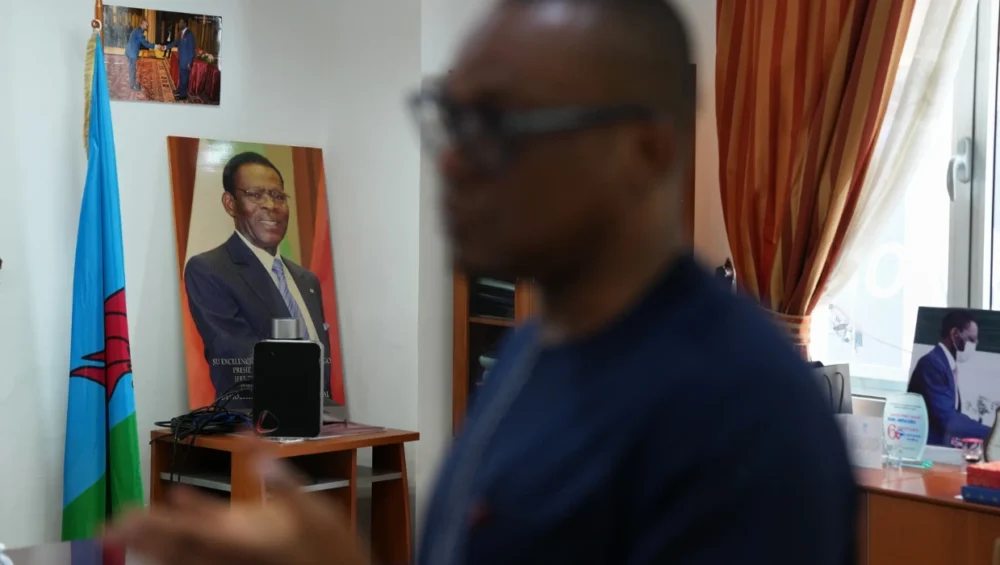
An extremely controversial agreement between the U.S. and Equatorial Guinea is being harshly criticized by many international human rights watchdogs, as deportation to a country with high possibilities of being persecuted, tortured, and even killed seems to be happening. A multi-million dollar third-country agreement was found out through an investigation and legal filing, causing many African immigrants to be either trapped or deported back to their home country, where they were previously deemed unsafe by U.S. immigration courts.
It is no exaggeration to say that this issue has become a milestone case in front of Africa’s highest human rights tribunal. According to human rights lawyers, such an agreement contravenes the basic principles of non-refoulement. Non-refoulement involves the prohibition of forcibly returning an individual to a location where his/her life or freedom might be endangered.
UN Experts Issue Rare Public Appeal
UN human rights officials, in an unusual intervention, have appealed to Equatorial Guinea to stop its plans to send American deportees back to their home countries. This comes at a time when accounts by deportees tell of “prison-like” conditions in detention camps, among others.
“Human rights experts make a rare public appeal as US deportees describe being held in ‘prison-like’ conditions,”
stated The Guardian, which first reported on the UN’s urgent concern.
The involvement of the UN demonstrates that what we now have is an international human rights matter rather than a matter of regional enforcement. The concerns of the UN specialists are very practical, having come about on the basis of instances where even people who had their applications for asylum rejected have received protection from being deported due to the U.S. breaking the terms of the Convention Against Torture if the individual was returned to his home country.
The Trump Administration’s Role in the Deal
Deportation deals were reached under the Trump administration and formed part of a plan to open up additional channels for deporting people to third countries. Through this deal, the U.S. government gave Equatorial Guinea millions of dollars to take migrants who have no familial, cultural, or historical links to the country.
“Secretive deal leaves deportees from the US stuck in Equatorial Guinea with ‘no more hope’”
reported the Associated Press, detailing how asylum seekers who had been legally protected from return to their home countries were nonetheless transferred to Equatorial Guinea before being pushed onward destinations.
One 28-year-old refugee from East Africa, whose asylum was denied but who was legally protected from deportation due to danger at home, recounted the betrayal:
“He told me: ‘Welcome to the US,’”
the refugee told the AP, describing the moment an immigration judge said he could leave detention after 13 months—only to be flown to Equatorial Guinea and stranded.
The deal bypassed the intent of U.S. asylum law, which is designed to prevent harm, not redirect it through third countries with weak human rights protections.
Rights Lawyers File Landmark Case Before African Commission
A suit was filed against the state of Equatorial Guinea in June 2026 before the African Commission on Human and Peoples’ Rights regarding alleged violation of international human rights laws. This is in relation to its repatriation of US deportees that may be persecuted in their respective native countries.
This case pertains to 14 African immigrants that were deported from the United States during the period of November 2025 to April 2026. This could set a precedence for future actions concerning how African states will deal with US deportees.
The filing asks the Commission to:
- Order Equatorial Guinea to halt all deportations of US deportees
- Improve detention conditions for those currently held
- Provide compensation to individuals already returned to danger zones
“Advocates call this a landmark case that could pressure African governments accepting U.S. deportees,”
noted the Atlanta Journal-Constitution in its coverage of the filing.
The case is much more than an issue of accountability. Rather, the complaint indicates that some of the deportees have been forced to relocate to places where there may be threats of being persecuted politically, violently targeted because of their ethnicity, or even prosecuted on account of their sexual preference or religion.
Prison-Like Conditions in Equatorial Guinea Detention Centers
Reports from deportees and rights groups describe alarming conditions in Equatorial Guinea’s detention facilities. Individuals are reportedly held without access to legal representation, adequate food, or medical care. Some say they are detained in overcrowded cells with little ventilation and no recourse to challenge their onward transfer.
“Accounts are emerging from people deported from the U.S. to the African petrostate of Equatorial Guinea in a multi-million-dollar, third-country deal with the Trump administration,”
wrote the AP, highlighting the secrecy and lack of oversight surrounding the arrangement.
Similar stories were also featured in The Boston Globe and The Seattle Times, further establishing the credibility of these allegations. Deportees claim that they are all alone with no embassy assistance, no legal status, and no means to return safely.
The regime of Equatorial Guinea, under President Teodoro Obiang Nguema Mbasogo who has been in power since 1979, is characterized by authoritarian rule and a lack of respect for human rights. In a climate of political suppression, migrants are exposed and vulnerable to human rights abuses.
The Legal and Ethical Breach of Non-Refoulement
What is most central to the violation of human rights in this case is the prohibition against refoulement—a key aspect of international refugee and human rights law. The principle states that countries are not allowed to deport a person back into a country where he or she faces danger of being persecuted, tortured, or harmed in any way.
The U.S., while agreeing to the principle in immigration court judgments by allowing such people some relief from deportation, has been violating its own standards by moving these people to Equatorial Guinea, which moves them to even more dangerous destinations.
EG Justice, an advocacy group focused on Equatorial Guinea, raised the alarm early:
“The U.S government and Equatorial Guinea appear to rapidly advance an agreement to receive deportees with no ties to the country,”
EG Justice stated in October 2025, warning of the human rights implications before the full scale of the deal became public.
This circumvention of due process and protection mechanisms undermines the integrity of asylum systems globally. It sets a dangerous precedent that other countries may follow, turning third-country deals into loopholes for evading international obligations.
US Deportees Face Persecution Upon Return
The individuals affected by this deal come from diverse backgrounds, but many share a common thread: they fled countries where their lives were in danger. Some escaped political repression in Ethiopia, Eritrea, or Sudan. Others fled violence tied to their sexual orientation in Cameroon or Nigeria. A few were targeted for their religious beliefs or activism.
When returned to these countries, they face:
- Arrest and imprisonment without trial
- Torture by state or non-state actors
- Extrajudicial killing
- Social ostracization and family rejection
In many of these countries, there is no independent judiciary, no free press, and no effective mechanism to seek protection. Once returned, these individuals are often vanished into the system, with no way to contact lawyers, family, or advocacy groups.
“The filing asks the African Commission on Human and Peoples’ Rights to order Equatorial Guinea to halt deportations and improve detention conditions,”
reported the US News & World Report, underscoring the urgency of the legal action.
Advocates Call for Transparency and Accountability
Human rights organizations are pressing for complete disclosure regarding the terms of the agreement between the United States and Equatorial Guinea, particularly the total payment made, number of deportees included, and the basis for selection. At present, there is very little transparency regarding the agreement, with no Congressional or judicial oversight.
“It also seeks compensation for those already returned,”
the AJC noted in its coverage, emphasizing that justice must include remedies for those already harmed.
Advocates are also calling for an independent investigation into the conditions in Equatorial Guinea’s detention centers and the onward transfer process. They argue that without accountability, the deal will continue unchecked, endangering more lives.
A Test for US–Africa Relations and Human Rights Policy
The controversy leaves the US government in an awkward position, as it neither supports the agreement nor cancels it. If the US distances itself from the agreement, it will leave itself open to lawsuits; however, allowing deportation under this agreement poses another set of problems.
This issue also highlights challenges in the relationship between the United States and Africa. Most African countries feel threatened by the idea that they might be treated as dumping grounds for deportees.
What Comes Next?
The African Commission on Human and People’s Rights now wields the power to make binding recommendations or send the case to the African Court on Human and People’s Rights. In case of a ruling against Equatorial Guinea, the decision could compel Equatorial Guinea to stop deporting detainees, improve their conditions in detention centers, and pay damages.
However, deportation flights can still be carried out without any judicial intervention. Human rights organizations are appealing to the Congress to allocate funding for oversight measures and prevent future agreements with third parties that violate human rights standards.
For the deportees, time is running out. Each day spent in limbo or returned to danger brings them closer to irreversible harm. As one advocate put it:
“Advocates call this a landmark case that could pressure African governments accepting U.S. deportees,”
the AJC reported, capturing the stakes not just for these 14 individuals, but for the future of migration policy across the continent.