
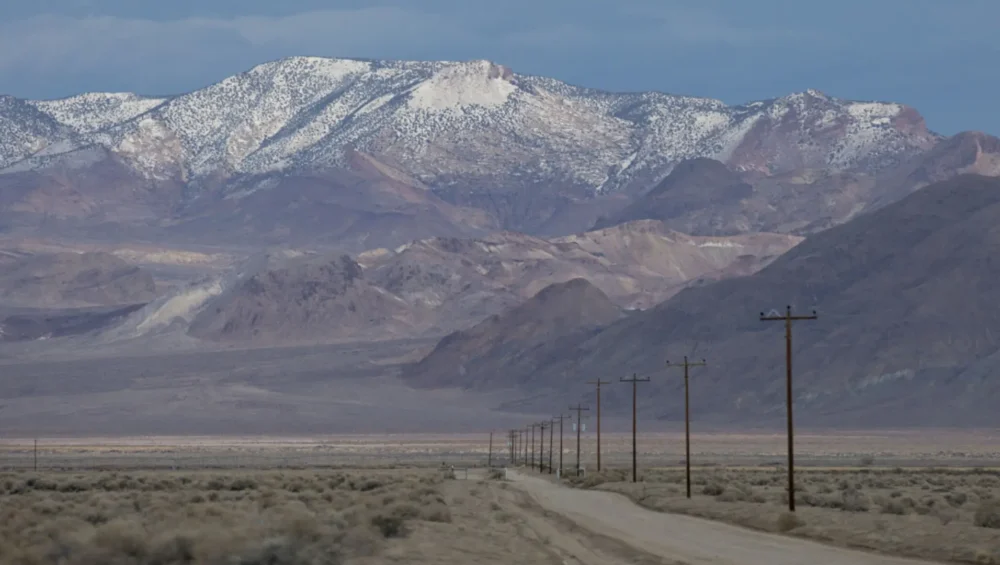
Nevada’s vast lithium deposits, touted as a cornerstone of America’s clean energy future, are igniting a fierce clash over Indigenous rights. The rapid expansion of mining operations, particularly at Thacker Pass, has drawn sharp criticism from human rights organizations accusing the US government of sidelining Free, Prior, and Informed Consent (FPIC) standards.
This breach, detailed in a pivotal February 2025 report by Human Rights Watch (HRW) and the American Civil Liberties Union (ACLU), underscores a troubling disconnect between national energy ambitions and international human rights obligations. As President Donald Trump’s administration pushes for domestic critical minerals to secure electric vehicle battery supply chains, Indigenous communities like the Numu/Nuwu (Northern Paiute) and Newe (Western Shoshone) peoples face existential threats to their sacred sites, water sources, and cultural survival.
Thacker Pass: Epicenter of the Conflict
At the heart of this controversy lies Thacker Pass, a sprawling lithium project in northern Nevada approved by the Bureau of Land Management (BLM). Spanning federal lands revered by Indigenous groups as Peehee Mu’huh—”the land of our people, forever”—the mine operated by Lithium Americas blocks vital access routes for ceremonies, hunting, and gathering.
The ACLU-HRW report, titled
“The Land of Our People, Forever,”
meticulously documents how construction has physically severed tribes from these ancestral grounds, eroding practices integral to their identity.
“US mining laws disregard Indigenous rights; agencies must align with FPIC standards,”
stated HRW researcher Abbey Koenning-Rutherford, encapsulating the frustration of communities long marginalized by resource extraction.
The size of the project only exacerbates these tensions. Thacker Pass is expected to produce sufficient amounts of lithium for the batteries in millions of electric vehicles each year, thus making Nevada a leading country in the extraction of this vital mineral for the transition into renewable energy sources. Nevertheless, this gain brings a great price.
According to the representatives of the indigenous population, the BLM hurriedly issued the permits without proper consultations, thus disregarding the requirements of Article 32 of UNDRIP that insists on the requirement of FPIC for any project built in the indigenous territories. Although American law demands consultations from the tribes during project approval through the National Historic Preservation Act and National Environmental Policy Act, it provides no authority to use the veto right.
Developments parallel to those of the Ioneer Rhyolite Ridge mine project further complicate the situation. In addition to the concerns raised by Western Shoshone activists, other opponents such as ranchers and environmental groups have sued for breach of the Endangered Species Act due to possible dangers to tiehm’s buckwheat. Although the case brought forth against Rhyolite Ridge in March 2026 cleared environmental hurdles, this does not mean that environmental dangers will cease to exist. There is more at stake than just these two projects, with over 54% of US mines in Nevada located on tribal land.
Human Rights Breaches and FPIC Shortfalls
The principle of Free, Prior, and Informed Consent as per international laws requires Indigenous groups to give prior consent for any development activity affecting them. In the case of Nevada, the policies of the BLM have been criticized for their tokenism. The 133-page Amnesty International/Human Rights Watch report shows how hastily performed environmental impact assessments and disregard for the tribal knowledge about the region contribute to the problem at hand. For the Numu and Newe tribes, Peehee Mu’huh is not just land; it is a repository of massacres, springs of healing, and rebirth of spirituality.
HRW’s analysis extends to broader US policy failures. Despite ratifying UNDRIP in principle, federal agencies prioritize economic imperatives, echoing colonial-era land grabs.
“The US government is breaching international human rights standards by moving ahead with a series of new lithium mines across Nevada without the Free, Prior and Informed Consent of affected Indigenous Peoples,”
the report asserts, highlighting threats to culture, health, water, and environment. Tribes report heightened fears of gender-based violence from incoming transient workers, a pattern seen in other extractive zones where Indigenous women and Two-Spirit individuals bear disproportionate risks.
Legal precedents highlight the difficulty of the fight. A case against the BLM’s decision for Thacker Pass approval in 2020 claimed procedural errors, but the judicial system deferred to the agency’s technical knowledge. In 2025, even after investing $250 million, the Native Americans were deeply frustrated, as was highlighted by Indigenous Corporate Training in its media reports.
Environmental and Health Catastrophes Looming
The lithium mining process uses water, a serious issue in the dry region of Nevada. Thacker Pass may extract large amounts of groundwater resources, leading to the depletion and potential contamination of the aquifers due to chemicals used in the refining process. There is an existing precedent of adverse health effects in Nevada due to past mining activities. Communities have high levels of cancer caused by toxins in the air and tailings.
Emissions of greenhouse gases from mining activities add to the lack of legitimacy of the label “clean.” Large amounts of earth-moving machinery and power production on-site can result in pollution that rivals what is produced by coal-fired electricity generators. Indigenous peoples have pointed out that this is greenwashing, that a lithium rush is taking place while providing climate change solutions that cause local ecocide.
The repercussions of this extend further than just water. Noise, light pollution, and the limiting of their ability to hunt affects their diets, contributing to diabetes and psychological epidemics among disadvantaged indigenous communities. The arrival of so many people stresses resources, leading to boomtown dynamics that have seen increases in drug and alcohol abuse, as well as violence. Far from mere speculation, previous Nevada rushes into mining gold and silver have led to poisoned rivers and ghost towns.
Economic Stakes Versus Cultural Imperative
Lithium is said to be critical for energy security in the US after 2024 if Trump wins the presidential race, as his administration prefers sourcing from within the country. With lithium deposits in Nevada meeting about 25% of the world’s demand, lithium companies such as Tesla would benefit. The investments have been increasing, with Thacker Pass obtaining loans from the government through the Inflation Reduction Act. However, the story overlooks indigenous sovereignty.
CounterVortex and Business & Human Rights Resource Centre tracked the saga, noting stalled progress amid protests. A February 2025 A News article amplified global outrage, framing Nevada as a litmus test for equitable mining. Tribes demand revenue sharing and veto rights, arguing economic trickle-down benefits few while devastation is widespread.
Broader Implications for Global Supply Chains
The unrest in Nevada is reflective of the world’s lithium conundrums, ranging from the Atacama salt flat region in Chile to indigenous claims in Australia. With demand expected to rise to four times its current level by 2030, according to projections from the International Energy Agency, the US may be guilty of hypocrisy regarding international human rights violations.
Indigenous activists shift tactics to direct action: prayer camps, roadblocks, and international lobbying. The ACLU calls for legislative change, such as mandating FPIC in permitting processes. Otherwise, Nevada’s lithium rush could end up as an example of lost rights for batteries.
By May 2026, as mines expand, the situation becomes urgent.
“Endangering their culture, health, water, and environment,”
as stated in the original news release, captures the essence of the issue. For Numu and Newe communities, the future of Peehee Mu’huh represents the challenge to see if America’s green energy transition respects the original guardians of its lands.