
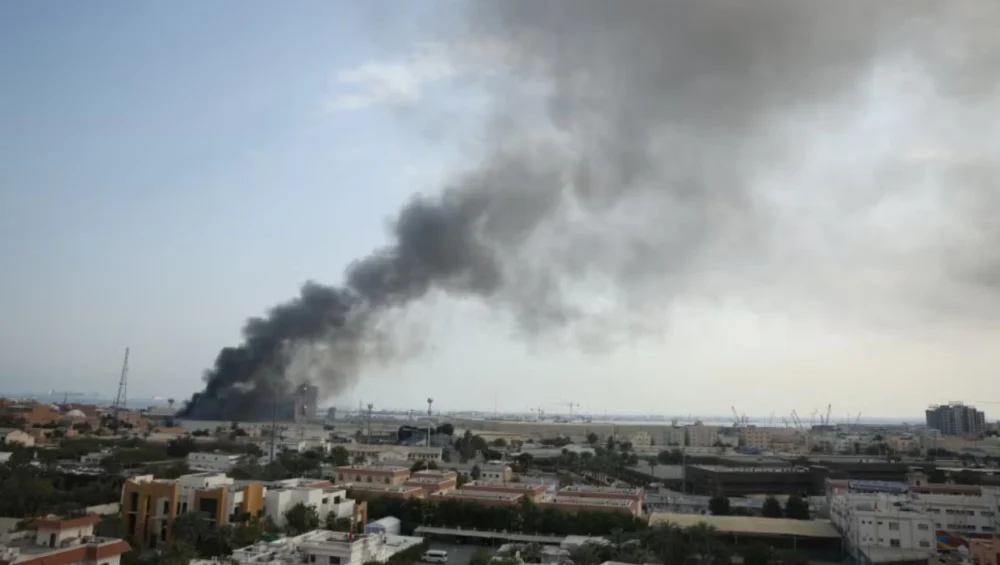
This is a glaring example of inequality embedded in the system as migrant workers in Bahrain suffer the impact of regional conflict without being able to access any emergency assistance. According to Human Rights Watch (HRW), migrant workers were denied emergency wage compensation when the conflict erupted with Iran, making thousands of workers vulnerable without any emergency financial assistance despite receiving delayed payments and high living costs.
This demonstrates that migrant workers continue to suffer the impact of a structural vulnerability within Bahrain’s labor system, since these migrants continue to be left out of the social net during times of national crisis.
The Emergency Wage Support Program and Its Blind Spot
As part of its emergency wage support scheme to mitigate the effects of the Iran conflict on the economy, Bahrain included in its plans to cushion its citizens, as well as some other residents, against the economic impacts of the war between the two nations. However, HRW found out that migrants were deliberately not included in the scheme. It is important to note that migrant workers play a crucial role in Bahrain’s economy. These people have been making contributions through their payroll deductions to Bahrain’s social security system for a long time now.
“Bahraini authorities have excluded migrant workers from an emergency wage support program during the Iran conflict,”
said a Human Rights Watch researcher who documented the policy’s impact on migrant communities.
The program’s design effectively created a two-tiered system of emergency relief: one for nationals and select residents, and another—nonexistent—system for migrant workers who face identical economic pressures but receive no official support.
Human Toll: Testimonies from the Front Lines
The human cost of this policy exclusion is measured in lost wages, delayed payments, and families struggling to survive. HRW collected testimony from migrant workers across multiple sectors, including construction, hospitality, and service industries.
One Nepali worker described the cascading effects of the conflict on his livelihood:
“I lost hours and pay because the car rental company, which relies on tourism, cut back during the crisis.”
This testimony illustrates how regional geopolitical tensions directly impacted individual workers’ survival.
Another migrant worker recounted the compounded stress of wage delays and rising living costs:
“My family depends on my remittances, but now I cannot even pay my rent in Bahrain, let alone send money home.”
The above experiences shed light on the interrelationship between economic fragility and geo-political instability. It is even worse for the family members of those who have lost their lives or been severely affected due to the conflict, since HRW cites examples of relatives not receiving any assistance or compensation at all.
Migrant Workers: The Backbone of Bahrain’s Economy
Migrant workers form a large part of the labor force of the private sector in Bahrain, contributing significantly to sectors such as construction, healthcare, domestic help, and services. Excluding migrant workers from relief efforts in times of emergency is both a humanitarian mistake and an economic one.
Economic reasoning for emergency wage support is to ensure spending among consumers, avoid mass unemployment, and stabilize essential sectors. The exclusion of migrant workers from such a scheme defeats its purpose, because millions of rands worth of economic transactions are lost when the employees are not able to meet even the most basic needs.
From historical records, the migrant workers in Bahrain have been contributing to the social security scheme through deductions from their earnings. This emergency wage scheme seems to be running parallel to the social security fund.
Historical Context: Long-Standing Protection Gaps
This crisis is not an isolated incident but rather the latest manifestation of systemic issues documented in HRW’s extensive reporting on migrant worker rights in Bahrain. A landmark 2012 HRW report titled
“For a Better Life: Migrant Worker Abuse in Bahrain and the Government Reform Agenda”
documented widespread abuse and exploitation, calling for comprehensive labor safeguards and redress mechanisms.
That report highlighted that
“Bahraini authorities need to implement labor safeguards and redress mechanisms already in place and prosecute abusive employers,”
yet more than a decade later, similar gaps persist in emergency relief policies.
HRW’s follow-up materials continue to emphasize the need for migrant workers to have access to basic protections, including wage protection, social security, and non-discriminatory access to public services. The current emergency wage support exclusion represents a regression in progress, not a continuation of reform.
Advocacy Groups Raise Alarm Over Discriminatory Policies
Apart from HRW, there have been other migrant worker rights advocacy groups watching carefully the policy development of the Kingdom of Bahrain. According to the advocacy groups, the Kingdom of Bahrain planned to introduce discriminatory policies against migrants in January 2024.
Some of the policies being suggested include changes in residency requirements, end of service benefits, and labor disputes. Although some of the reforms are seen as efforts towards modernization, there are concerns that they may worsen the vulnerability of migrant workers during economic downturns.
“The current trend shows a pattern of policies that disadvantage migrant workers at critical moments,”
said a representative from a migrant rights advocacy group monitoring Bahrain’s policy landscape.
The exemption of the emergency wage support from the trend seems to be in line with this larger phenomenon, indicating that it is not an aberration, but instead shows that policy-making has consistently favored nationals over migrants in resource distribution.
Economic Implications of Exclusion
This exclusion has broader ramifications on the economic well-being of Bahrain. The inability of workers to access basic necessities results in low consumption levels, which adversely affects business operations in various sectors. Small businesses that depend on migrant workers as consumers also experience lower profits, resulting in an economic downturn.
Finally, the policy hampers Bahrain’s image as a business center in the region. Investors from abroad now take into consideration the treatment of migrant workers when deciding whether or not to invest in their companies.
The social security system in Bahrain, which includes migrant worker contributions, was designed to provide protection during economic hardship. However, the emergency wage support program operates as a separate mechanism, creating a gap where workers who have paid into the system receive no benefits during crises.
HRW’s Call to Action
Human Rights Watch has made an unequivocal appeal for the government of Bahrain. The organization asks the government to provide emergency and social assistance to foreign workers without discrimination in times of crisis. It must be ensured that foreign laborers receive relief through relief schemes regardless of their nationality.
HRW’s recommendations include:
- Immediate inclusion of migrant workers in emergency wage support programs
- Implementation of labor safeguards and redress mechanisms already in place
- Prosecution of abusive employers who exploit workers during crises
- Comprehensive review of social protection policies to eliminate discriminatory gaps
“Bahraini authorities need to implement labor safeguards and redress mechanisms already in place,”
HRW stated in its report, echoing demands made in earlier investigations more than a decade ago.
International Pressure and Accountability
The international community has shown growing concern with regard to the rights of migrant workers in the Gulf region, especially after several incidents where conditions in some key construction projects were made public. Exclusion of migrant workers from the relief program in Bahrain may come under international scrutiny, particularly from human rights groups and international labor organizations.
There are also questions regarding whether Bahrain is in line with international standards for human rights and labor practices. The International Labor Organization has developed conventions regarding the rights of migrant workers that Bahrain has ratified.
Reform or Continued Exclusion?
As the situation in the region keeps evolving, one wonders whether Bahrain will be forced to change its emergency response plans regarding migrant workers, or it will continue excluding them in an attempt to preserve their status quo. Both the financial burden and human suffering that exclusion entails are rising, and political pressure exerted by NGOs is increasing.
How this conflict ends will decide how Bahrain handles migrant worker rights in the future. If the current situation persists, the divide between Bahrain nationals and migrant workers will deepen even more, posing even greater risks in terms of social and economic stability in the future. However, if changes are made to existing regulations, Bahrain can establish itself as a good example for the entire Gulf.
The voices of migrant workers themselves—documented in HRW’s testimony—will be crucial in shaping the policy response. Their experiences highlight the human cost of exclusion and the urgent need for change.
A Systemic Failure Requiring Systemic Solutions
The issue faced by the migrant workers in Bahrain cannot be said to be an isolated one because it reveals much deeper problems that exist within the country’s employment system. Migrant workers being denied wage compensation during the Iran conflict is yet another step in the long line of failures of protective services provided to migrant workers in Bahrain.
In order to resolve this crisis, there needs to be thorough changes made to the systems in place to provide social security, protection, and emergency wage payments to workers, regardless of their nationality. There should be a combined effort made by the international community and Bahrain’s own government to make these necessary changes.
The test for Bahrain will be whether it chooses to prioritize economic efficiency and human rights over discriminatory policy choices that harm vulnerable populations and undermine its own economic interests. The answer to this question will define the country’s labor rights trajectory for years to come.