
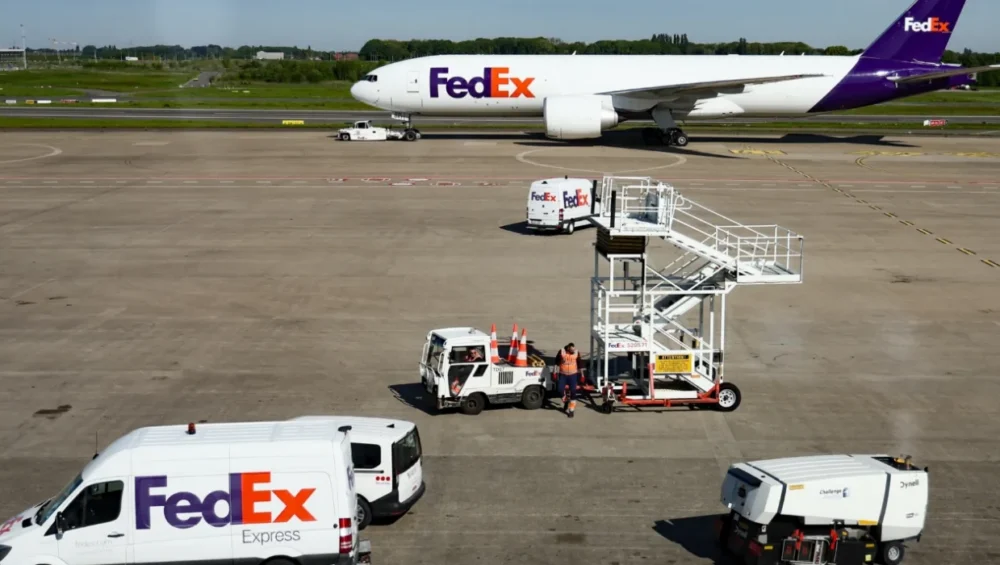
Taking an audacious step where human rights and business ethics come together, Amnesty International is now part of a criminal case filed against FedEx Belgium for aiding and abetting the illegal shipment of weapons, including parts of F-35 fighter jets, to Israel via Belgium. This development signifies the beginning of a serious legal action against multinational companies over their involvement in military supply chain operations.
The complaint focuses on a consignment that is said to have left Hill Air Force Base in Utah in October 2024, passed through Liège Airport in Belgium, and finally arrived at Nevatim Air Base in Israel. According to civil society organizations, the consignment had to go through the U.S. International Traffic in Arms Regulations (ITAR) laws of the United States, but it seems to have been shipped into Europe in an unregulated manner. The path taken by the consignment reveals some weaknesses in the law and its enforcement.
The participation of Amnesty International ensures that there is worldwide focus on the legal and ethical implications of the transport of arms through Europe in view of the continuing Israeli military operation in Gaza. It is important to note that Amnesty sees the complaint against KLM and Lufthansa Airlines within the wider scope of demanding an arms embargo against Israel.
The Legal Core: Alleged Violations of Licensing and International Law
The charge made against FedEx Belgium includes the illegal involvement of the firm in the transportation of military parts to Israel, and thus violating laws in Belgium and regional regulations on arms shipments. The charge involves the licensing process in the Walloon region concerning exports and transit of defense-related goods out of the Liege region.
According to critics, there were no licenses obtained before moving the goods, as required, in line with export regulations. Additionally, the nature of the goods was such that there was a need for greater control of them because they were regarded as ITAR-controlled items. These charges call for an investigation of the procedures involved in the movement of military equipment in Europe.
Amnesty International underscores that under international law, states have a duty to prevent arms transfers that could facilitate serious violations of humanitarian law. The organization cites the Arms Trade Treaty and related legal frameworks, emphasizing that countries must assess the risk that exported or transited arms will be used in atrocities. In this context, Amnesty argues that Belgium may have failed in its obligations by allowing the transit to proceed unchecked.
FedEx’s Stance: Compliance, Screening, and Denial of Weapon Shipments
FedEx has reacted strongly against the charges, asserting that it obeys all rules and laws and that it does not deliver weapons or ammunition to any other country. FedEx stresses that it has stringent screening measures aimed at ensuring that only permitted goods, including no military supplies, are shipped through the company’s network worldwide.
“FedEx complies with all applicable laws and regulations. We do not ship weapons or ammunition internationally, and we have strict screening procedures in place to prevent such shipments,”
FedEx stated in response to the complaints across multiple jurisdictions.
This approach by the logistics firm fits into a larger story in the corporate world where international shipments with many different legs are not easy to track in real time; yet, there are stringent internal measures to ensure there is no violation of regulations. But, the criticism against the Liège case is based on the fact that there was a loophole in these measures.
Amnesty’s Broader Campaign: From Investigation to Embargo Advocacy
The involvement of Amnesty International in filing the complaint against the logistics company FedEx does not happen in isolation; rather, it is part of a broader effort by Amnesty International to uncover and prevent any arms trafficking associated with the Israeli military activities in Gaza. For over a year now, Amnesty International has released reports detailing the arms shipments to Israel from various nations, including America.
For years, the organization has called for a complete ban on arms supplies to Israel since it believes that the continuous transfer of weaponry and dual-use technology poses a very high probability of violating humanitarian law. Amnesty International holds that all state parties should stop the transfer of any armaments to Israel if there is any possibility that they would commit a breach of humanitarian law.
This legal filing amplifies that message by attaching concrete allegations to a specific corporate actor. Amnesty’s involvement signals that human rights NGOs are increasingly willing to use litigation and public pressure to target not only governments but also the private companies that enable military supply chains.
The F-35 Parts Allegation: Why Fighter Jet Components Matter
The core issue within this case is the claim that this cargo included the parts for the F-35 fighter jet, which is considered one of the best combat aircraft of our time. The transportation of such parts poses serious legal issues under American regulations regarding the transfer of export-controlled materials and is regulated by the ITAR. Given the fact that these parts can potentially pose some threat to the region, this only makes the stakes of this case even higher.
The transfer of F-35 components is likely critical to maintaining and improving the performance of these aircrafts. Such a transfer will contribute to making the Israeli Air Force more efficient, according to Amnesty International, among others, who claim that such efficiency can result in an imbalance between military operations and collateral damage in Gaza.
Liège Airport’s Role: A European Hub at the Center of Controversy
The Liège Airport of Belgium has become a key element in discussions surrounding the transportation of arms into Israel. Liège Airport serves as one of the main cargo transport airports in Europe, with large traffic volumes in terms of the amount of cargo it carries. The airport’s position, along with its well-developed logistics system, makes it an important center for cargo transportation around the world.
According to the critics, the example of Liège Airport and the incident involving the transfer of cargo from Liège in October 2024 demonstrates how important a transit airport may be in relation to bypassing existing regulations. According to the lawsuit, this cargo was transported through the airport without appropriate licensing.
Belgian authorities and the Walloon regional government now face pressure to clarify whether proper licenses were granted for the transit and whether the shipment complied with arms export regulations. The outcome could set a precedent for how European hubs handle similar cases in the future.
Parallel Complaints: France and a Global Wave of Legal Action
The Belgian case is not isolated. In April 2026, a similar complaint was filed in France accusing FedEx France of complicity in the crime of genocide over claims it transported parts for Israeli aircraft involved in bombing Gaza. This French complaint, brought by a French Jewish group for peace, echoes the core allegations in the Belgian case and underscores the growing international legal pressure on FedEx.
“FedEx is accused of transporting parts for Israeli aircraft involved in bombing Gaza,”
reports noted in coverage of the French complaint, highlighting the cross-border nature of the allegations.
These parallel cases demonstrate how civil society groups are leveraging multiple legal jurisdictions to challenge corporate involvement in arms transfers. The strategy aims to create cumulative legal and reputational pressure on FedEx and to force governments to take stronger action on arms export controls.
Corporate Accountability in the Age of Global Supply Chains
In essence, the whole case highlights the issue of corporate responsibilities in terms of global logistics networks. The company is engaged in logistics operations in multiple countries and transports millions of items every year. It is an immense challenge to meet all the national and international legal obligations, especially in regard to sensitive cargo and cargo of dual usage.
Nonetheless, there is an important argument coming from human rights activists: that the more a company engages in certain practices, the more responsible it becomes for any consequences of those actions. Human rights activists state that the company should not limit itself merely by legal requirements but analyze the potential influence on human rights associated with the transportation of certain types of cargo, especially if this cargo might be used in conflict areas.
What Happens Next: Legal Process and Potential Outcomes
FedEx Belgium is now under judicial scrutiny by the Belgian authorities for this complaint. The prosecution will need to decide if they have enough evidence to press charges against the company. This may entail looking into shipping records, licensing, and correspondence between FedEx and the respective authorities.
This could culminate in anything from the case being dropped to pressing charges against FedEx Belgium. Whatever the outcome of the legal matter, it is certain that the case would have gotten plenty of media coverage.
Amnesty International is likely to continue its advocacy work, using the case to push for broader policy changes, including stronger arms export controls and a formal embargo on military transfers to Israel. The organization may also support similar legal actions in other countries, amplifying the global impact of the complaint.
Implications for International Humanitarian Law and Arms Trade Governance
The FedEx case underscores the growing intersection between corporate conduct, international trade law, and humanitarian obligations. It challenges existing frameworks to keep pace with the realities of modern logistics and the sophistication of military supply chains.
If the complaint leads to a precedent-setting ruling, it could reshape how European countries regulate arms transit and force multinational logistics firms to adopt more rigorous due diligence processes. For human rights advocates, the case represents a critical test of whether international humanitarian law can be effectively enforced through corporate accountability mechanisms.