
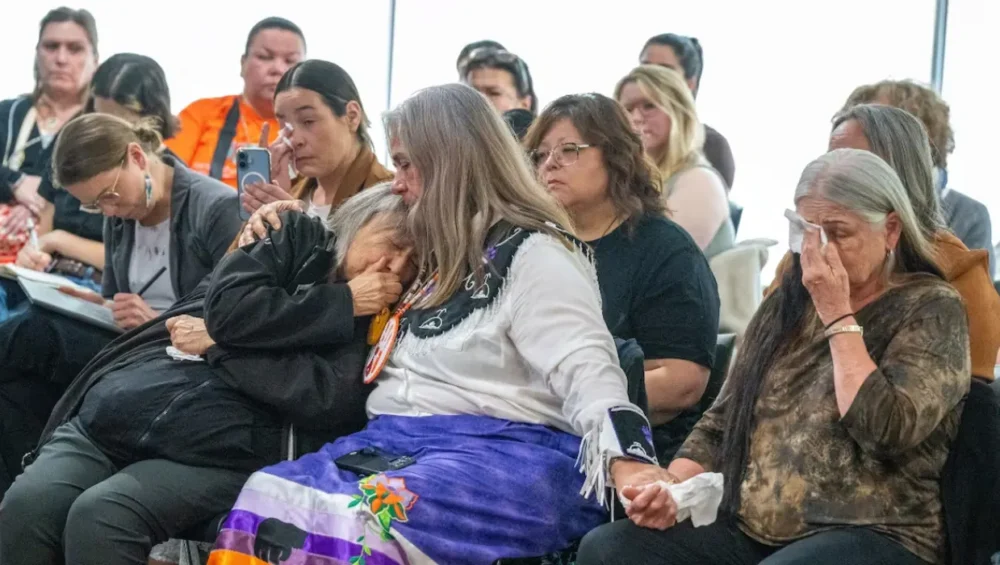
An international panel of experts in human rights has come up with an incriminating interim report accusing the Canadian government of genocide against its Indigenous community after holding hearings for one week in Montreal. The Permanent Peoples’ Tribunal (PPT), which is an international organization investigating human rights cases all over the world, found out that Canada’s policies amount to an act of genocide against Indigenous Peoples due to their history of assimilation, dispossession, and violence.
The Tribunal’s interim report represents a crucial turning point in international discussions on indigenous rights in Canada, amplifying longstanding concerns over accountability on issues such as residential schools, missing children, unmarked burials, forced sterilization, and systemic inequalities in access to healthcare services and clean water.
The Tribunal’s Core Finding: Genocide Is Ongoing, Not Just Historical
The interim decision of the PPT makes clear that the policies of the Government of Canada do not represent a legacy of colonialism, but in fact continue to inflict harm on Indigenous groups. The tribunal drew its conclusions based on the international legal framework defining genocide, which asserts that any acts carried out with the intent of destroying any one of these groups in part or in whole qualify as genocide.
“Canada continuing genocide against Indigenous Peoples, international tribunal finds,”
reads the headline of the tribunal’s interim statement, underscoring the gravity of the finding.
It was pointed out by the panelists that the harm does not stop with historic acts of atrocity but continues into the present, meaning that Canada is legally, morally, and politically responsible for genocide in the ongoing form. The language chosen by the tribunal is not intended to describe genocide as history. On the contrary, it claims that what Canada is doing now, especially in such areas as child welfare, medicine, indigenous lands, and resource exploitation, amounts to genocide.
Historical Context: Residential Schools, Forced Assimilation, and Unmarked Graves
The tribunal’s analysis is embedded in the history of colonization in Canada through the residential schools that existed for more than one hundred years. While the last residential school was shut down in 1996, the legacy continues to exist in the form of intergenerational trauma, cultural genocide, and mourning that still needs to take place. Countless indigenous children were stripped away from their parents and taken to institutions where they suffered abuse, neglect, and death.
The findings of hundreds of potential unmarked graves at residential school grounds in recent years have brought into light this issue again and raised demands for recognition and justice. These findings have been mentioned by the tribunal as being indicative of ongoing patterns of neglect and dehumanization that meet the requirements of genocide.
“The thousands of Indigenous women and girls who were murdered or disappeared across the country in recent decades are victims of a ‘Canadian genocide,’”
the 2019 final report of the national inquiry into murdered and missing Indigenous women and girls concluded.
PPT’s interim finding is consistent with the above precedent by widening the genocide to include policy that applies to all members of the group including men and women. The issue of forced sterilizations to indigenous women which have been confirmed in various investigations and reports also support the argument presented by the tribunal. This is due to the fact that the sterilization of indigenous women occurs against their will.
Systemic Inequities as Evidence of Ongoing Harm
Aside from past injustices, the tribunal also highlighted current systemic inequalities that disproportionately impact Indigenous peoples. Clean water is still an ongoing problem since there are hundreds of Indigenous communities living under boil water advisories for extended periods. Removal of Indigenous children from their homes by the child welfare services continues to take place on an enormous scale.
Healthcare discrimination, poor quality housing, and substandard educational institutions are contributing factors to this cycle of harm. What the tribunal contended is that these circumstances were not simply unintended consequences but part of a system created to keep Indigenous people marginalized.
“Ignore debaters and denialists, Canada’s treatment of Indigenous peoples fits the definition of genocide,”
wrote Sean Carleton, Assistant Professor of History and Indigenous Studies, and Andrew Woolford, Professor of Sociology and Criminology, in a 2021 article reinforcing the legal and moral case for genocide recognition.
This conclusion is supported by the scholarly consensus, as well as that of the PPT, which dismisses any attempts to trivialize or deny the gravity of Canada’s actions. Indeed, the PPT stressed that there has been significant environmental damage on indigenous lands due to the extraction of resources through projects that have not gained the FPIC of indigenous communities.
Canada’s Response and the Limits of the Tribunal’s Authority
The Canadian Government has not yet provided any formal reaction towards the findings of the PPT. Generally, reactions of the government to such issues tend to focus on issues of the country’s adherence to human rights laws and reconciliation. These reactions generally indicate the continued efforts that the country has made to address issues related to the residential schools.
The findings of the PPT contradict these efforts since they show that the steps taken by the Canadian Government in terms of reconciliation have not been enough.
The panel indicated Canada bears legal, moral, and political responsibility for continuing harm, suggesting that current measures fall short of meaningful accountability.
As an additional point of information, one should be aware of the fact that the Permanent Peoples’ Tribunal is not a legally binding judicial body. Rather, it is a non-governmental organization which makes moral and political decisions with regard to international human rights standards. While the outcomes of such deliberations have great impact in advocacy, they are not legally binding or enforcing.
On the other hand, the decision by the Permanent Peoples’ Tribunal may serve to affect government actions, provide more power to Indigenous peoples’ movements, and promote the discussion on policy implications of such decisions.
Indigenous Voices: Calls for Accountability and Truth
Indigenous communities and advocacy groups have long called for acknowledgment of the genocide against Indigenous peoples. The PPT’s interim finding validates their lived experiences and demands for justice. Survivors, families of missing children, and Indigenous leaders have welcomed the tribunal’s acknowledgment, while emphasizing the need for concrete action.
“Recognition of our country’s own genocide against Indigenous people is long overdue,”
wrote Dr. David MacDonald, Professor of Political Science, in a 2021 analysis criticizing Canada’s reluctance to fully acknowledge its colonial crimes. The tribunal’s finding aligns with this perspective, urging Canada to confront its past and present obligations.
Indigenous organizations have stressed that acknowledgment must be accompanied by meaningful change: full implementation of the Truth and Reconciliation Commission’s Calls to Action, the National Inquiry’s Calls for Justice, and the United Nations Declaration on the Rights of Indigenous Peoples (UNDRIP). They also demand independent investigations into missing children, unmarked graves, and forced sterilizations, with Victim-centered approaches and full access to archives.
Global Implications and the Broader Human Rights Context
The PPT’s interim finding places Canada under heightened international scrutiny. Other nations with colonial histories and Indigenous populations face similar critiques, but Canada’s self-image as a human rights leader makes the allegation particularly stark. The tribunal’s ruling challenges Canada’s global reputation and raises questions about its compliance with international human rights obligations.
The Canadian Museum for Human Rights in Winnipeg already recognizes the treatment of Indigenous Peoples as genocide, having updated its position in 2019 after criticism for initially labeling it “cultural genocide” only. The Canadian Museum for Human Rights in Winnipeg now deems the treatment of Indigenous Peoples in Canada as genocide, a change in position following criticism, marking an institutional acknowledgment that aligns with the tribunal’s findings.
This institutional shift reinforces the growing consensus among human rights experts, scholars, and Indigenous leaders that Canada’s actions meet the legal and moral criteria for genocide. The PPT’s interim finding adds authoritative weight to this consensus, potentially influencing future international bodies, courts, and policy debates.