
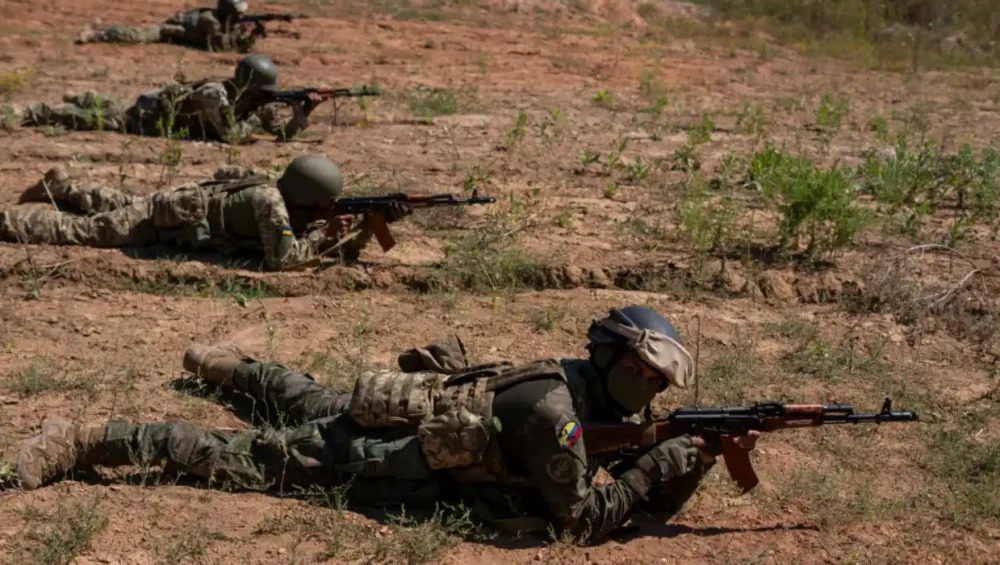
The ongoing civil war in Sudan has taken an even more disturbing turn, as the conflict is now spilling over beyond its geographical borders, pulling international parties into the increasingly horrific events unfolding there. As per an unprecedented report published by Human Rights Watch (HRW), Colombian private military companies, which seem to have been contracted by a UAE-based security firm, traveled via UAE military facilities prior to their deployment in Sudan for supporting RSF (Rapid Support Forces).
This revelation marks a significant escalation in the internationalization of Sudan’s conflict, drawing attention to the UAE’s reported role in facilitating foreign fighter deployment and training programs that may directly enable atrocities on the ground.
The Human Rights Watch Investigation: Key Findings
Human Rights Watch released its report on May 24–25, 2026, titled
“Sudan: Colombians Linked to Atrocities Trained in UAE Bases.”
The report outlines how the Colombian mercenaries, who were hired by a UAE-associated security company, underwent training in the Emirates’ military facilities and were then sent to operate alongside the RSF in Darfur.
The information is sourced from testimonies by the mercenaries, video evidence, and interviews with witnesses.
“Colombian private military contractors apparently hired by a United Arab Emirates (UAE)-based company transited through UAE military bases before being deployed to Sudan to support the abusive Rapid Support Forces (RSF),”
states the HRW report, underscoring the direct logistical and operational link between the UAE and the RSF.
The report highlights that some of these contractors claimed to have trained RSF recruits—including, allegedly, child soldiers—at camps near Nyala in South Darfur around April 2025. This claim adds gravity to existing accusations against the RSF for systematic recruitment of minors, a violation of international humanitarian law.
Hundreds of Colombian Mercenaries Deployed Through UAE
While exact numbers remain difficult to verify, HRW and multiple media outlets describe “hundreds of Colombian mercenaries” being recruited through a UAE-linked security company and deployed to Sudan. This figure, though approximate, points to a significant and organized foreign military presence supporting the RSF.
It is said that the Colombian mercenaries received training at the military facilities of the UAE before entering Sudan. The timing of their deployment was coincidental with increased attacks from the RSF forces on El Fasher, which is a town located in the state of North Darfur, and which has become the center of the war, as well as the scene where massacres were perpetrated against the Masalit community.
There have been eyewitness accounts and video evidence showing the involvement of the foreign mercenaries in the attack related to genocidal acts within the vicinity of El Fasher.
UAE’s Denial and International Scrutiny
The UAE has publicly denied any direct involvement in Sudan’s civil war. In response to the HRW allegations,
“The United Arab Emirates has denied any involvement in the civil war and says it investigates alleged links,”
according to BBC reporting.
Despite such denial, the HRW report contributes to the growing pile of evidence and international attention towards Abu Dhabi’s possible involvement in the war. There have been many accusations against the UAE, suggesting that the country gives military support to the RSF by supplying them with weaponry, funding, and other necessary help. Now, HRW claims that the UAE is also helping to train and recruit foreigners for the RSF.
Human Rights Watch urges the UAE government to stop supporting the RSF with its military aid, stating that any further cooperation might result in complicity in war crimes..
RSF’s History of Abuses and Alleged Genocide in Darfur
The Rapid Support Forces were originally formed out of the Janjaweed militias responsible for carrying out crimes against humanity during the Darfur genocide of the early 2000s. Nowadays, the RSF is a powerful paramilitary organization commanded by General Mohamed Hamdan Dagalo, also referred to as Hemedti. Allegations of human rights abuses committed by the organization include mass murders, rape, and ethnic cleansing.
In 2023, the rivalry between the RSF and the Sudanese Armed Forces resulted in an outbreak of civil war that cost many lives and caused hundreds of thousands of refugees. One of the most controversial events of the year was the genocide allegedly committed against the Masalit population of Darfur.
The deployment of Colombian mercenaries to support the RSF in this context raises alarming questions about the international community’s ability to hold perpetrators accountable.
“Witnesses and verified footage reportedly place foreign contractors near El Fasher during assaults linked to alleged genocide,”
according to a YouTube analysis of the HRW report, highlighting the direct link between foreign fighters and alleged atrocities.
Child Recruitment: A Dark Pattern in RSF Ranks
A particularly shocking element in the Human Rights Watch (HRW) report is the involvement of Colombian contractors in the training of RSF recruits including children. Child soldier recruitment is an illegal act under international humanitarian laws, and it is something that has plagued Sudan’s conflict for a long time now.
In the La Silla Vacía report in Colombia, quoted by HRW, “child recruits were receiving combat training” at the RSF facilities in South Darfur. The involvement of children in acts of combat exposes them to danger while also creating a cycle of violence that will plague the region.
The international community has always opposed the recruitment of child soldiers in Sudan. However, the new findings in the HRW report reveal that other foreign entities have joined in on this process.
Geopolitical Implications: Gulf Actors and Sudan’s War
The participation of the UAE in the Sudanese civil war is just one instance of a wider trend of Gulf states’ engagement with the Horn of Africa. In addition to strategic reasons, such as having access to ports along the Red Sea, agricultural lands, and military bases, helping the RSF might have helped the UAE advance its own interests in the region.
On the other hand, the findings of HRW suggest that the involvement of the UAE might be more concrete than just supporting the RSF. The fact that the Colombians pass through Emirati military bases, receive training from the UAE, and are deployed to fight side by side with the RSF indicates just that.
This development has drawn criticism from human rights organizations and governments alike.
“The report adds to growing international scrutiny over Abu Dhabi’s alleged role in Sudan’s war,”
according to the YouTube analysis of the HRW findings. The international community faces pressure to investigate these allegations and hold accountable those who enable atrocities.
Colombia’s Role and the Private Military Industry
The engagement of contractors from Colombia begs the question regarding Colombia’s contribution to the international private military industry. Colombia is known for its long-standing experience in military expertise and warfare. Many Colombian mercenaries have been employed by other parties to participate in battles within Africa, the Middle East, and Latin America.
From the information provided in the HRW report, it seems clear that the contractors were employed via an UAE-based security firm, indicating the international scope of operations within the private military industry.
The deployment of Colombian mercenaries to Sudan underscores the need for stronger regulations on private military contractors and greater transparency in their activities. Without such measures, the risk of further atrocities and destabilization remains high.
What Comes Next? Calls for Accountability and Action
Human Rights Watch calls on the international community to take immediate action in response to this report. It urges the UAE to immediately stop any military assistance provided to the RSF and to look into the involvement of its bases in sending in foreign mercenaries.
Accountability of individuals responsible for war crimes and crimes against humanity in Sudan needs to be secured by governments, international organizations, and non-governmental bodies. It should include leaders of the RSF, its foreign backers, as well as any contractors engaged in perpetrating these crimes.
The Human Rights Watch report represents an important step towards exposing the reality behind the Sudan conflict. However, exposure of the truth is just the beginning of what needs to be done.