
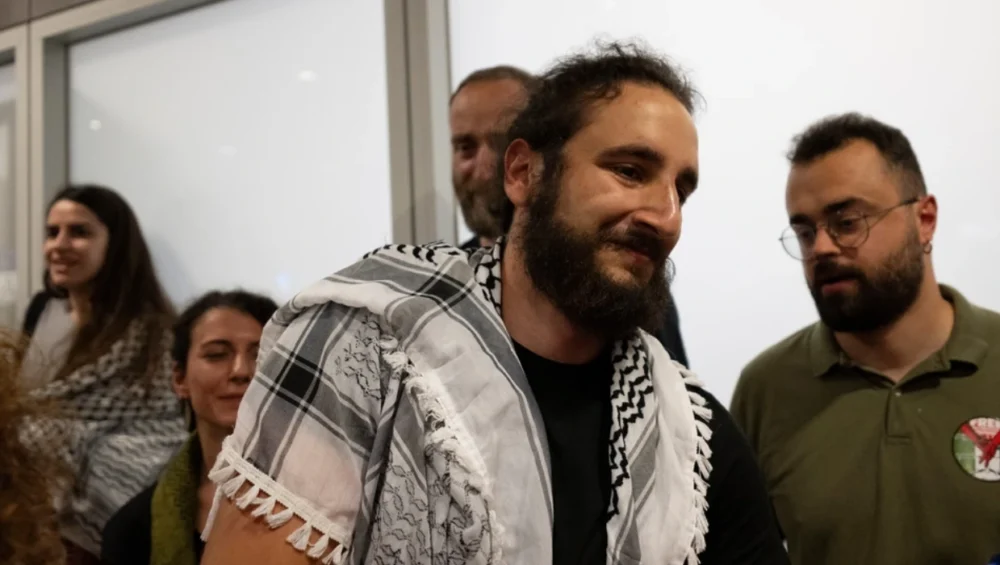
In May 2026, a humanitarian aid flotilla mission aimed at breaking Israel’s maritime blockade on Gaza became involved in an international scandal following the interdiction of the boat by the Israeli navy while sailing in international waters. The Global Sumud Flotilla had set off for Gaza with the mission of delivering humanitarian aid and making known to the world the crisis situation in Gaza. Soon after its interdiction, those who were released from captivity started reporting abuses, including beatings and rape, suffered while being held captive.
The mission was another attempt in a long chain of initiatives carried out by civil society organizations in their struggle against the Gaza blockade implemented by Israel since 2007. According to the Israeli government, the necessity of such a policy stems from national security considerations, as weapons or equipment can be delivered to Hamas. Nevertheless, the humanitarian sector has expressed serious concern about the humanitarian aspect of the situation and its disastrous consequences for the lives of Gazan civilians.
What Specific Allegations of Physical Abuse Did Activists Report?
The activists detained by Israel and freed on May 22, 2026, gave coherent descriptions of torture inflicted on them while in captivity. These statements were verified by several independent sources and paint a very disturbing picture of what happened to them onboard the ships and at the detention center.
According to journalist Catriona Graham from Sky News, who interviewed multiple freed activists,
“We’ve already had reports of at least 15 sexual assault, at least 30 broken bones, concussions, broken clavicles, broken ribs”.
These injuries resulted from what appeared to be systematic physical assaults rather than isolated incidents.
The physical violence reportedly began immediately upon interception and boarding of the flotilla vessels. One activist described the experience in vivid detail:
“I was kicked in the shin… a punch to the face, one from this side, one from that side. A closed-fist punch. I moved to get up and I got kicked in the leg. A little jolt from a taser to the ribs”.
This scenario highlights how the violence took a patterned form where the victimizers used a number of techniques in order to inflict pain and keep the prisoners under control. The use of electric tasers was a particularly common theme mentioned by various activists when describing their experiences, with many stating that they had been shocked in private parts like ribs, hips, and the back. Most shocking of all, however, were the descriptions of group beatings on board the so-called Israeli prison ships.
One activist recounted passing through a container where violence was systematically administered:
“On the prison ship there was a container that everyone had to pass through. You entered through one door and a group of six or seven people would beat you mercilessly until you emerged from the other side. Every single one of us went through that”.
This description suggests a systematic rather than random approach to violence, with detainees being funneled through locations where they would be assaulted by multiple attackers in succession.
How Were Tasers Used Against Detained Activists?
Another interesting aspect which became quite apparent from the testimonies gathered by human rights organizations and journalist interviews is that of using the taser against detained activists. Several of the activists have been reported to have been tasered for prolonged periods, even exceeding one minute, causing them immense agony and paralyzing them temporarily. What is also significant about the manner in which the shocks were administered to the detainees is the area in which the shocks were applied, such as ribs, hips, and the spine.
One particularly disturbing account involved the tasing of a female activist by multiple attackers. The testimony described:
“Four men began striking [a woman] against the [wall], and kept falling down and getting back up, only to be tasered for over a minute… on her ribcage, hips, and back”.
This account reveals not only the prolonged nature of the taser abuse but also the coordinated effort by multiple individuals to inflict pain repeatedly. The pattern of striking the victim, allowing them to fall, then tasering them upon attempting to rise suggests a deliberate strategy to maximize suffering while preventing escape or resistance.
It is clear that the use of the tasers in many incidents leads to doubts on whether there is a proportionality in the way in which Israeli forces have reacted. According to international standards on human rights, tasers are lethal force which can be used in cases when there is an immediate threat of danger to people’s lives. However, it becomes obvious from the activists’ stories that the individuals who were shocked with a taser did not use any forms of violent resistance, thus implying disproportionate use of force.
What Sexual Violence Allegations Emerged From Detainees?
Perhaps the most shocking feature of the accusations of abuse is the large number of sexual abuses, with evidence indicating no less than 15 cases of sexual assault of the arrested individuals. The sexual abuses are said to include rape, being penetrated with different objects including guns, strip search done simply to humiliate the person and not for any security reason, and constant grope. Such allegations, if true, will definitely amount to war crimes.
At least 12 of these sexual assaults reportedly occurred on a single Israeli landing craft that activists described as a floating detention facility. Australian filmmaker Juliet Lamont provided one of the most detailed accounts, recounting being
“beaten and sexually assaulted by five men inside a shipping container on what she described as an Israeli ‘prison boat'”.
Her testimony is particularly significant given her professional background as a documentarian, which may have made her more aware of the importance of precise detail and chronological accuracy in her account.
French activist Mer Hadjal also provided testimony about sexual violence and humiliation:
“sexual violence and groping. I was hit, slapped, kicked, and having my hair pulled. I was traumatized for hours”.
The combination of physical violence with sexual assault and humiliation suggests a systematic approach to breaking down detainees’ psychological resistance and asserting dominance. The fact that activists from multiple countries reported similar experiences strengthens the credibility of these allegations, as it indicates a pattern rather than isolated incidents involving individual perpetrators.
What Do International Governments Say About the Mistreatment?
The governments across the world started reacting to the accusations based on accounts provided by their citizens, who were held captive. The Canadian government has admitted receiving accounts of “shocking mistreatment,” according to which the Canadian citizens traveling aboard the flotilla have been abused. An important aspect of this is the fact that an official confirmation by any government indicates the credibility of the allegations.
Germany and Spain also confirmed that several of their nationals sustained injuries during the detention. These European governments have traditionally been vocal about human rights issues in the Middle East, and their confirmation of injuries adds weight to the activists’ claims. The involvement of multiple Western governments in documenting and responding to these allegations creates international pressure on Israel to address the claims and potentially conduct an independent investigation.
The response to the issue has been very careful on the use of language, where governments have confirmed that they are in possession of information regarding the allegations and injuries but stopped short of attributing blame to any particular party for the incident. This is due to the complexities involved in dealing with the issue because the West maintains important partnerships with the Israeli government despite pressures from domestic parties with concerns over human rights abuses.
How Does Israel Respond to These Allegations?
The Israeli government’s response to the allegations has been categorical and unequivocal in its denial. The Israel Prison Service issued a formal statement asserting that all claims of abuse are
“false and entirely without factual basis”.
This denial comes from the agency responsible for detention facilities and the treatment of detainees, placing the organization itself in the position of investigating its own alleged misconduct. A Prison Service spokesperson named Ivan Frein explicitly stated the organization’s position, providing a clear official response that contradicts the activists’ detailed accounts.
In additional statements to CNN, Israeli authorities maintained that the claims are “unfounded and entirely baseless” and emphasized that the organization “operates within the legal framework”. This response reflects a broader pattern in which Israel has historically denied allegations of abuse against detainees, often citing security concerns and the right to protect national interests. The emphasis on operating within legal frameworks suggests that Israeli authorities view their actions as lawful and justified under both domestic and international law.
However, the Israeli response has not included an offer for independent investigation or transparency about the detention conditions and treatment protocols. The categorical denial without providing corroborating evidence or implementing oversight mechanisms has drawn criticism from human rights organizations that argue transparency is essential for maintaining credibility. The stark contrast between the detailed, specific accounts from multiple independent witnesses and Israel’s blanket denial creates a credibility gap that will likely require external investigation to resolve.