
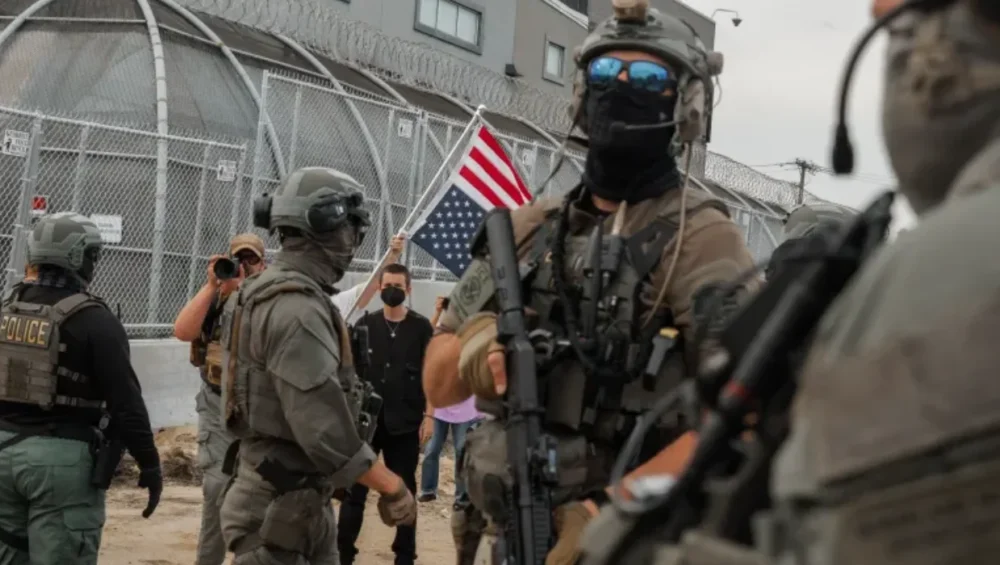
The head of the United Nations on Human Rights issues has made an urgent request for an independent inquiry on the increasing numbers of deaths in U.S. Immigration and Customs Enforcement (ICE) facilities, prompting a fresh wave of criticism of the U.S. system of immigrant detention and enforcement. The request, which is among several other requests made by the UN throughout 2025 and 2026, has attributed the increasing numbers of deaths to the shortcomings of care, transparency, and accountability in the system of facilities detaining large numbers of immigrants every year. This essay will analyze the request within the context of recent deaths, statistics, and positions.
There has been an increase in the number of deaths in ICE detention within recent reporting periods, leading to concerns from rights activists, politicians, and even international organizations. Information available at the UN office reveals that there were 33 deaths in ICE detention centers in 2025 compared to 11 in 2024, and there have been 18 deaths in the first five months of 2026 in addition to one more death in June, making a total of 19 deaths in 2026 up to late June.
The upward trajectory raises multiple questions: Are detention conditions worsening? Are medical and mental-health services insufficient or inaccessible? Is oversight — both internal and external — failing to identify risks and intervene in time? The UN’s response suggests that the answers are at least partly systemic, not merely episodic.
UN position and key statements
The United Nations High Commissioner for Human Rights, Volker Türk, characterized the matter in ethical and legal terms, stressing that every such death should be investigated quickly, independently, and impartially. Accountability was considered important, as well as preventive measures to stop such incidents from happening again. Statements made by the UN from January to June 2026 revealed concern about the “dehumanization” of migrants in the American immigration enforcement system.
The UN’s stance rests on two interconnected lines of reasoning. First, deaths in custody are not only humanitarian tragedies; they are potential indicators of rights violations — neglect, inadequate medical care, improper use of force, or substandard detention conditions. Second, without independent investigation, systemic problems cannot be identified and corrected, and families and communities cannot obtain truth and justice.
Official reactions and accountability pressures
The UN’s public urgings have amplified pressure on U.S. authorities — including ICE, the Department of Homeland Security (DHS), and congressional oversight committees — to respond with transparency and reforms. Advocates and some lawmakers have echoed the call for independent probes, arguing that internal reviews by ICE or contractor self-reporting cannot substitute for scrutiny by impartial entities with subpoena power and prosecutorial follow-up where warranted.
Reactions in the United States have been mixed. Civil society organizations have viewed the involvement of the UN as too little too late, noting examples of individuals whose deaths were found to be troubling, with even some deaths being determined as homicides by local medical examiners. Proponents of a more aggressive stance on immigration policy have viewed the practice of detention as a legal means of immigration control, and thus have not wanted it to be labeled in any way as a form of rights violation. However, statistics of the dead and repeated cases have presented a challenge to the status quo.
Conditions and structural problems cited
The UN’s analysis and the wider reporting point to several recurring problem areas that could contribute to fatalities:
- Healthcare access: Detained migrants often report delays or denials of timely medical care, incomplete screenings, and a lack of continuity for chronic conditions and mental health needs.
- Overcrowding and facility management: Physical conditions in some detention sites — especially where local jails contract with ICE or where private contractors operate facilities — have been cited as inadequate for safe long-term care.
- Oversight gaps: Internal ICE reviews have been criticized for lacking independence, while external oversight varies widely by facility and jurisdiction.
- Use of restraint and force: Allegations of excessive restraint and inadequate monitoring of individuals with medical or mental-health vulnerability have been raised in some cases.
- Information opacity: Families and advocates often encounter obstacles obtaining clear information about incidents, transfers, and the causes of deaths, prolonging grief and frustration and undermining trust in official narratives.
Legal and policy implications
The demands for independent inquiries are not symbolic. They have legal and policy implications. The results of such independent inquiries, done through congressional committees, inspector generals, states, and special inquiry commissions, can result in referrals for criminal investigation, civil action, terminating contractor relations, and even policy changes. There are also actions that can be made in response to the independent inquiries, including medical protocol changes, screening changes, employee training, and restrictions on detaining certain vulnerable people.
Policy-wise, the demands made by the UN tie into larger conversations regarding the use of detention in immigration enforcement processes. Alternative forms of detention – community monitoring, case management, or humanitarian parole – have been suggested as alternatives that are not only safer but also cheaper for groups such as family members, expectant women, elderly immigrants, and people suffering from serious illnesses. The increase in fatalities adds weight to these claims and justifies the need for reduced dependency on detention.
Accountability mechanisms and options
Several accountability pathways exist, though each faces limitations:
- Internal ICE reviews and DHS Office of Inspector General (OIG) audits can identify failures and recommend changes, but critics fault their independence and follow-through. The UN explicitly called for independent, impartial probes rather than relying solely on internal review mechanisms.
- State and local medical examiners and law enforcement can investigate deaths that occur within facilities located under their jurisdiction; these investigations have sometimes produced findings (including homicide determinations) that differ from federal narratives.
- Congressional oversight can compel testimony, obtain documents, and legislate reforms, but partisan divides complicate prospects for sweeping, consensus-driven change.
- Civil litigation by families and advocates can secure findings and damages in individual cases, but litigation is slow and limited in its capacity to produce systemwide reform.
- Independent commissions or international review mechanisms can offer external assessments and recommendations, but their influence depends on political will and the willingness of U.S. authorities to comply.
Human stories and systemic patterns
Beneath all the figures, there lie personal tragedies of people who risked their lives seeking security or better living conditions while being under state control. The family members of those people have been demanding an explanation and compensation. The UN pointed out that the issues of accountability and truth are vital not only for the sake of the victims’ families but also to prevent such incidents from happening again.
Comparative perspective and international norms
The international human rights conventions are clear on the need for governments to guarantee that those who are detained enjoy their rights to security and dignity. The involvement of the UN in this case is consistent with global practice whereby there is a need for speedy and independent investigations in cases where someone dies in custody as well as steps to reduce the number of deaths that can be prevented.
Policy recommendations implicit in the UN’s demand
The UN’s call for probes implies a suite of measures that would strengthen protections and reduce deaths:
- Immediate independent investigations into recent deaths, accompanied by public reporting of findings.
- Strengthening medical screening and continuous care in detention, with independent health oversight.
- Reducing the use of detention for vulnerable populations, while expanding non-custodial case-management alternatives.
- Enhancing transparency: timely notification to families, clearer reporting of incidents, and public disclosure of detention conditions.
- Reviewing contractor and local jail arrangements to ensure consistent standards and accountability.
- Legislative or administrative reforms to codify independent oversight mechanisms for immigration detention.
Political dynamics and prospects for reform
The political environment in the U.S. determines whether any change is likely to be achieved at all. Any accountability reforms that involve increased oversight, more money spent on monitoring, or restrictions on detention may not be well-received by the politicians who see a need for tough immigration control. However, the growing public interest and advocacy, combined with findings by the UN and local investigations, may open some room for cooperation between the two parties.