
Israeli ministers have called for the resumption of a broad military offensive in the Gaza Strip and urged Prime Minister Benjamin Netanyahu to reject a US-backed roadmap designed to implement the second phase of President Donald Trump’s ceasefire plan.
The demand, reported by Israeli media on Friday, came during a Security Cabinet meeting as Israel’s political and military leadership faced pressure to determine whether the fragile ceasefire should lead to negotiations, a phased Israeli withdrawal and Hamas disarmament—or return to large-scale warfare.
Ministers Ze’ev Elkin, Bezalel Smotrich, Orit Strock and Avi Dichter reportedly argued that Israel should formally reject the roadmap rather than continue what they viewed as delaying tactics.
“If Israel does not launch offensive operations for two weeks, it would mean that it has accepted the plan,”
Elkin said, according to the reports.
This assertion shows the increasing dissent among Netanyahu’s allies against any move that would make Israel leave areas controlled by it within Gaza. In addition, this indicates that the conflict is no longer about the terms of the ceasefire deal’s second phase. At its heart lies the question of whether Israel will engage in a negotiated transition of control over the area or use the military means to crush Hamas and maintain full control over the territory. This creates for Netanyahu a dilemma, as on the one hand stands the administration of Trump, which regards the roadmap as a way of ending the Gaza war. And on the other side there are far-right and security-oriented members of the Israeli coalition government, who claim that accepting the roadmap without full disarmament of Hamas will put Israel under threat of new attacks.
Netanyahu rejects withdrawal before disarmament
Netanyahu has not formally accepted the proposed roadmap. He has repeatedly said that Israel will not withdraw from its current positions in Gaza until Hamas is fully disarmed.
“Israel will not withdraw from the positions it controls in Gaza, and will not cease fire,”
Netanyahu reportedly told US envoy Nickolay Mladenov, according to Israeli media. He justified the position by claiming that Hamas was rebuilding its military capabilities and remained a direct threat to Israeli troops and communities near the Gaza border.
In a video statement, Netanyahu said the White House had sent Israel a draft proposal but that Israel had not agreed to it.
“It is not our draft. We sent our comments,”
he said.
This issue is of importance because it represents a direct challenge to the sequence that was presumed in the roadmap supported by the US administration. As per the report, the process of the disarmament of Hamas will be followed by the gradual withdrawal of Israeli forces rather than the absolute disarmament of Hamas as a prerequisite for every step taken by Israel. There have been reportedly three conditions set by Israel’s armed forces; first, complete liberty of action to fight any threat; second, full control of all arms in Gaza and finally no withdrawal without disarming Hamas. These demands would mean that Israel would retain its right to conduct its operations in the region even during the transitional period. This requirement has become the major obstacle.
What Trump’s second-phase plan proposes
The roadmap said to have been unveiled by Trump’s Peace Council has fifteen points aimed at bringing Gaza from the ceasefire stage. These include phased disarming of Hamas and other armed militias, the movement or safekeeping of their arms, the phased withdrawal of the Israelis and the establishment of an international stabilization force. The plan further calls for the creation of a Palestinian technocratic administration in Gaza during the transition process. There will also be increased reconstruction and humanitarian aid and gradual shifting of the responsibility of ensuring security to a newly created Palestinian structure, which will be supported by the international community.
Trump’s administration has made it known that Hamas’ reported readiness to disarm is a huge diplomatic achievement. Supporters of the plan claim that it presents a feasible order of disarmament, withdrawal of the Israelis, international supervision and reconstruction.
These include who would verify Hamas’s disarmament, what would happen if weapons were discovered, how the international force would operate, whether Israel would retain the right to conduct raids and whether the proposed Palestinian administration would have genuine authority.
The Israeli government has reportedly told Washington that the roadmap is unacceptable in its current form. Israel has also raised objections to the role of the international force and said it will not retreat from the existing Yellow Line. An Israeli political source said the government had authorised immunity for a limited number of Moroccan and Ugandan troops expected to serve in the international force, but had not accepted the broader military and political provisions.
Smotrich and Strock fear political consequences
Opponents such as Smotrich and Strock have emerged among the strongest voices against the proposal. It has been reported that they made warnings to Netanyahu about the proposal being a stepping stone for a Palestinian state, which would limit Israel’s freedom to conduct military operations in Gaza. This criticism is not only based on military aspects but also the future administration of the territory. Israeli government members worry that the proposal may allow the return of the Palestinian Authority’s rules to Gaza.
Smotrich reportedly demanded an immediate formal rejection of the document.
“You are good at maneuvering, but after the issuance of an official document, we must delegitimize it. We cannot continue maneuvering,”
he told Netanyahu, according to Israeli reports.
The finance minister has also used uncompromising language about Hamas.
“Hamas must not remain. It must be erased,”
Smotrich said, according to the same reports.
These statements demonstrate the political limits facing Netanyahu. If he accepts a plan involving Israeli withdrawal, international monitoring or a political horizon for Palestinians, he could risk the support of far-right coalition partners. If he rejects the roadmap, he could deepen tensions with Trump and undermine a US initiative that Washington has described as the basis for ending the war.
Hamas accepts plan conditionally
It is believed that the Hamas has embraced the newest version of the roadmap for itself in general terms, accepting phased disarmament and phased withdrawal of the Israelis. But at the same time it has declared clearly that it does not see disarmament as the unconditional capitulation. The Hamas has asked for a full stoppage of the Israeli actions against its people, withdrawal from Gaza, entrance of the humanitarian help and reconstruction. Also the Hamas has tied the issue of disarming with other political guarantees including the future status of the Palestinian territories.
Such conditional stance enables the Hamas to appear negotiable without immediate and irreversible disarmament. For the Israel such conditions are unacceptable since they can lead to the situation when the Hamas will keep their weapons till the initial phase of the transition process. And thus both sides understand the same roadmap in different ways. For Israel it means too soft document that fails to provide the guarantee of the immediate and complete disarmament.
The dispute is further complicated by the absence of a mutually accepted enforcement mechanism. Neither side appears willing to rely solely on assurances from the other, and the proposed international force has yet to receive a clear mandate, command structure or operational authority.
Ceasefire casualties continue to rise
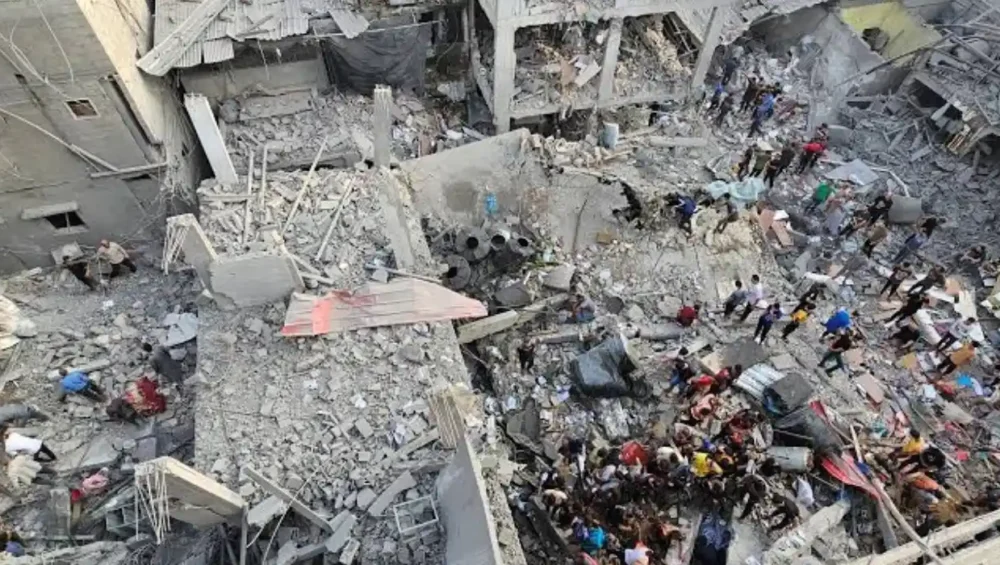
The political dispute is unfolding while Israeli military attacks continue in Gaza despite the ceasefire that took effect on October 10, 2025.
Palestinian officials cited in the latest reports say Israeli ceasefire violations have killed at least 1,254 Palestinians and injured 4,121 since the agreement began. The figures in the original report were slightly lower, at 1,252 deaths and 4,120 injuries, reflecting the rapid updating of Gaza’s health statistics.
The Gaza Health Ministry also says that Israel’s wider military campaign since October 2023 has killed more than 73,000 Palestinians and injured over 174,000. On August 5, the reported death toll reached 73,381, according to Palestinian health authorities.
The number of casualties includes both civilian and non-civilians, and does not always provide a complete breakdown on the responsibility or status of the dead. Nevertheless, UN agencies and international media organizations have relied on statistics from the Gaza Health Ministry in the past because the ministry keeps records in hospitals and morgues, although such data may not always be independently verified due to the ongoing fighting. As a consequence of the attacks, various international organizations have produced different numbers. In one UN report that came out in June, 738 Palestinians had been killed since the end of the ceasefire, whereas the Palestinians themselves claimed more than 1,200 dead.
The difference was a result of different reporting times, verification processes and continued additions to casualty numbers. It is believed that Israeli troops have gained control of or occupation of around 70 percent of the Gaza Strip. Early estimates showed Israeli occupation of the area around half the area of the Gaza Strip after redeployment following the October ceasefire. Other estimates put this at about 64 percent.
Humanitarian crisis deepens under the truce
The ceasefire has failed to provide sustained safety for Gaza’s civilians. UN agencies say airstrikes, shelling and gunfire have continued, while displaced families remain concentrated in increasingly restricted areas.
UNICEF reported that at least 300 children had been killed during the approximately 300 days since the ceasefire began, an average of about one child each day. The agency said civilians remained exposed to attacks and that families were living amid destroyed buildings, rubble, contaminated water and inadequate shelter.
The humanitarian crisis includes shortages of food, medicines, fuel, clean water and reconstruction material. Hospitals continue to face damaged facilities, power shortages and limited supplies. The destruction of sanitation networks has increased the risk of disease, while damage to housing has left a large proportion of Gaza’s population displaced.
A ceasefire that allows daily or near-daily attacks presents a legal and political contradiction. Israel describes its operations as defensive actions against threats and violations by Hamas. Palestinian authorities and UN officials argue that continuing attacks represent a breach of the ceasefire and demonstrate that the agreement has not provided meaningful protection to civilians.
UN High Commissioner for Human Rights Volker Türk previously described the continuing killings as evidence of disregard for Palestinian lives.
“The unrelenting pattern of killings reflects continuing disregard for Palestinian lives, enabled by sweeping impunity,”
Türk said in April.
The risk of a wider breakdown
The demand of the ministers may end up freezing the 14-day period meant to hammer out the details on how to implement the second stage. The Palestinians have already accused Israel of intentionally holding back on any progress through failure to put on paper their position in relation to the roadmap. A formal rejection from the Israelis will mean more than just the negotiations. It will signal a return to large scale military operation with displacement and deaths. It will also put an end to any thoughts of an international stabilisation force and prevent the formation of the transitional Palestinian government.
For Trump, this has become a challenge for the US to bring Israel to order. The US administration has been advocating for the roadmap, but the refusal of Israel to accept the withdrawal component of it has proven the lack of influence that America has over Israel. For Netanyahu, the decision will be difficult. Accepting the roadmap may split his coalition while rejecting it may spoil any diplomatic relations with Trump and close the door on releasing the last prisoners among other things.
For Hamas, accepting disarmament without enforceable Israeli withdrawal guarantees could end its military capacity while leaving Israel in control of Gaza’s territory. Rejecting the proposal, however, could allow Israel to argue that continued military operations are necessary because no credible disarmament agreement exists.
A ceasefire trapped by sequencing
The immediate crisis is therefore not simply whether the ceasefire will continue. It is whether the parties can agree on the sequence that would transform it into a durable settlement.
Israel claims that the disarming of Hamas must come first. Hamas calls for an Israeli withdrawal and cessation of attacks as a precondition for surrendering its arsenal. President Trump’s roadmap aims at bridging the gap by means of parallel actions under international monitoring, but the Israeli ministers are pushing Prime Minister Netanyahu to completely rule out such an approach. The report about the Security Cabinet discussion indicates that Israel’s leadership still disagrees on the question of how Gaza’s future will be determined – through negotiation or through further military action. The death toll in the ceasefire period exceeds 1,250 Palestinians and the Israeli forces control most of the territory of the Strip.