
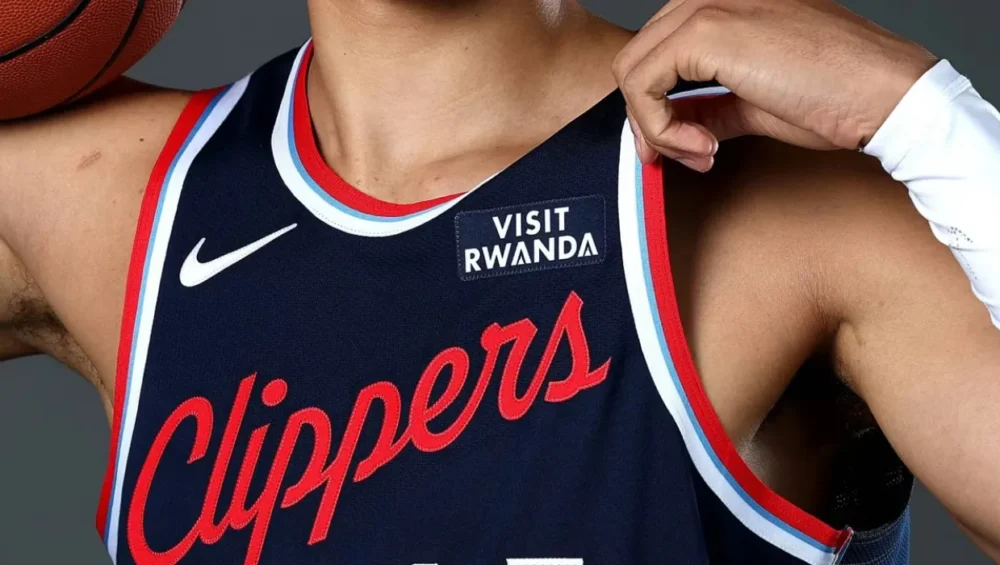
The NBA, which has always been praised for its forthright advocacy of social justice and human rights, is now caught up in an increasingly serious ethical and reputation dilemma, which is its business relationship with Rwanda. The U.S. administration is currently attempting to punish the Rwandan military and its top officials due to their backing of the March 23 Movement (M23), which is known to have committed “horrific human rights abuses” in the Democratic Republic of Congo.
At the crux of this conflict, one cannot help but ask if such an organization that positions itself as progressive and socially responsible could maintain its multi-million dollar association with a government whose army the United States government has officially sanctioned because of its support for heinous acts? As human rights organizations and the governments of Africa along with a few foreign entities increase their demands, the Rwanda project for the NBA has become a reputation issue.
The NBA–Rwanda Deal: Commerce Meets Soft Power
NBA’s ties to Rwanda revolve around the creation of the Basketball Africa League (BAL), which is a FIBA-Approved tournament that began in 2019 with the aim of promoting the game throughout the African continent and establishing Africa as an indispensable center for basketball in the world. Rwanda is not just a host nation, but also one of the biggest sponsors of the league, having spent huge amounts of money to have its Visit Rwanda logo featured.
“Rwanda is not just a host nation; it’s a pay‑for‑play promotional partner,”
one regional sports analyst told a major international outlet.
It essentially means that the Rwandan government uses the NBA’s international reach to create an impression of modernity, receptiveness to tourism, and political stability, especially amid increasing international pressure on Rwanda’s role within the region. The NBA, on the other hand, gets access to new markets and broadcasting rights while promoting African basketball players. However, there is something much more disturbing hidden behind this seemingly win-win situation; namely, the government that helps satisfy the NBA’s African dreams is the same government whose army is currently under U.S. sanctions for supporting a militia accused of committing crimes against humanity.
U.S. Sanctions and the M23 ‘Human Rights Quagmire’
The gravity of the matter was made evident at the beginning of 2026 when the Treasury Department of the United States placed sanctions on the Rwanda Defense Force (RDF) and four senior military officers. In its accusations against the Rwandans, the United States claimed that the country was “actively supporting, training, and fighting along” with M23 rebels who have been responsible for killing thousands of civilians in eastern Congo.
“We are holding the Rwandan military accountable for its direct and sustained support of M23,”
a senior U.S. Treasury official stated at the time.
Organizations like Human Rights Watch and Amnesty International, which are human rights organizations, have made similar statements in regard to the actions of M23, referring to them as acts of war crime. These organizations state that Rwandan forces have played a part in all of these attacks and not just by providing technical assistance; in addition, they have participated actively in these activities and have been responsible for sending their drones and other devices to provide air defense and jam the communications channels.
In this context, the NBA–Rwanda partnership begins to resemble a classic case of “sportswashing,” where a sports league becomes an unwitting amplifier for a government’s efforts to launder its image despite its conduct in neighboring conflicts.
“It’s not enough to say the NBA is ‘just playing basketball’ when it’s sitting on a contract that glorifies a state tied to mass atrocities,”
a policy expert at a prominent human‑rights NGO remarked.
Rwanda’s Role in the DRC Crisis
The “human rights dilemma” associated with M23 is not just a faraway abstract fight but is rather an extremely tangible situation that is occurring in the eastern part of the DRC, which has been ravaged by conflict and instability for decades. In the latter half of 2021, M23 has been making progress in occupying towns such as parts of North Kivu, driving thousands of people to abandon their homes and seek shelter in crowded refugee camps where they lack basic necessities such as food and healthcare.
Despite repeated denials from the Rwandan government, the U.S. sanctions and UN investigations tell a completely different story. As reported by the U.S. Treasury, Rwandan soldiers have not only trained members of the M23, but have shared intelligence and even positioned their troops alongside the rebel forces. Satellite evidence and ground reports also confirm allegations of Rwandan soldiers entering Congo to aid the rebels.
“The line between Rwanda and M23 is increasingly blurred,”
a conflict analyst told a major international news outlet.
To the population of eastern DRC, such issues are no geopolitical theory; it means either remaining in one’s homeland or running away into unfamiliar areas with nothing but the clothes they wear. In fact, over 100,000 individuals have already become displaced refugees as a result of ongoing tensions in the region, while non-governmental agencies express concern over an imminent threat of growing food shortages, epidemics, and violence, should the current situation remain unchanged. It is worth noting that the DRC government constantly accuses Rwanda of using the M23 rebels for their own political gain.
Congolese and African Reactions to the NBA’s Ties
The NBA-Rwanda connection has also caused much political controversy in the region, none more than in the case of the Democratic Republic of Congo. The government and civil society in Congo have accused the NBA of normalizing relations with a country whose military actions pose a direct threat to the national interests of the Congolese government. In this regard, the government of the Democratic Republic of Congo has made an official request to the NBA to sever all commercial connections with Rwanda.
Statements from Congolese basketball officials and activists have been particularly pointed. In early 2025, Basketball‑DR Congo released a statement urging the NBA to suspend its sponsorship deals with Rwanda, warning that the league’s brand was being “used to legitimize acts of war and displacement.”
“How can the NBA preach about social justice and human rights while taking money from a government whose army is destabilizing our region and fueling a humanitarian crisis?”
a Congolese sports federation leader asked in an interview.
In Africa, this issue has sparked discussions about the ethics of sports diplomacy between nations. While some African journalists contend that the NBA’s BAL is necessary to nurture the growth of African talent, others warn that the NBA should be careful in selecting its hosting partners. There is fear that the NBA’s desire for markets and exposure may be exceeding its abilities in conducting proper due diligence for its partnership with the African countries.
“The BAL can be a force for good, but not if it becomes a tool for whitewashing the abuses of powerful states,”
a regional human‑rights advocate noted.
The Broader ‘Sportswashing’ Debate
Indeed, the relationship between the NBA and Rwanda can be seen as one of “sportswashing,” where sport events and sport leagues are exploited to rehabilitate the image of governments and organizations that are widely accused of being authoritarian, corrupt, and in violation of human rights. The use of sports to rehabilitate the image of Rwanda is thus compared with how other nations have done so through investment in sporting events.
In this light, the NBA occupies an uncomfortable middle ground. The league has cultivated a global reputation for outspokenness on issues such as racial justice and police reform, yet its Rwanda partnership reveals the limits of that moral posture when confronted with lucrative commercial deals.
“The NBA’s Rwanda partnership raises serious questions about where the league draws the line between doing business and doing the right thing,”
a sports‑ethics expert observed.
It is made more complex by the marketing strategy of the NBA itself. The league has always been proud of its advocacy for social justice, from anti-racial discrimination campaigns to human rights support around the world. However, it does not seem appropriate that while the United States government has imposed sanctions on the Rwandan army for supporting acts of atrocity, the NBA promotes Rwandan tourism in the BAL uniforms.
“If the NBA truly stands for human rights, it must show that its partnerships are not purely transactional,”
a human‑rights lawyer specializing in corporate accountability said.
The NBA’s Dilemma and Possible Paths Forward
As far as the NBA is concerned, their relationship with Rwanda is no longer just about generating sponsorship money. This partnership has turned out to be a test of NBA’s values, its resilience in the face of government and nongovernmental organization pressure, and its decision to reconsider a partnership that goes against its own morals. Organizations like Amnesty International and Human Rights Watch have urged the NBA to evaluate or terminate their business dealings with Rwanda until the league proves that its partnership does not unintentionally reinforce the crimes committed by M23 and Rwanda.
Some options under discussion include suspending the “Visit Rwanda” sponsorship while the BAL continues, conducting an independent human‑rights impact assessment of the league’s African partnerships, or attaching explicit human‑rights conditions to future sponsorship agreements.
“Partnerships with states accused of serious human‑rights violations require transparency, accountability, and safeguards,”
a senior official at Amnesty International said.
Financially speaking, such a move would come at a price. The sponsorships made by the Rwandan government are not small, and there might be resistance on behalf of other possible sponsors should the league show a tendency to walk away from profitable deals. But there are benefits that go beyond financial gain; indeed, by tying their sponsorship deals into their commitment to human rights, the NBA can solidify its reputation as a league that practices what it preaches.
“The NBA’s Rwanda partnership is a litmus test for whether its social‑justice stance is principled or performative,”
a leading sports journalist wrote.
The Road Ahead for the League and Rwanda
As scrutiny intensifies, the NBA will need to decide how to balance its commercial interests with the ethical dimensions of its Rwanda partnership. The U.S. sanctions on the Rwandan military and the ongoing humanitarian crisis in eastern DRC make it difficult to ignore the broader implications of the league’s choice. For now, the NBA’s Rwanda partnership remains in place, but the pressure from human‑rights groups, African governments, and public opinion is unlikely to dissipate.
In the months and years ahead, the league’s actions will say more about its character than any slogan or campaign. Will the NBA treat its Rwanda partnership as a routine endorsement of a willing sponsor, or will it confront the uncomfortable truth that its brand is now entangled in a human‑rights quagmire far larger than basketball itself?
“The NBA’s Rwanda partnership is not just a business deal; it is a moral decision,”
a global affairs commentator recently noted. As the league weighs its next move, the world will be watching closely to see whether one of sports’ most influential institutions puts its values where its money is.