
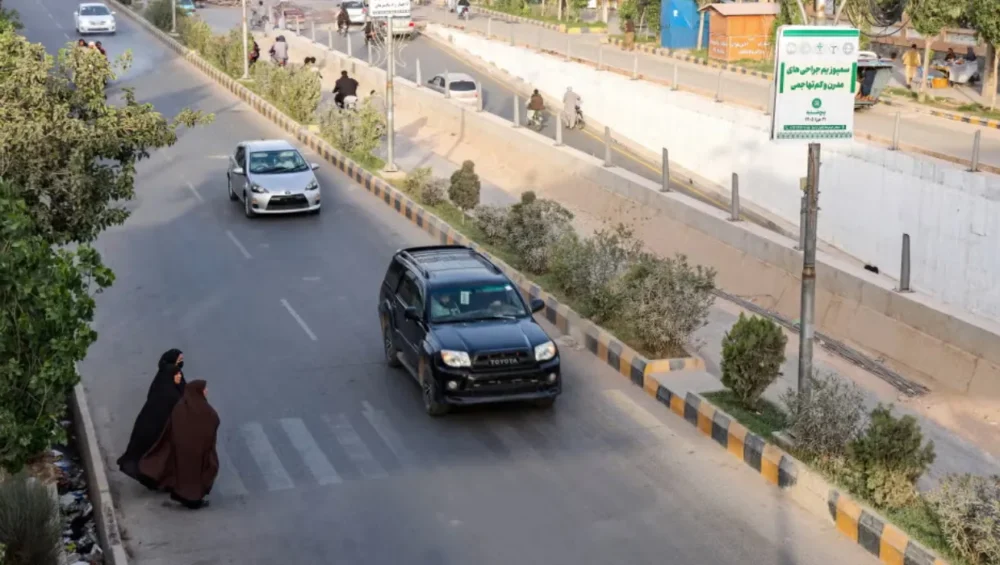
In the historical city of Herat, Afghanistan, the Taliban forces engaged in another instance of violence against peaceful protestors on June 9, 2026. What was initially intended to be a peaceful demonstration involving over 100 individuals – women among them, calling for their fundamental human rights – turned into a violent scene when the armed Taliban forces shot at the protestors, resulting in the death of a child and injuring several others. The events as described above by Human Rights Watch on June 11, 2026, reflect the pattern of atrocities that the Taliban has been engaging in since its ascension to power in 2021.
According to witnesses, the Taliban police force, which was fully armed, surrounded the area where the demonstration was taking place, and opened fire on the protesters. The demonstrators were comprised mostly of women who were demonstrating against the oppressive measures that the Taliban was imposing on women, especially regarding their right to wear hijab. Rather than engaging with the demonstrators and listening to their grievances, the Taliban immediately resorted to violence. Reports from various sources have claimed that the Taliban not only attacked the demonstrators but also started visiting hospitals looking for the wounded ones.
The deceased child was identified to be a little boy, although no information has been released regarding his name or age. It can only be said that the loss of this innocent life serves as a reminder of the toll paid by human lives at the hands of the ruthless regime of the Taliban. The extent of injuries suffered by other demonstrators, on the other hand, cannot be quantified in terms of exact numbers.
Human Rights Watch Condemns the Unlawful Violence
The international human rights community reacted swiftly to the Herat incident, with Human Rights Watch issuing a formal statement that condemned the Taliban’s actions as a clear violation of international human rights standards. The organization’s report, titled
“Afghanistan: Taliban Use Excessive Force against Protesters,”
laid out the factual details of the incident with precision and demanded accountability from the Taliban regime.
“Taliban security forces in Afghanistan used excessive force against protesters in the city of Herat on June 9, 2026,”
stated Human Rights Watch in their official announcement. The organization went further to detail the specific tactics employed, noting that Taliban forces
“beat protesters and shot toward the crowds, killing a child and injuring others, and detained an unknown number of people”.
This choice of wording is intentional as it highlights the fact that these actions are illegal according to international law that forbids the use of excessive force against peaceful protesters.
The importance of Human Rights Watch’s statement cannot be overstated considering the organization’s long history of monitoring abuses around the world. This participation is an indication that even after all these years, the international community continues to take a skeptical attitude towards the activities of the Taliban government.
UN Special Rapporteur Richard Bennett Expresses Alarm
The response was also forthcoming from the United Nations where the statement issued by the UN Special Rapporteur for the situation of human rights in Afghanistan, Richard Bennett, indicated how concerned the UN had become with the violence exhibited by the Taliban in their reaction to dissent. Richard Bennett, who is the foremost expert at the UN in matters relating to human rights in Afghanistan, holds an important place in human rights debates.
“Alarmed by excessive use of force against seemingly peaceful protesters in Herat today,”
Richard Bennett stated in his official communication. Use of the term “peaceful protesters” highlights the UN’s perception that the demonstration in Herat was one which posed no danger that could necessitate the violent response witnessed from the Taliban security forces. In his statement, Bennett seems to be suggesting that an inquiry should be done about this matter and that Taliban should comply with international guidelines on use of force in public demonstrations.
The participation of Bennett is especially notable considering that the UN has been watching over the human rights situation in Afghanistan ever since the Taliban regained power. This concern is part of a general trend highlighted in various reports of the UN over the past five years, showing how this regime consistently ignores basic human rights, especially for women and girls.
Amnesty International Urges Immediate Action
Amnesty International, another leading global human rights organization, also issued a statement calling for immediate action from the Taliban authorities. The organization’s South Asia Campaigner, Samira Hamidi, emphasized the contradiction between the Taliban’s public claims about human rights and their actual behavior on the ground.
“The Taliban have repeatedly insisted that they will respect human rights, yet these claims are completely contradicted by reports that they are using unlawful force against peaceful protesters and journalists at gatherings across Afghanistan, including using gunfire to disperse crowds and cables to lash protesters,”
Samira Hamidi stated. This statement is particularly powerful because it directly challenges the Taliban’s narrative of legitimacy and exposes the gap between their public declarations and their actual practices.
Amnesty International’s call to action included three specific demands: the Taliban must
“end the use of unlawful force against peaceful protesters, release those arbitrarily detained, and respect the rights of women and girls”.
These demands are not new but represent a consistent set of expectations that international human rights organizations have been raising since 2021. The repetition of these demands underscores the Taliban’s failure to meet any of them despite years of international pressure.
A Documented Pattern: Five Years of Violent Crackdowns
The Taliban’s attack on protesters on June 9, 2026, in Herat should not be considered an isolated case but rather as one of a series of attacks that have been conducted by the Taliban over the course of the past five years. Having come back into power in August 2021, the Taliban resorted to the use of violence to suppress any protests and especially protests of women who are defending their rights.
As early as September 2021, having barely taken power, the Taliban resorted to the violent suppression of a peaceful protest demonstration. It resulted in the deaths of four people, one of whom was a child. The demonstration took place in several cities, such as Kabul, Badakhshan, and Herat. The Taliban resorted to violence against peaceful civilians, using weapons, batons, and whips to suppress them.
The situation worsened significantly in January 2022 when the Taliban violently cracked down on a women’s rights demonstration in Kabul. Human Rights Watch reported that Taliban forces pointed firearms at protesters, administered electric shocks, used pepper spray, and physically assaulted women who dared to demand their rights. This incident marked an escalation in the Taliban’s tactics, introducing more sophisticated forms of torture and intimidation against peaceful demonstrators.
By 2024, the Taliban’s repression had intensified and broadened across all human rights categories, with particular focus on women’s rights. Human Rights Watch’s World Report 2024 noted that the Taliban had
“intensified and broadened their crackdown on human rights, particularly the rights of women and girls, in Afghanistan”.
This broadening of repression suggests that the regime view any form of dissent as a threat to its authority and responds with maximum force.
The Anti-Hijab Protest Context
The June 9, 2026 protest in Herat was prompted by the actions taken by the Taliban on restricting women’s rights, including their policies on hijab, which also restricted women’s freedom to participate in public affairs. According to sources, some women took part in this protest because they were reacting to what they considered the Taliban’s violation of women’s dignity and right to autonomy in matters of dress code.
The issue of women’s dress code and public behavior in general has been among the most controversial elements of Taliban rule since 2021. Although the Taliban defends their policy as an attempt to uphold Islamic values, international observers and human rights organizations say otherwise. This shows how frustrated and desperate Afghan women are at their inability to change the situation.
The use of violence by the Taliban regime in dealing with these demonstrations has been persistent, with armed forces resorting to shooting and beating among other acts of violence in order to drive away the demonstrators. This indicates that the Taliban see the women’s demand for their rights as an act of defiance against their rule.
The Hospital Searches: A New Tactics of Intimidation
Perhaps the most frightening element of the Herat demonstration on June 2026 is the news that the Taliban has started visiting hospitals in search for injured demonstrators. According to sources speaking to Afghanistan International, “The Taliban has detained several protestors and has started visiting hospitals in search for injured demonstrators.” Such a move by the Taliban indicates that the group has resorted to using even more intimidating tactics by extending its reach to areas where injured persons should seek refuge.
Hospital visits are unethical not only because they represent a violation of the rights and freedoms of patients who seek medical treatment, but they may result in further suffering among those who have been hurt in the protest. It is possible that other wounded people may refrain from getting medical assistance due to fear that their whereabouts could be revealed by the Taliban.
The hospital searches also demonstrate the Taliban’s willingness to violate the neutrality of medical institutions, which are supposed to be protected under international law. This violation suggests that the regime views any space where protesters might gather, including hospitals, as potential sites of resistance that must be controlled through intimidation and force.
The Child’s Death: A Symbol of Taliban Cruelty
The death of the child in Herat on June 9, 2026, constitutes one of the most blatant abuses of human rights by the Taliban and is an act that contravenes international norms of protecting children. Killing a child in the context of a peaceful demonstration is an affront to many international conventions, such as the Convention on the Rights of the Child, which Afghanistan has signed up to. It further constitutes a violation of the Taliban’s policy of safeguarding vulnerable groups, including children.
The fact that a child was killed among the protesters who were adults implies that the Taliban security forces were not able to distinguish among the protesters, and hence did not evaluate the potential danger of individual demonstrators. On the contrary, the security forces appeared to have fired arbitrarily, without making any distinctions between adults and children, and hence risking the lives of both alike.