
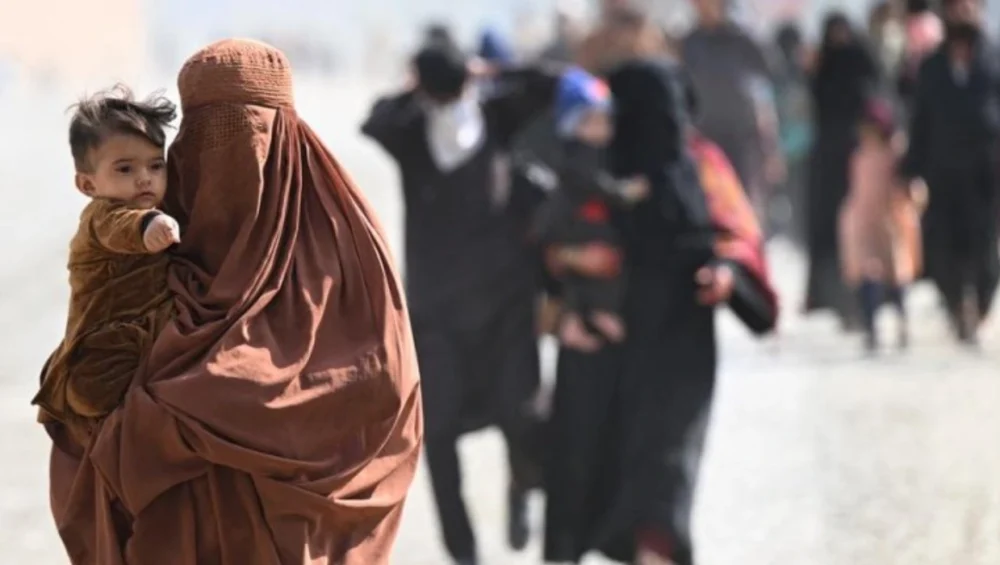
Trump’s government is sending nearly two dozen individuals including Iranian and Afghan women back to the Central African Republic, marking a dramatic intensification of the practice of third-country deportations and sparking outrage from human rights groups around the world. This unprecedented step involves the deportation of immigrants to a country that the United States government itself considers too risky even for traveling. It calls into question the legality, morality, and human costs of immigration policies under Donald Trump’s second term.
The flight for deportees, set for Thursday, June 11, 2026, represents the first occasion that the United States has ever deported people to the Central African Republic, which is suffering from dire poverty, strife, and instability, thus making it the recipient of the harshest travel warning issued by the United States Department of State. The legal representation provided to the deportees is unequivocal in calling the scenario catastrophic from both a legal and ethical standpoint, especially considering some deportees have court decisions stating that they cannot be sent to their homelands as they will be tortured there.
The Deportees: Women Without Criminal History Facing Extreme Danger
The two Iranian women who have been included among those who will be deported by force are not involved in any criminal acts but instead sought asylum in America. According to their lawyer, Ar Jal Pawels, these women have some laws protecting them from being deported to their home country of Iran, and hence deporting them to Central Africa becomes legally difficult. These Iranian women have undergone detainment in the U.S. while their immigration cases were being sorted out, and they are to be deported to another state they know nothing about.
The broader group includes migrants from Afghanistan and Syria, creating a diverse cohort of individuals who fled persecution, violence, or extreme hardship in their home nations. None of these deportees have ever been to the Central African Republic, nor do they possess any cultural, linguistic, or familial ties to the country. This complete disconnection between deportees and destination country exemplifies the fundamentally arbitrary nature of third-country removals, which treat human beings as inventory to be shipped to whatever nation agrees to accept them.
U.S. Travel Warning Contradicts Deportation Decision
The most damning contradiction in this deportation plan lies in the U.S. government’s own assessment of the Central African Republic’s safety conditions. The State Department’s official travel advisory for CAR states unequivocally:
“Do not travel for any reason.”
This warning represents the highest level of danger in the U.S. travel advisory system, reserved for countries where life-threatening violence, kidnapping, civil unrest, or complete lawlessness make travel impossible to guarantee safely.
Paradoxically, the U.S. government goes an extra step further in giving its recommendations, advising individuals contemplating traveling to the Central African Republic that they should make a will before traveling there, owing to the high risks of dying. This recommendation clearly reveals that the Central African Republic has come to represent death for the U.S. government through the communication of its representatives. Strikingly, at the very time when the Central African Republic is being warned against, nearly two dozen individuals are forcibly transported there by the Trump administration.
The Central African Republic is faced with very high levels of poverty resulting in millions not having access to enough food, clean water, and medical care. Violence in the region due to the fighting between government troops and various armed militias has resulted in an humanitarian disaster whereby civilians are being killed, sexually abused, and forcibly displaced. With its poor infrastructure, there are areas within the country where such amenities as electricity, health facilities, and educational institutions do not exist.
Legal Protections Ignored in Third-Country Removals
The immigration lawyers who have defended the deportees have pointed out several troubling issues related to the determination of the administration to deport people without paying attention to the fact that there were already judicial decisions protecting some people against the possibility of being deported to those particular countries. There are deportees that have legal judgments that protect them against deportation back to Iran, Afghanistan, or Syria as these countries are known places where they could be subjected to torture, persecution, or even death.
Ar Jal Pawels, attorney for the Iranian women, emphasized the legal impossibility of their situation:
“The women have legal safeguards against deportation to Iran, yet the government is proceeding with removal to a country where they face unknown dangers.”
This statement captures the core legal contradiction: the administration is respecting court orders only superficially by avoiding the named countries while completely disregarding the underlying principle that these individuals cannot be returned to environments where they face persecution.
It is unclear whether a more comprehensive legal regime exists regarding third-party deportations. Although the Trump administration has been very keen on signing such agreements with countries that will take deportees, most of them are opaque, fail to involve Congress, and do not have any form of treaty law behind them. The Central African Republic agreement, for example, seems to have been struck following the U.S. delegation’s visit to Bangui recently.
Human Rights Organizations Issue Urgent Condemnations
Amnesty International has responded to the deportation plan with immediate and forceful condemnation, declaring the organization
“deeply alarmed by reports that the Trump Administration plans to deport Afghan and Iranian nationals to the Central African Republic tomorrow.”
The human rights group emphasized that third-country removals raise serious concerns about compliance with international refugee law and the principle of non-refoulement, which prohibits returning refugees to situations where they face persecution.
The accusation by Amnesty International is part of the general trend of international disapproval of the immigration policies of the Trump administration. Various human rights groups have observed that deportation deals with other nations usually circumvent normal procedures for granting asylum to individuals, do not give people access to legal counsel, and deport immigrants to places where proper refugee systems are not established. The Central African Republic, which itself faces an internal humanitarian crisis, does not have the capability to provide for deported individuals who need help with asylum proceedings or even health services.
Trump Administration’s Expanding Deportation Network
This latest agreement with the CAR is yet another step by the Trump administration to expand its growing list of countries willing to receive deportees. In just the last six months, similar deals have been made with Ghana, Equatorial Guinea, and Eswatini. The result is that the administration will be able to maintain its hard-line stance on immigration, but not technically deport any individuals to countries where persecution is known to occur.
The administration’s method clearly indicates a pattern in trying to reach deals with countries that can accommodate these people without necessarily having proper structures in place to do so, or any capacity for receiving such people. This is clearly a deal-making tactic that focuses on numbers over due diligence into whether the destination countries are in a position to accommodate these deportees in a humane manner. This is illustrated by the deal made with the Central African Republic within a visit by one delegation.
Arbitrary Nature of Third-Country Destinations
The sheer arbitrariness associated with deportation into third countries is brought out clearly when looking at the lack of correlation between the deportees and the destination to which they are being deported. There exists no association between the Iranian ladies, Afghan immigrants, and the Syrian nationals on the plane and the Central African Republic. None of them speaks the language, knows about the culture, nor has connections to the place in terms of geographical knowledge and laws.
Third-country removals treat human beings as cargo to be deposited in whatever nation agrees to accept them, disregarding fundamental principles of dignity, cultural connection, and practical integration. The Central African Republic offers no pathway for these deportees to build meaningful lives, as the country itself faces one of the world’s worst humanitarian crises. Sending asylum seekers to such an environment essentially condemns them to continued displacement, poverty, and potential violence without any realistic prospect of safety or stability.
Broader Implications for International Refugee Protection
It is of utmost importance for the international refugee protection regime to analyze the deportation of individuals to the Central African Republic by the US Trump government. In case major countries such as the US are able to evade their obligations not to deport individuals by transporting refugees to other countries that have no relationship whatsoever with the refugees, then the refugee protection regime will become highly susceptible to manipulation. Another possibility is that other countries could adopt this practice and end up creating an international refugee protection regime wherein countries transfer their refugee problem to other weak states.
This approach undermines the 1951 Refugee Convention and its core principles, potentially triggering a cascade of similar policies that would leave millions of asylum seekers without protection. The Central African Republic, already overwhelmed by internal conflict and poverty, represents a particularly dangerous test case for this strategy, as the country lacks nearly all the resources necessary to support incoming deportees humanely.
Human Rights at Breaking Point
The deportation of migrants from Iran, Afghanistan, and Syria to the Central African Republic is a crisis of human rights that requires immediate attention from the international community. The Trump administration’s move to deport people to a country that America considers too unsafe even for travel shows an outright violation of the very core of human rights and international law. With the departure of this deportation flight today, more than two dozen people are heading into an environment that offers no protection under the law, any cultural background, and no safe haven.
The international community must hold the United States accountable for this policy and demand that third-country removals cease until comprehensive safeguards protect deportees from persecution, torture, and death. Human rights are not negotiable, and the Central African Republic deportation represents a breaking point that threatens the very foundation of international refugee protection.