
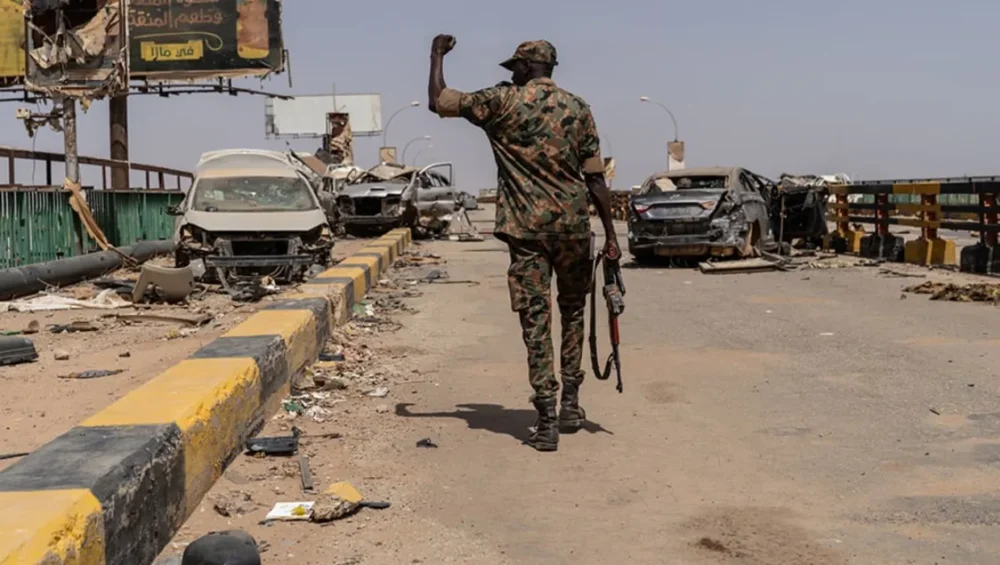
The war in Sudan has turned into one of the most devastating humanitarian tragedies in the world. Millions of civilians have been displaced, entire neighborhoods have been destroyed, and families are struggling to survive amid hunger, fear, and constant violence. From a human rights perspective, this conflict is not only about battlefield losses; it is about the collapse of protection for ordinary people.
What makes the situation even more alarming is the allegation that outside actors may be contributing to the violence. When armed groups receive support, training, equipment, or manpower from external networks, the suffering of civilians can become even more severe. In such cases, accountability is not limited to those firing weapons on the ground, but also extends to those who may help sustain the conflict behind the scenes.
The Human Rights Watch Report
According to the Human Rights Watch report
“From Bogotá to El Fasher: The UAE’s Role in the Deployment of Colombian Fighters and Other Backing to the Rapid Support Forces in Sudan,”
evidence suggests that Colombian private military contractors were recruited through a network linked to an Abu Dhabi-based security company and then deployed to support the Rapid Support Forces (RSF) in Sudan. The report describes travel through UAE military facilities and transit points in Libya, Somalia, and Chad, raising serious concerns about how these contractors moved into the conflict zone.
Human Rights Watch argues that this system of recruitment and deployment may have played a role in strengthening the RSF during a period when the group was already accused of serious abuses against civilians. The report also raises questions about possible links between private companies and state institutions, suggesting that the arrangement may not have been fully private in nature. If these findings are confirmed, they would point to a troubling example of how private military actors can be used to support armed conflict while creating distance between decision-makers and direct responsibility.
Civilian Suffering in Sudan
The human cost of the war in Sudan has been immense. The RSF and other armed actors have been accused of mass killings, forced displacement, looting, shelling, sexual violence, and attacks on civilians and civilian infrastructure. In places like El Fasher, civilians have faced siege conditions, starvation, and repeated attacks that have made survival extremely difficult.
From a human rights standpoint, these abuses represent a direct attack on the basic rights to life, dignity, security, and freedom from cruelty. Civilians are not supposed to become targets of war, yet in Sudan many have been trapped in exactly that position. The destruction of homes, hospitals, markets, and aid routes has also made the humanitarian crisis worse, leaving many people without food, medicine, or safe shelter.
Why External Support Matters
External backing can significantly worsen a conflict because it gives armed groups more capacity to continue violence. Support in the form of fighters, logistics, transport, and weapons can help prolong war and increase the scale of civilian suffering. In Sudan, the Human Rights Watch report suggests that foreign contractors and possible supply networks may have contributed to the RSF’s military strength at a critical moment.
This raises a serious human rights issue: if powerful actors knowingly support forces that commit atrocities, they may become part of the chain of abuse. International law places obligations on states and private actors not to assist violations such as war crimes or crimes against humanity. That is why any claims of outside support must be investigated fully and independently.
Child Soldiers and Exploitation
One of the most disturbing parts of the report is the allegation that contractors may have trained RSF recruits, including children. The use of child soldiers is a grave violation of international human rights and humanitarian law. Children should be in school, at home, or in safe care, not being prepared for combat.
The recruitment and use of children in war causes long-term harm that extends far beyond the conflict itself. It destroys childhood, exposes minors to trauma and violence, and often leaves lasting physical and psychological damage. Any credible evidence of child soldier involvement should trigger immediate investigation and strong legal action.
Accountability and Justice
A human rights response to the Sudan conflict must go beyond condemnation. It requires real accountability for abuses committed by armed groups and by anyone who helped them. This includes investigating recruitment networks, financing channels, transport routes, and any institutional or state-level involvement that enabled the violence.
Justice also means protecting survivors, supporting displaced families, and ensuring humanitarian aid reaches those who need it most. Without accountability, the cycle of abuse is likely to continue. With it, there is at least a chance to protect civilians and restore some measure of dignity to those affected.
The Sudan war shows how quickly a conflict can become a human rights disaster when civilians are left unprotected and external support deepens the violence. The allegations in the Human Rights Watch report are serious because they suggest that the suffering in Sudan may not be the result of local conflict alone, but also of a wider network of support that helped sustain it.
From a human rights perspective, the most urgent priorities are accountability, civilian protection, and humanitarian access. The world should not look away while civilians continue to bear the consequences of violence, starvation, and displacement.