
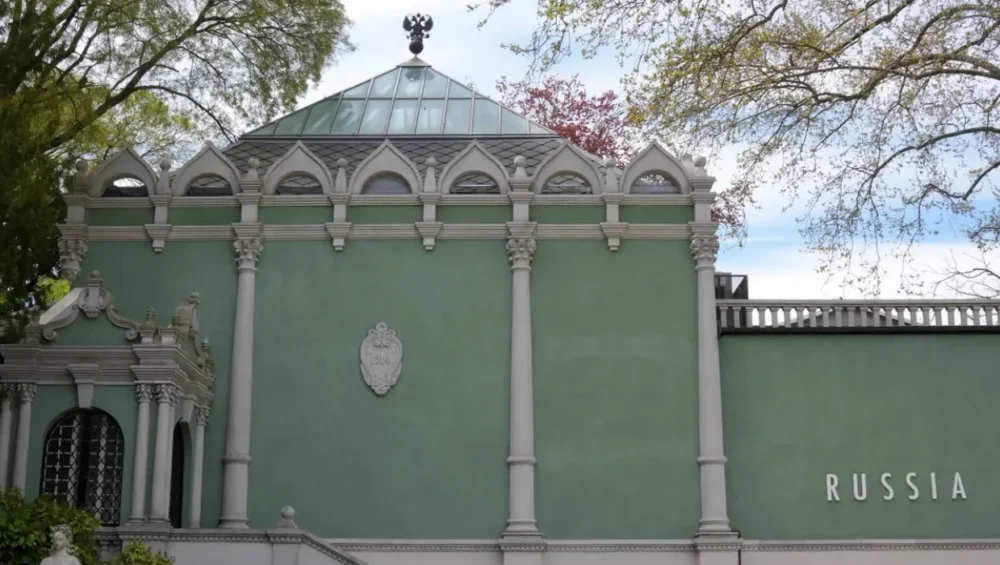
The decision of the Biennale Sanctions War-Crimes Nations is a turning point of the old tradition of institutional neutrality in international art exhibitions. The Venice Biennale has re-branded itself as an actor that takes direct action with geopolitical responsibility and not only mirrors it by limiting access to the highest awards according to the indictments of the International Criminal Court.
This change is indicative of a wider cultural change in cultural governance in which the large institutions are becoming more and more obligated to answer to world crises. The fact that the jury puts stress on its obligation to the impulses of its epoch has been an indication that art would no longer be put off limits by legal and ethical structures that define international relations.
Redefining The Role Of International Art Institutions
Venice Biennale has long been a place of national representation, expression of art, a place of creative freedom and diplomatic symbolism. This balance is complicated with the new policy as it encroaches legal standards in aesthetic judgment, which actually redefines the scope of the curatorial responsibility.
The jury makes recognition a type of symbolic punishment by making award eligibility dependent on ICC charges. This strategy does not rule out participation per se, but establishes a hierarchy where they are allowed to participate, but prestige is limited, which turns around the dynamics of cultural competition.
Influence Of Curatorial Vision And Institutional Leadership
This policy is consistent with the curatorial approach which was influenced by Koyo Kouoh whose focus on art in response to crises in the world has defined the curatorial approach of the 61st edition. The fact that the jury took the decision as it was, shows it is not an isolated power decision but rather a wider institutional ethos that emphasizes being relevant over detached.
Such alignment implies that the curatorial leadership is becoming more of a centerpiece in the manner in which global exhibitions define their social roles. The development of the Biennale reflects a broader trend of curators not merely providing organization to artistic material but also providing a discursive space of ethical mediation.
Historical Precedents And Continuity With Political Interventions
Though the present ruling seems to be unique in that it depended on the international legal mechanisms, it is founded on a tradition of political interventions in the Biennale system. Exclusions and symbolic acts in the past show that the institution has acted sporadically to global crises, albeit in a less formalized manner.
These precedents furnish a contextual basis to comprehend the 2026 policy as a continuum and not a discontinuity. The element of ICC criteria, however, brings a procedural rigor to it which differentiates it with previous actions.
Earlier Exclusions And Solidarity Gestures
The way in which the Biennale was excluded of South Africa during the apartheid period and also the reaction to the Prague spring crisis depicts how cultural platforms have been used in the past to respond to political happenings. Such activities were motivated by morality but without a systemized structure, but were based on ad hoc decisions by the prevailing situations.
By contrast, the 2026 policy codifies such engagement by basing it on international law. This change of moral stance to legal one is a great change in the way the institutions of culture rationalize their interventions.
Transition From 2025 Artist Activism To Institutional Policy
The ruling is also indicative of the collective activism of the artists over 2025, during which petitions and open letters demanded more decisive action over conflicts between Russia and Israel. These movements placed a neutral stand as complacency and pushed institutions to make more explicit moral stances.
This pressure moved on into a policy form of action by 2026, and this is how a long-term advocacy can transform institutional behavior. The reaction of the Biennale exemplifies a process of feedback between art worlds and governments in which the calls to accountability are slowly transformed into official systems.
ICC Warrants As A Framework For Cultural Sanctioning
This criterion of award eligibility based on the use of International Criminal Court presents a new intersect between international law and cultural governance. The policy sets a legal barrier, which educates artistic appreciation by prioritizing those leaders charged with crimes against humanity.
This strategy will focus on leaders like Vladimir Putin and Benjamin Netanyahu whose indictments respectively have influenced the world discourse on accountability. The move to associate these cases with the Biennale awards can be seen as an attempt to streamline the cultural practices according to the legal standards.
Legal Precision And Selective Application
The ICC charges upon which the policy relies have provided a certain level of specificity since the policy is only limited to cases in which formal legal actions are involved. This helps avoid the gray area that could emerge due to more general political considerations, but it offers an unambiguous, though limited, foundation on which to exclude.
Nevertheless, this selectivity also casts issues on consistency, with various conflicts and accusations being beyond the scope of the ICC. The framework thus sets an example that can be challenging to generalize without institutionalization.
Implications For National Representation And Artistic Autonomy
By making a line between participation and eligibility to receive awards, the Biennale attempts to maintain the inclusion of art, but at the same time points to the disapproval of state actions. This is a two-way strategy to ensure that individual artists do not suffer the consequences of collective punishment and at the same time, the symbolic nature of national pavilions is fulfilled.
However, the difference is still debatable, because the representation of nationality in artists predisposes them to the national identities. Tensions between individual creativity and the geopolitical structures in which it is exhibited are thus revealed in the policy.
Stakeholder Reactions And Institutional Pressures
The policy of Biennale Sanctions War-Crimes Nations has received both positive and negative reactions of artists, governments, and funding organizations, as it is not a simple policy. Although the decision has been considered by some as a need to make a statement of ethical responsibility, others regard it as politicization of the cultural space.
These responses underscore the difficulties associated with institutions trying to strike a balance between conflicting demands in a polarized international system. This Biennale is especially susceptible to these pressures because of its capacity to be on the border of both art and diplomacy.
Artist Community Perspectives And Ongoing Debates
The move has been received with a lot of enthusiasm by many artists and curators as a long-awaited recognition of the contribution that art can make in solving global injustices. The policy somewhat meets the call to take a more decisive action, but scholars still debate whether the limited award issue ought to be taken or a complete ban should be viewed.
Meanwhile, there are still fears of politicization to the detriment of artistic merit. Opponents claim that the move to incorporate legal parameters in the judging process poses the danger of diversion of attention to creative excellence towards issues of geopolitics.
State Responses And Funding Dynamics
That there are no official responses as of yet by the affected states does not lessen the possible diplomatic consequences. Cultural engagement is usually a form of soft power, and the prohibitions of the recognition could have symbolic significance in the global affairs.
Funding agencies, especially in the European Union can also affect the implementation of the policy. Money-related reliance adds more responsibility levels that may influence the future decision-making of the Biennale and its ability to stay independent.
Potential Ripple Effects Across International Exhibitions
The precedent set in Venice may influence other major exhibitions and festivals, encouraging them to adopt similar criteria or develop alternative frameworks for addressing geopolitical issues. Events such as Documenta and Art Basel could face increased pressure to clarify their positions on neutrality and accountability.
At the same time, divergence in approaches could fragment the global art ecosystem, creating inconsistencies in how artists and nations are treated across platforms. This fragmentation would reflect broader geopolitical divides, extending them into cultural spaces.
The Biennale’s recalibration of its role suggests that the boundaries between artistic expression and political responsibility are becoming increasingly porous, shaped by legal frameworks, activist pressures, and institutional choices. As cultural platforms continue to grapple with these dynamics, the question is not only how they respond to current conflicts but how they will define their responsibilities in future crises, where the line between representation and endorsement may grow ever more contested.