
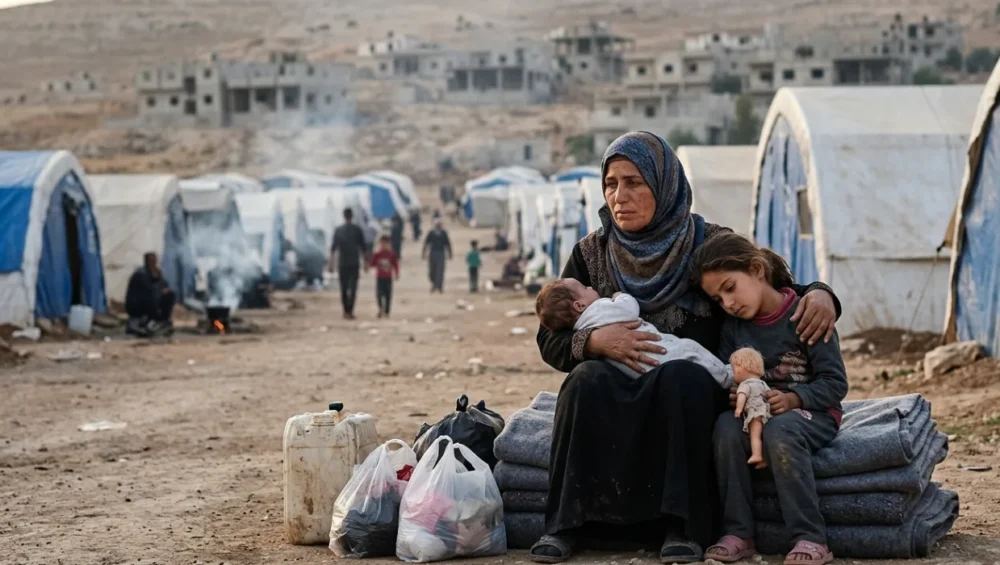
The human rights picture emerging from the Iran war is severe: civilians have been killed in large numbers, thousands more injured, and millions uprooted from their homes. Beyond the battlefield damage, the conflict has also deepened restrictions on civil liberties, increased arbitrary detention, and raised serious questions about compliance with international humanitarian law and the right to life.
Civilian Toll
The most immediate human rights concern is the scale of civilian harm. Iranian authorities reported that more than 1,300 people had been killed and more than 7,000 injured, while other rights-monitoring groups placed the death toll higher, including one report that said at least 1,443 civilians had been killed and 217 of them were children.
Amnesty International said the conflict “led to civilian deaths and involved violations of international humanitarian law,” and Human Rights Watch reported that Israeli forces unlawfully attacked Evin prison in Tehran, killing and injuring civilians in what it described as an apparent war crime. The BBC also reported figures from rights monitors suggesting that at least 1,606 civilians, including 244 children, had died in Iran since the conflict began.
Displacement Crisis
Displacement has become one of the most visible human consequences of the war. UN-linked reporting said up to 3.2 million people had been displaced across Iran, with many leaving Tehran and other major cities for northern and rural areas. That displacement figure is not just a statistic; it reflects the collapse of daily life for families forced to flee repeated attacks, fear of future strikes, and damage to essential infrastructure.
A separate report estimated that roughly 600,000 to 1 million families were forced to move, while another early estimate put displacement at nearly 800,000 people across Iran and Lebanon combined. These numbers show how quickly a military campaign can turn into a broad civilian emergency, especially when urban areas, transport networks, and energy systems are affected.
Statements By Officials
Several officials and institutions have publicly condemned the scale of harm. Iran’s ambassador to the UN in Geneva, Ali Bahreini, said, “The international community must not remain silent.”
UNHCR’s Ayaki Ito warned that displacement was likely to grow further as the violence continued, reflecting the view that the humanitarian situation was still deteriorating rather than stabilizing. The UN Independent International Fact-Finding Mission on Iran said the country’s “deepening human rights crisis” was likely to worsen after the US-Israeli attacks and Iran’s retaliatory strikes.
Human Rights Watch concluded that “Iranian authorities carried out executions on a scale unseen since the late 1980s,” while also noting that repression had intensified under the cover of national security. The International Committee of the Red Cross described the civilian toll as “alarming” and emphasized that civilians and civilian infrastructure must be protected.
Patterns Of Violation
From a human rights perspective, the central violations appear to involve the right to life, the prohibition on indiscriminate attacks, and the protection of civilians under international humanitarian law. When strikes hit homes, prisons, hospitals, and other civilian sites, the distinction between military and civilian targets becomes critical.
The reported damage to hospitals, with 25 facilities affected and 9 rendered non-operational, is especially troubling because it undermines access to healthcare at the very moment when casualty numbers are rising. If verified, such attacks can amount to unlawful attacks on protected objects, particularly where no clear military necessity is shown.
Children And Families
The scale of child casualties is one of the most disturbing parts of this report. Different sources placed the number of children killed at around 217 to 250, and one report said 45 children were among those killed in the initial wave of strikes. Children are not only direct victims; they are also among the most affected by displacement, interrupted schooling, trauma, and the loss of family support systems.
Families fleeing conflict zones face a layered rights crisis. They lose housing, access to food, schooling, medical care, and legal protection at the same time, which makes displacement a human rights issue rather than only a humanitarian one.
Internal Repression
The war has also been accompanied by a tightening of repression inside Iran. Amnesty International reported that Iranian authorities used the conflict to intensify internal repression, including arbitrary detention, harassment, and unjust prosecutions of people exercising their rights.
Human Rights Watch likewise said authorities carried out mass and arbitrary arrests and “ratcheted up repression,” especially after the armed conflict with Israel. The UN Fact-Finding Mission warned that repression in Iran had reached “unprecedented levels,” and said violations may amount to crimes against humanity. This combination of external warfare and internal crackdown is especially dangerous because it closes civic space precisely when independent monitoring is most needed.
Accountability Questions
The evidence reported so far raises serious accountability questions for all parties involved. HRW said the attack on Evin prison occurred “absent any evident military target,” which is the kind of claim that requires rigorous investigation under the laws of war. UN experts also said recent United States attacks “seriously threatened human rights,” including the rights to life, health, and self-determination.
The broader issue is not only whether a military objective existed, but also whether the expected civilian harm was proportionate and whether feasible precautions were taken to reduce it. When casualty figures rise into the thousands and displacement into the millions, the burden on states to justify their actions becomes far heavier.
Wider Humanitarian Impact
The humanitarian damage extends beyond deaths and displacement. Rights groups reported disruption to transport, energy, and internet access, which makes it harder for civilians to communicate, seek safety, or receive aid. Restrictions on journalists and intimidation of medical staff further weaken transparency and obscure the true scale of harm.
That secrecy itself is a human rights problem. Hengaw said Iranian security institutions had adopted a policy of “systematic concealment,” withholding accurate casualty figures and in some cases releasing numbers below those documented on the ground. Without credible access to information, families cannot verify deaths, aid agencies cannot respond efficiently, and accountability becomes much harder to achieve.
Critical Assessment
Critically, this conflict shows how quickly military escalation can evolve into a full civilian protection crisis. The reported deaths of civilians and children, damage to hospitals, mass displacement, and internal repression together suggest not isolated incidents but a pattern of harm affecting basic human rights on multiple fronts.
The human rights standard is not simply whether war occurred, but whether the conduct of war respected limits. On the evidence reported here, those limits appear to have been repeatedly strained, and in some cases possibly crossed. The scale of suffering means the central question is now accountability: who ordered the strikes, who failed to prevent civilian harm, and what independent mechanism will investigate alleged violations.
The Iran war’s human cost is measured not only in death counts but in broken families, displaced communities, destroyed health services, and a shrinking civic space. Officials and rights bodies have repeatedly warned that civilians are paying the price, and the available evidence points to serious violations that require independent investigation and legal scrutiny.