
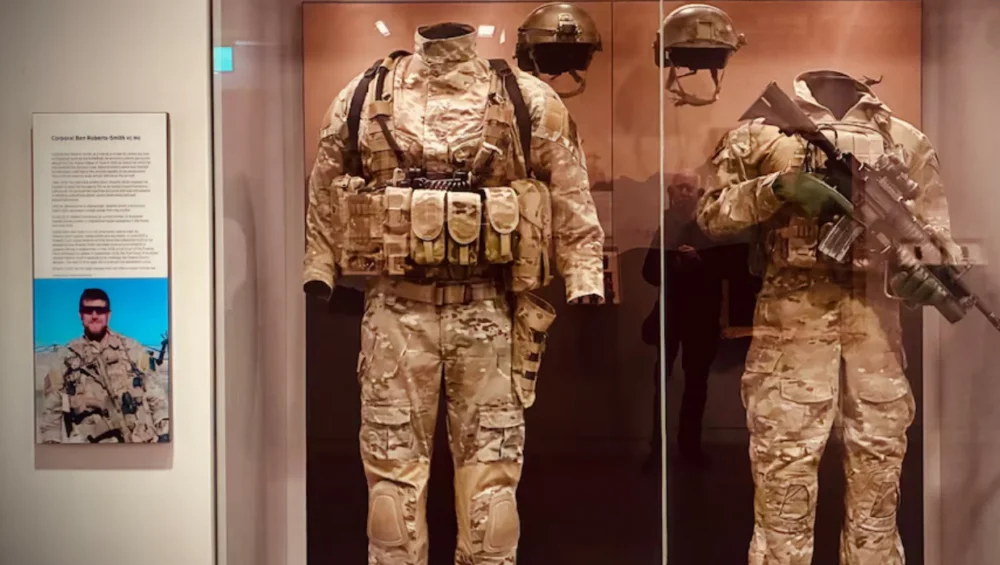
The Brereton Report has been one of the most impactful military investigations in the contemporary history of Australia, transforming the perceptions of the Australian people on its involvement in Afghanistan. The report was formally referred to as the Inspector-General of the Australian Defence Force Afghanistan Inquiry after it was published as the result of a four-year inquiry into Australian special forces behavior between 2005 and 2016. Its results, which were published in November 2020, reported plausible signs of 39 civic and prisoner murders in 23 distinct instances.
The investigation revealed systemic shortcomings and not individual wrongdoings. Such practices like blooding where junior soldiers were purportedly called to execute detainees so as to attain their first kill indicated that a culture that was no longer in line with the existing military ethics. The report came to the conclusion that a warrior culture had emerged in some units, a culture that condoned the violation of the rules and the loss of the line between fighting and civil disobedience.
Redactions and public release limitations
The published edition of the Brereton Report was severely censored, especially where information on current investigations was involved. The purpose of these omissions was to safeguard the integrity of future prosecutions, but they also made the entire scope of allegations less visible to the public. This conflict between transparency and caution of the law became one of the hallmarks of the report reception.
Conversations escalated on whether the partial disclosure would be able to satisfy the accountability expectations. Although the report made 143 recommendations regarding leadership reform, cultural change, and victim compensation, they were not fully detailed, leaving unanswered questions regarding the extent to which institutions were responsible.
Australian War Memorial display and curatorial strategy
The move to place the Brereton Report in the Australian War Memorial is a big turning point in the presentation of military history to the masses. The institution has traditionally been concerned with commemoration but is currently adopting a critical reflection in its narratives.
Gallery context and exhibit integration
In June 2026, as part of the extended redevelopment of Anzac Hall, the Afghanistan gallery is planned to open which will contain about 1,200 artifacts related to the 20-year history of Australian military participation. The redacted Brereton Report is also placed in the middle of the frame, as director Matt Anderson explained that the national narrative is composed by inserting challenging elements.
The context provides the position of the report in the greater historical continuum in the placement of the report between medals, uniforms and personal items. Instead of being a standalone anomaly, the exhibit incorporates the results into the lived experience of the conflict, and the concept that accountability is a part of the military story is enhanced.
Curatorial decisions and ethical framing
Curators chose to show the censored edition of the report because they did not want to interfere with on-going investigations by the Office of Special Investigator. This ruling is a compromise between openness and lawfulness, in which the necessity to inform the society should not override the processes of the judiciary.
The practice also indicates a transformation of the memorial practices. Introducing controversial and uncomfortable elements into the narrative of military history, the institution shifts its focus beyond a strictly commemorative mission to a more ethically complex and institutionally critical one.
Developments since 2020 and progress on prosecutions
The initiative to seek accountability since the publication of the Brereton Report has been carried out in a mix of investigative, legal, and administrative actions. The speed and results of those initiatives still influence the general opinion about the effect of the inquiry.
Office of the Special Investigator and legal actions
The legal response has been led by the Office of the Special Investigator, which was instituted in 2021 and through the operation Emerald in partnership with the Australian Federal Police. One ex-special forces soldier was charged with murder in the New South Wales Supreme Court in early 2026, the first criminal case to arise due to the findings of the report.
Although 53 investigations were started at the beginning, many of them have been shut down because of the lack of evidence. By 2025, the officials reported that numerous cases were nearly being resolved, with a preference being made on the cases most likely to satisfy prosecutorial thresholds. Although it is recommended to prosecute dozens of cases, the few charges are indicative of the difficulty in converting the results of the investigation into the proceedings.
Administrative reforms and military response
Other than prosecutions, the Australian Defence Force has adopted administrative measures to counter culture and leadership failures. References that were granted to units involved have been withdrawn and staff associating with bad behavior have been dismissed or fired. The top management has not been spared either and there have been cases of disciplinary measures that have been halted until the law takes its course.
These actions are indicative of efforts to deal with both personal responsibility issues and structural change. Nevertheless, there are questions concerning the possibility of eliminating cultural problems found in the report using institutional changes.
Stakeholder perspectives and contested interpretations
The display of the Brereton Report and its memorial has evoked varied reactions among the military officials, human rights activists, the media observers, and the communities at stake. These views demonstrate the difficult nature of the understanding of accountability in a conflict environment.
Military leadership and institutional reflection
The top defence officials have admitted that there was a toxic competitiveness within some of the special forces units and they identified internal forces as contributing to bad behaviour. This recognition has been put into perspective as a step that will restore trust and strengthen the ethical culture within the military.
Meanwhile, leadership has highlighted the need to focus on due process as it should not draw conclusions that may jeopardize the continuity of legal processes or the well-being of the personnel.
Human rights and victim-centered concerns
Human rights groups have not only embraced the findings of the report but also raised concern about the rate of accountability. The victim compensation issue and increased transparency are still demanded by advocacy groups who believe that the international legal demands should be taken more decisive action.
To Afghan communities, the memorial display is a partial recognition and not a full solution. The inability to access witnesses and evidence because of the prevailing political situation in Afghanistan makes it difficult to seek justice, and this symbolism makes the exhibit especially important.
Transparency trade-offs and institutional credibility
The exhibited censored Brereton Report highlights the tension at large between openness and procedural fairness. Although the report addition is itself an indicator of institutional readiness to face challenging realities, the redactions indicate that limitations remain.
Public trust and incomplete disclosure
Partial transparency risks creating ambiguity. While the public is informed of wrongdoing, the absence of full detail can undermine confidence in the completeness of the narrative. This dynamic mirrors earlier concerns that initial responses to allegations were insufficiently transparent.
The memorial’s decision to proceed with the display reflects an attempt to navigate this challenge, offering visibility without compromising legal processes.
Timing and prosecutorial considerations
The timing of the exhibit aligns with developments in ongoing investigations, suggesting a calculated effort to present the report without interfering in judicial outcomes. This coordination reflects an institutional awareness of the interplay between public history and legal accountability.
International and domestic implications of the display
The Brereton Report’s visibility at the Australian War Memorial carries implications beyond national borders, influencing how other countries address similar allegations arising from conflicts in Iraq and Afghanistan.
Global precedent and legal scrutiny
Australia’s approach is being closely observed by international institutions, including those concerned with war crimes accountability. The extent to which prosecutions are pursued may affect perceptions of compliance with international legal standards, particularly under frameworks such as the Rome Statute.
The challenges of evidence collection and witness access in Afghanistan, especially under Taliban governance, further complicate these efforts, increasing reliance on domestic processes to deliver accountability.
Domestic cultural and institutional shifts
Within Australia, the report and its display contribute to an evolving public discourse on military conduct. The inclusion of war crimes within a national memorial context reflects a broader cultural shift toward acknowledging complexity in historical narratives.
This shift may influence future military training, oversight, and public expectations, reinforcing the idea that accountability is integral to institutional legitimacy.
As the Brereton Report occupies a visible place within the Australian War Memorial, it transforms from a legal document into a focal point of national reflection. The interplay between redacted truth and public acknowledgment raises ongoing questions about whether partial visibility can sustain long-term trust, or whether deeper transparency will be required to fully reconcile the legacy of conflict with the demands of justice and historical memory.