
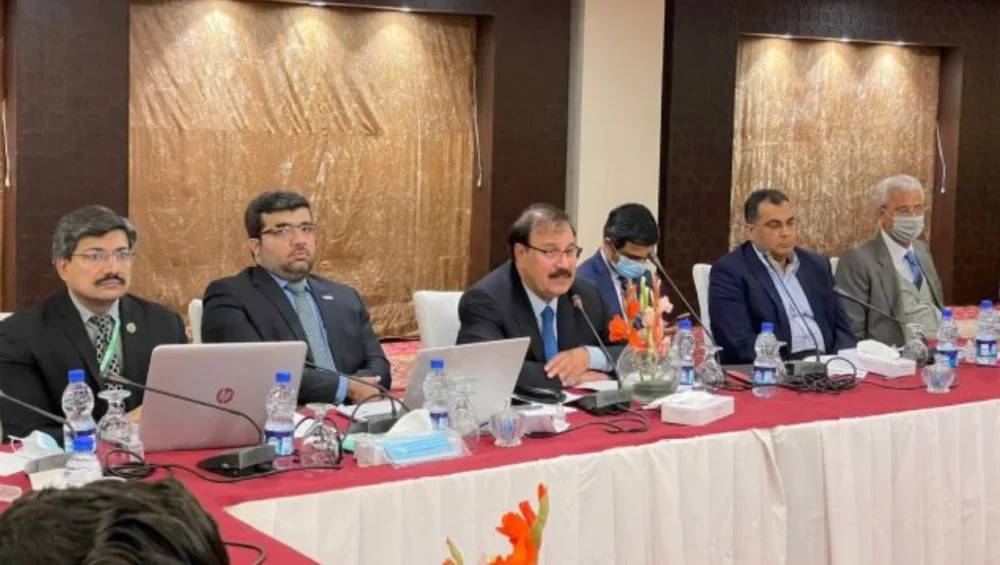
The case against FBR shell company directors represents a very big step in the implementation of the anti-money laundering laws in Pakistan, especially concerning the corporate and non-profit financial connection. In April 2026, the Federal Board of Revenue formally charged the five directors of a Karachi-based pharmaceutical organization with a First Information Report under its Directorate of Intelligence and Investigation.
The focus of the accusations is a payment of Rs7.5 billion to pay off personal debts that were incurred through a court battle in December 2023. According to investigators, the money was laundered by using the funds of a non-profit organization and it was reflected in the financial statements of the company as a business expense. This categorization enabled the claim of the amount as deductible in Tax Year 2024 filings under the Other Indirect Expenses category, but seemingly evaded its reporting as personal income by the directors involved.
Legal dispute origins and settlement structure
The money was obtained as a result of a legal case of high value filed in Sindh High Court by a founder of the company and his son and demanded damages of Rs.60 billion. The following settlement, which was achieved in December 2023, led to the disputed Rs7.5 billion payment.
The organization of this settlement has emerged as a center of the inquiry. The government claims that the fact that organizational funds were used to clear personal debts was a good way of misrepresenting the actual business. It is claimed that the directors concealed the personal gain of the settlement by making the payment a part of the corporate accounts.
Financial reporting and tax implications
The fact that the payment is a business expense has its tax implications. Investigators indicated that the deduction minimised the amount of taxable income of the company and also kept the directors off personal taxes. It is this two-fold effect that underlies the money laundering charges in that it provides an indication of a deliberate attempt to hide the source and use of the funds.
The fact that the corresponding statements are absent in personal tax returns makes the argument put forward by the authorities even stronger. This mismatch between corporate and personal financial reporting is key to proving intent in anti-money laundering laws.
Investigation process and enforcement mechanisms
The case of the investigation of FBR shell company directors is a multi-level process that entails both a civil and criminal case. The case was started in early 2025, and then went through regulatory examination, which led to formal charges.
Trigger and regulatory scrutiny
The inquiry was catalyzed by a complaint lodged by the founder of the company in February 2025, which compelled law enforcement agencies to look at financial documents and the organization structures. Before this, the non-profit organization associated with the case had already been regulated against such as the withdrawal of its status by the Large Taxpayers’ Office based on the concerns of misappropriation of donations.
Notices were given under Section 176(1) of the Income Tax Ordinance 2001 in April 2026 to conduct civil inquiry under which the Anti-Money laundering Act 2010 provides to conduct criminal investigation. The answers provided by the directors were considered inadequate and the FIR was registered.
Evidence collection and analysis
Financial records such as accounting books and tax returns have helped investigators to determine how the money changed hands. According to these records, the payment of Rs7.5 billion was made as an expense of the company but not accompanied by any personal disclosures.
The trace of the flow of funds out of the non-profit organization to the pharmaceutical company and finally to the settlement is analyzed. The purpose of this operation is to show how corporate and charitable organisations were supposedly exploited to launder personal debts.
Corporate structure and non-profit linkages
One of the main aspects of the case is the connection between a pharmaceutical company and a related educational trust. This connection has cast doubt on the operation of government and the possibility that charitable funds may be abused.
Interconnected entities and financial flows
Institutions like the universities and schools run by the educational trust are alleged to have contributed the funds that were used during the settlement. According to investigators, this structure enabled the directors to avoid paying their personal accounts even as they used resources to benefit the people.
These interrelations between business and non-profit organisations make it tricky to regulate them. They open up possibilities of financial transfers that might not be immediately apparent in the ordinary auditing structures.
Implications for non-profit governance
The reported misappropriation of non-profit funds has further consequences to the donor confidence and regulation integrity. Cancellation of the status of the organization indicates the fear of misappropriation of funds not meant to be misused.
This feature of the case demonstrates the necessity of a more stringent control over charitable organizations, especially in cases when they have financial ties with business organizations.
2025 enforcement trends and broader context
The indictment of FBR shell company directors is one of a broader trend of increased enforcement activity, which has been noted in 2025. Law enforcers have given increased attention to intricate financial transactions related to shell companies and money laundering using trade.
Expansion of anti-money laundering actions
In 2025, the Federal Board of Revenue hunted several high-profile cases, such as a Rs120 billion type of trade-based laundering scheme in importing solar panels. The fines levied were over 111 billion, which was an indication of a more vigorous way of dealing with financial crime.
These moves were justified by guidelines to limit the illegal financial transfers, which were wider economic issues of loss of revenues and outflow of capital. The case at hand is not an exception as it shows that one and the same method of investigation is applied to business and non-profit organizations.
Laws and legislation.
The charges against the directors of FBR shell companies are based on the Ani-Money Laundering Act 2010, which makes it illegal to hide and transfer illegal funds. The use of this law in the intricate corporate conditions is both a challenge and opportunity.
Comparative cases and precedents
Previous investigations have uncovered significant laundering activities through shell companies, including cases involving fake invoicing and equity manipulation. These examples illustrate recurring patterns in which financial structures are used to obscure the origin and destination of funds.
The accumulation of such cases has contributed to the development of enforcement frameworks, enabling authorities to identify and address increasingly sophisticated schemes.
Legal framework and regulatory challenges
The prosecution of FBR shell company directors is grounded in the provisions of the Anti-Money Laundering Act 2010, which criminalizes the concealment and movement of illicit proceeds. The application of this law in complex corporate contexts presents both opportunities and challenges.
AML provisions and enforcement tools
Under the AML framework, authorities have the power to freeze accounts, attach assets, and pursue criminal charges. These measures are intended to prevent the dissipation of funds while investigations are ongoing.
The use of dual-track proceedings, combining civil inquiries with criminal prosecution, allows for a comprehensive approach to enforcement. This strategy enables authorities to address both tax violations and broader financial misconduct.
Concerns over due process and enforcement scope
Critics within the business community have raised concerns about the pace and scope of enforcement actions, arguing that rapid issuance of notices may limit the ability of respondents to provide adequate explanations. Authorities maintain that due process is followed and that actions are based on detailed investigation.
This tension reflects the broader challenge of balancing effective enforcement with procedural fairness, particularly in cases involving complex financial arrangements.
Economic and institutional implications
The case has implications beyond individual accountability, touching on systemic issues within Pakistan’s financial and regulatory environment. It highlights vulnerabilities in corporate governance, tax compliance, and non-profit oversight.
Impact on financial transparency
The use of shell structures and interlinked entities can undermine transparency, making it difficult for regulators to track financial flows. Addressing these challenges requires enhanced auditing practices and improved information-sharing mechanisms.
The case underscores the importance of aligning corporate reporting standards with regulatory expectations, ensuring that financial disclosures accurately reflect underlying transactions.
Broader policy considerations
Efforts to combat money laundering are closely linked to broader economic objectives, including revenue generation and financial stability. High-profile cases such as this one serve as signals of regulatory intent, potentially influencing corporate behavior.
At the same time, they raise questions about the effectiveness of existing frameworks in preventing similar activities. The interplay between enforcement actions and structural reforms will likely shape the trajectory of anti-money laundering efforts in the coming years.
As the investigation into FBR shell company directors progresses, it illustrates the complexities of addressing financial misconduct in interconnected systems. The outcome may not only determine the accountability of those involved but also influence how regulatory institutions adapt to evolving challenges, leaving open the question of whether current measures can fully address the structural gaps that enable such practices to emerge.