
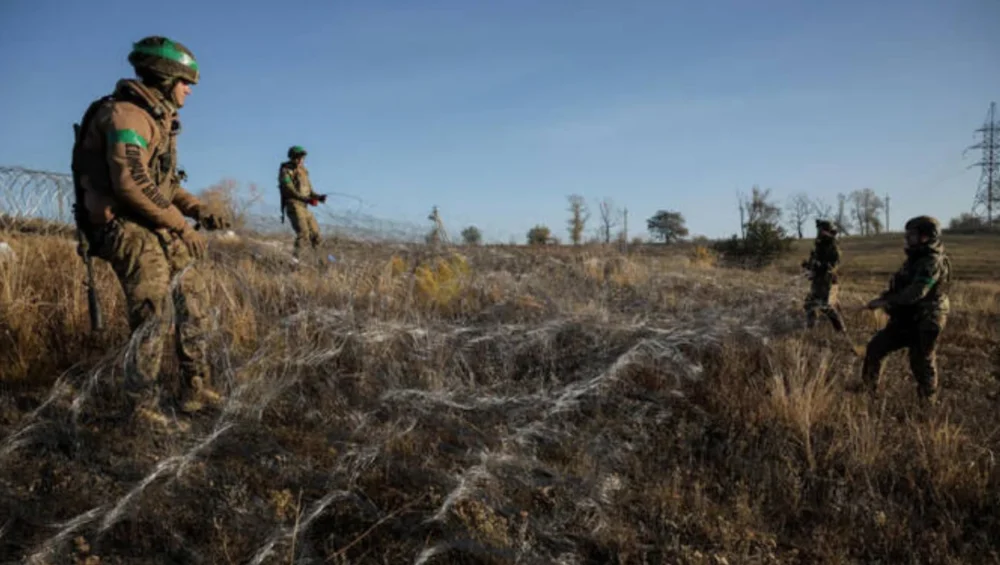
The Peru trafficking case has shown that there was a complicated transnational network, where citizens were purportedly recruited to Russia on fake grounds and then diverted into military duties connected with the conflict in Ukraine. The investigation, which started following several family complaints in late 2025, has highlighted the overlap between human trafficking, labor exploitation, and recruitment of modern conflict.
Prosecutors in Peru outline a practice of fraud that started with social media recruitment assuring that people could get private security employment with monthly wages of 2000-3000 dollars. These promotions, frequently directed to former military or economically disadvantaged people, gave an impression of credibility that enabled voluntary traveling. When the victims arrived in Russia, it is said they had their passports seized and threatened into signing military contracts or faced the threat of detention or deportation.
Scale of the scheme and victim accounts
Lawyers engaged in the case project that there is a possibility of about 600 being affected with at least 13 being certain to have died. The testimonies by the investigators indicate that most of the recruits did not know about the real nature of their jobs until they got inside the Russian territory. One of the survivors, who was rescued in April 2026 with the help of Ukrainian forces, said that he was pressured into signing a contract as he was threatened with imprisonment.
These reports suggest that there is a hierarchical line of recruitment and not isolated cases. The regular utilization of online communication tools, such as messaging apps, implies that there is an organized campaign to recruit and handle recruits across international boundaries.
Role of local intermediaries
In the Peru trafficking investigation, there are a number of domestic players that are claimed to have been involved in recruitment. Some of the pieces of evidence collected are audio records, chat transcripts, and advertisements that portray the offers as legal jobs. Governments are looking into how much these middlemen were linked to larger networks that were international.
The same domestic aspect makes the investigation more difficult, because it has to be organized between the agencies of national law enforcement and the agencies of foreign countries, to build the entire chain of responsibility.
Investigative framework and prosecutorial actions
Public prosecutor offices in Lima and Lima Norte are at the forefront of the investigation with assistance of human trafficking-specific police units. The method is a mixture of testimonial evidence and migration records and diplomatic letters.
Evidence collection and legal strategy
Aggravated human trafficking is a concept that prosecutors are basing their cases on, as it is a law in Peruvian law and involves the recruitment via deception to exploit another. This manipulation of employment opportunities and thereafter coercion fits the well-known definitions of trafficking, despite the fact that the early traveling is not under duress.
Contracts signed under duress are also being investigated by authorities on whether they were legal. The seizure of writings and the threat of penal actions are important factors that determine coercion that fortifies the prosecutorial case.
Coordination with international actors
The international character of the scheme has led to the interaction with foreign ministries and international bodies. Peru has demanded appropriate information about the status and whereabouts of its citizens by the Russian authorities, and is also seeking ways of repatriation and legal collaboration.
This aspect exhibits the difficulties of implementing national statutes where the key evidence and suspects are in foreign countries and it is necessary to use diplomatic means and international law.
Russian recruitment strategies and global patterns
The Peru trafficking investigation is consistent with larger coverage of the topic of Russia recruiting foreigners to supply its military forces. Ukraine intelligence tests show that thousands of people in more than 100 countries have been targeted using similar techniques.
Expansion into Latin America
Although the previous recruitment strategies paid much attention to other continents like Asia and Africa, the incorporation of Latin American nationals is a significant change. Analysts indicate that these regions are good targets due to economic vulnerabilities and limited control on international labor migration channels.
The recruitment method usually incorporates financial rewards with the promise of a legal status or citizenship, which forms a powerful narrative to the prospective recruits. Yet, the following circumstances tend to deviate radically with the first assumptions.
Coercion and deployment conditions
It has been reported that foreign recruits are often given high-risk positions having very little training and without sufficient equipment. According to Ukrainian sources, these people are to be employed to fill in gaps in manpower, frequently in the front lines.
The Russian embassy has insisted that enlistment is voluntary and is done according to the law, denying any allegations of coercion. This clash of the stories highlights the challenge of having a universally accepted version of the events.
Legal and diplomatic implications of the Peru trafficking probe
The Peru traffic investigation poses serious legal issues on how forced recruitment into armed conflict should be classified. It also brings about diplomatic strains between Peru and Russia especially as the accusations of coercion are becoming visible.
Trafficking definitions and international law
Human trafficking may be a deceptive recruitment of people to exploit them under international law. Such recruitment can also overlap with the bans on forced labor and infringements on humanitarian law, when it results in forced involvement in armed conflict.
The Palermo Protocol gives a guideline on how to deal with cross-border trafficking and the international humanitarian law principles stipulate how people in war-torn areas are treated. These legal regimes have led to a complicated prosecution and accountability terrain.
Diplomatic engagement and response
The fact that Peru demanded information about Russia is an indication that it is trying to strike a balance between legal and diplomatic relations. The feedback is that the enlistment is voluntary, which has created a discrepancy between the official and the investigations.
This deviation can affect bilateral relations, especially when new evidence corroborates the allegations of systematic deception. It also brings other concerns regarding the role of states in controlling the functions of recruitment in their states.
2025 developments and escalation context
The Peru trafficking investigation is closely associated with events that occurred in 2025, when more and more reports on the increase of foreign recruitment by Russian forces became evident. These advancements put the present study into perspective regarding the magnitude and urgency of the investigation at hand.
Surge in recruitment activity
Recruitment efforts were particularly intensified late in 2025, as the conflict was reported to have manpower shortages. Intelligence sources reported the setting of quotas and broadening of outreach measures of the foreign nationals.
This may be indicated by the arrival of Peruvian recruits in the time, which indicates that the nation was included in a wider network of recruiting activities, indicating the global scope of these activities.
Growing international scrutiny
By early 2026, investigations into similar cases involving other nationalities had prompted increased scrutiny from governments and international organizations. Some countries implemented measures to restrict travel or warn citizens about potential risks associated with overseas employment offers.
The Peru trafficking probe contributes to this growing body of evidence, reinforcing concerns about the exploitation of vulnerable populations in the context of armed conflict.
Broader implications for migration and security
The exposure of deception-based recruitment schemes has implications beyond the immediate legal and diplomatic context. It highlights vulnerabilities in global labor migration systems and the potential for exploitation in conflict-related scenarios.
Economic vulnerability and recruitment pathways
The reliance on financial incentives underscores the role of economic conditions in shaping recruitment dynamics. Individuals seeking better opportunities may be more susceptible to offers that appear legitimate but conceal exploitative intentions.
The use of digital platforms facilitates rapid and wide-reaching recruitment, complicating efforts to regulate or monitor such activities. This creates a challenge for authorities seeking to prevent similar schemes in the future.
Security and conflict dynamics
The integration of foreign recruits into military operations affects both the conduct of the conflict and its broader perception. High casualty rates among these individuals raise questions about the sustainability and ethical implications of such strategies.
At the same time, the capture or identification of foreign fighters introduces additional dimensions to prisoner exchanges and international negotiations, further entangling migration issues with conflict dynamics.
As the Peru trafficking probe continues to unfold, it brings into sharper focus the intersection of labor exploitation, international conflict, and state responsibility. The emerging evidence suggests that recruitment practices are adapting to global conditions, drawing individuals from distant regions into localized conflicts. Whether this case leads to meaningful legal accountability or prompts broader regulatory changes remains uncertain, but it underscores how economic vulnerability and geopolitical strategy can converge in ways that reshape both migration patterns and the human landscape of modern warfare.