
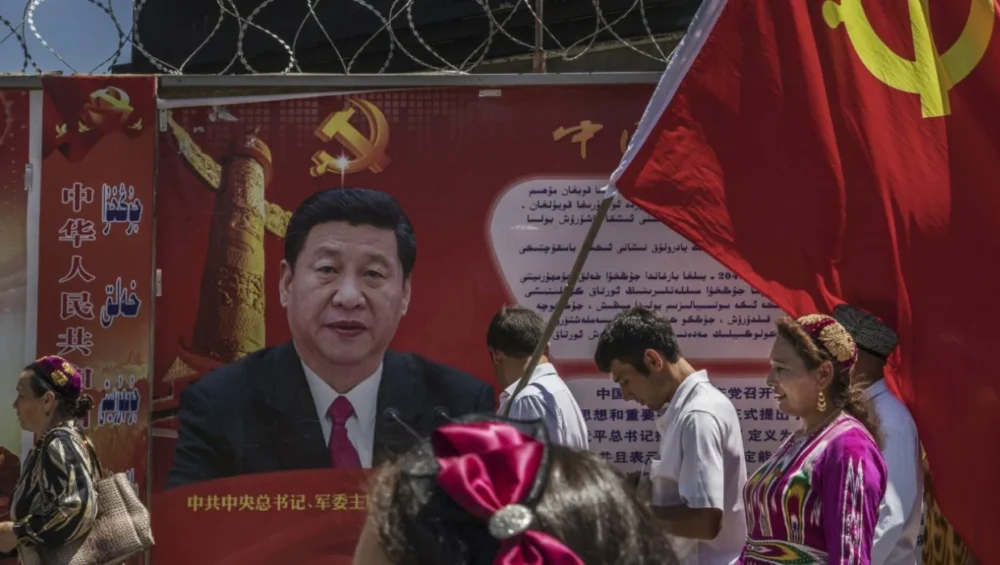
The Law on Promoting Ethnic Unity and Progress came into effect on March 12, 2026, after its passing by China’s National People’s Congress in response to global criticism over China’s treatment of ethnic groups in the nation. While hailed by Beijing as a law to enhance national unity, the controversial law has been widely perceived as a means of intensifying the assimilation of Chinese ethnic groups in the name of “unity.”
What the Law Says: A Framework for Integration
This is a detailed legislation about the integration of ethnic minorities into the single nation identity headed by the Communist Party. The legislation touches on various sectors such as education, housing, mobility, community affairs, culture, tourism, and economic development. Even though the document has not explicitly stated “consequences,” it gives a basis for existing laws which could be utilized in suppressing the demands of the minorities as “separatist” and “extremist.”
Under the law, Mandarin Chinese must now be the language of teaching in schools serving minority populations. This provision is intended to ensure that all students, regardless of ethnicity, are proficient in the national language. Critics argue that it effectively sidelines minority languages like Uyghur, Tibetan, and Kazakh, reducing their presence in formal education and public life.
Moreover, parents are supposed to instill in their children the love for the Communist Party in accordance with the law. There is an expectation from the government as to how people should be ideologically brought up since it is important for everyone to be loyal to the country. That comes from the need to develop a “shared national identity” among all the ethnicities. The governments of the local areas have the additional responsibility to help minority workers and students moving around the country. The reason is that such policy would help in destroying the ethnic enclaves and creating mixed communities of different people living together.
The Language Mandate: Mandarin as the Default
One of the most obvious effects of the law will be felt in the education industry. It is true that the law stipulates that Mandarin must be taught in the schools for minorities, and although this has not been new to the regions of Xinjiang and Tibet, where this has been going on for many years now, it will now be written into the law. The schools in the said regions have cut down on using Uyghur and Tibetan in classrooms, opting instead for a Mandarin-dominated curriculum.
Experts argue that language is a cornerstone of cultural identity. By mandating Mandarin as the primary language in education, the law risks producing a generation of minority students who are fluent in the national language but disconnected from their linguistic heritage. Critics see the law as allowing authorities in Beijing more room to frame ethnic groups’ demands for cultural autonomy as a push towards “separatism.”
This framing is particularly dangerous in regions like Xinjiang, where the government has long equated minority language use with potential separatist activity. The law provides a legal basis for such associations, potentially justifying further crackdowns on language activists, cultural organizations, and community leaders.
Ideological Control in the Family and Community
In addition to the educational sector, the law now touches on the family and community spheres as well. The mandate to the parents to instruct their offspring to show love for the Communist Party is a definite indication of the efforts of the Chinese government to instill ideological loyalty in the children right from childhood itself. Through such a directive, the family now becomes an important realm of political education of the children. This provision comes in the context of the efforts of the Chinese government to develop the ethics of the minorities.
The law also encourages interethnic marriage and mixed-community living. Neighborhoods are to be restructured so that different ethnic groups live together, theoretically promoting integration. However, critics warn that such measures may be used to break up traditional ethnic enclaves and reduce the social cohesion of minority communities.
“The law states that its goal is to strengthen national unity under the leadership of the Communist Party,”
while also calling for policies that promote a shared national identity across all ethnic groups. This language is not neutral; it positions the party as the central authority in defining what “unity” means and how it should be achieved.
Religious and Cultural Restrictions
Consequently, the emphasis placed by the law on having a common identity as a nation affects religion and culture in many ways. It compels religious institutions to be guided by the concept of Sinicization, according to which the teachings and practice of religions should be consistent with the socialist values of China. Already implemented in Tibet and Xinjiang, the policy involves the supervision of monks and clergy and control over religious activity. Now, the new law will strengthen the existing policy. The government can more easily justify that any religious practice that does not fit into the concept of national unity becomes a threat to social stability.
Cultural practices, including festivals, music, and traditional arts, are also subject to the law’s requirements. The government can now claim that certain cultural expressions are incompatible with the goal of national unity. This has led to the suppression of Uyghur music, Tibetan poetry, and other forms of cultural expression that are seen as promoting ethnic identity over national identity.
The Backdrop of Xinjiang and Tibet
The law’s effects are particularly felt in the cases of Xinjiang and Tibet, both regions in which the government has introduced a number of assimilation programs. In Xinjiang, there has been an enormous increase in the security system, including monitoring, internment camps, and restrictions on movement. In Tibet, there has been a restriction in the freedom of religion and culture, with monasteries under government control and limited religious education. The law serves as a justification for all these policies, providing the government with the power to brand any demands made by minorities as separatist.
“Critics see the law as allowing authorities in Beijing more room to frame ethnic groups’ demands for cultural autonomy as a push towards ‘separatism.’”
This is not just rhetoric; it has real consequences for people on the ground. Activists, lawyers, and community leaders who speak out for minority rights risk being labeled as threats to national unity.
Global Reaction and Human Rights Concerns
The law has drawn sharp criticism from international human rights organizations, foreign governments, and diaspora communities. Many view it as a step toward forced assimilation, with potential violations of linguistic rights, religious freedom, and cultural autonomy.
Human rights groups have raised concerns about the law’s impact on minority communities, warning that it could lead to further repression and the erosion of minority identities. They argue that the law is not about unity in the sense of mutual respect and coexistence, but about homogenization and control.
Several countries have expressed concern over the law’s implications, calling for China to respect the rights of its ethnic minorities. Diaspora groups, particularly from Xinjiang and Tibet, have organized protests and campaigns to highlight the law’s negative effects on their communities.
What the Law Means for the Future
The passage of the Law on Promoting Ethnic Unity and Progress marks a significant shift in China’s approach to ethnic governance. It moves from a policy of gradual integration to one of legal enforcement, with the state taking a more direct role in shaping the cultural, linguistic, and ideological lives of minority populations.
The long-term implications of the law will most likely be very significant indeed. For one thing, there is the possibility that the law will cause the decline of the minority languages, religion and other cultural institutions of communities based on communities. At the same time, the law might result in greater resistance on the part of minority communities in order to preserve their own identity amid pressure from the state. For China, the law reflects a move towards the consolidation of national unity according to a centralized ideology. For the minorities, however, the law is a threat to the existence of their unique culture and language. The key question is whether or not the law will achieve its purpose of bringing unity or only causing greater division and conflict.