
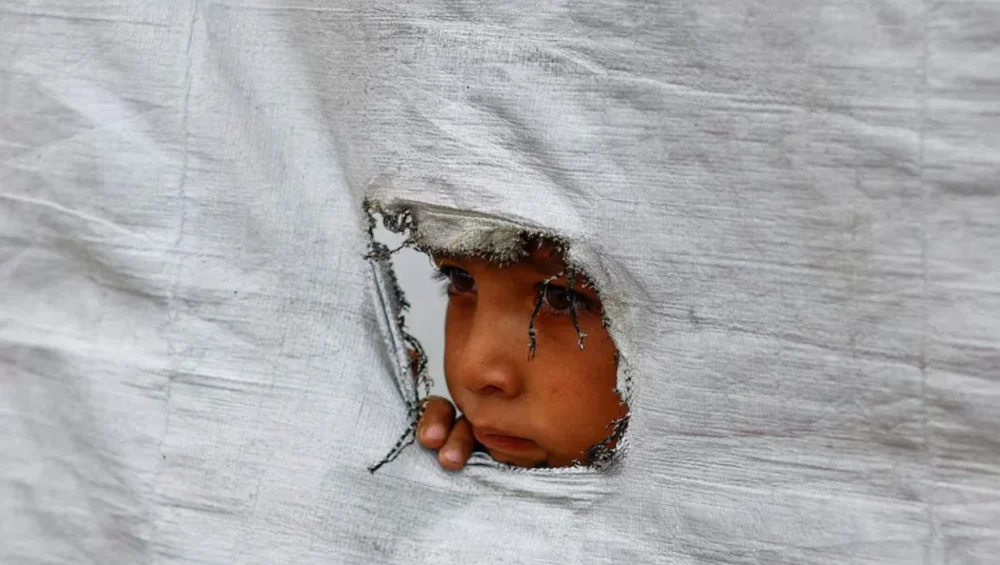
A UN-backed probe has issued one of the most scathing rebukes of Israel regarding the conflict in Gaza, which has charged Israeli officials and security forces of deliberately targeting Palestinian children on a systematic scale that constitutes genocide, in addition to crimes against humanity and war crimes. The charge will serve to increase an already highly charged international dispute over the nature of the conduct of the war, the level of genocide required for such a charge, and the involvement of high-ranking Israeli officials in military strategy and propaganda.
It is important to understand not only the result of this inquiry but also its reasoning as well. The Commission concluded that the attack on the children was not incidental damage of the urban warfare, but rather a part of the general plan which implied the genocidal intention. It is an important point because genocide according to the international law implies the existence of the special intent to destroy in full or in part a particular group of people. Thus, by pointing to the children, the authors of the report try to make their harm intentional.
What the inquiry concluded
In the view of the commission, there were systematic acts by the Israeli authorities and the security forces aimed at the Palestinian children, and these acts formed an important part of what the commission described as genocide. This act was also considered by the commission as a crime against humanity and war crimes. The earlier findings of the commission indicate that there are reasonable grounds to conclude that Israel had committed four out of the five acts as provided for under the Genocide Convention.
These findings are particularly significant in light of their going beyond the death toll of combatants. In essence, they paint a picture of behavior that includes an attack on life, health, family perpetuation, and the survival of the people. Even the report from the commission before, which accuses the leadership of Israel of incitement, indicates the way the commission perceives the chain of responsibility reaching up to the top of government and command. It should be noted that although the language of the report is clearly legalistic and factual, its implications are political. With the designation of an attack against children as genocide, the Gaza conflict has been put in the category of some of the most terrible atrocities of our times.
Why children are central to the case
Children occupy a critical place in genocide analysis because they represent the future of any protected group. When investigators say children were deliberately targeted, they are not simply describing tragic civilian deaths. They are pointing to an alleged strategy that destroys the biological and social continuity of a people. That is why the commission’s emphasis on children makes the report so explosive.
Within the framework of the Gaza situation, this rationale goes hand-in-hand with the overall demolition of schools, houses, hospitals, and the very conditions necessary for survival. It seems as though the investigation is arguing that it is impossible to detach the targeting of children from the broader phenomenon of the collapse of civilian life. If young members of the community are continuously being killed, mutilated, dispossessed, or denied medical treatment, the debate shifts into the very framework of destruction.
This is also why the report is likely to be cited heavily by rights groups and international legal advocates. Even before any court ruling, a finding that children were deliberately targeted gives a powerful evidentiary and narrative foundation to those arguing that the war has crossed from counterterrorism into atrocity crime.
Israel’s rejection of the allegations
The denial of genocide in Israel has been very strong. The government there has described the claim of genocide as outrageous and says that the Israel war against Hamas is not a war against Palestinians but against terror organizations like Hamas. This is in line with their overall stance on the issue since the war began.
The Israeli authorities have also dismissed previous allegations that its officials provoked genocide. The dismissals are very crucial in the politics surrounding the report since the findings of the commission hinge on establishing intention. This means that Israel will most probably contend that the investigation misses out on the realities of urban warfare, Hamas tactics, and selective military activities by disregarding the security intentions of Israel.
The dispute is not simply about facts on the ground. It is also about legal framing. Israel will almost certainly argue that the report pre-judges complex battlefield decisions and fails to meet the threshold required for a genocide finding. That argument is not unusual in such cases; states accused of atrocity crimes often challenge the impartiality of investigative bodies and reject the notion that their military actions can be read as evidence of genocidal policy.
Legal weight and limits
The commission’s findings matter, but they do not amount to a final court verdict. That distinction is crucial. A UN commission of inquiry is an investigative mechanism, not a judicial body. Its reports can influence international opinion, future prosecutions, diplomatic pressure, and the evidentiary record, but they do not themselves convict states or individuals.
Nevertheless, such evidence is far from being symbolic. It frequently ends up being part of the paperwork that prosecutors, human rights attorneys, and foreign states consider when deciding what steps should be taken. It may also influence the way the international media, parliaments, and civil society organizations portray the conflict. In reality, a finding of genocide by a commission makes it difficult for people to remain neutral.
The legal burden for genocide is exceptionally high, which is part of why these findings are so consequential. The commission is effectively saying that the pattern of conduct, the scale of civilian destruction, the targeting of children, and the statements of officials together satisfy the threshold of genocidal intent. That is a bold conclusion, and one that will likely be contested for years.
Wider political consequences
It is an opportune moment when this report emerges, considering that views around the world regarding Gaza have already become highly divided. There are those who view the situation from the angle of destruction and loss of lives in Gaza, while others say the application of the concept of genocide should be avoided at all costs since it might confuse things.
For Israel, the commission’s language is a diplomatic problem as much as a legal one. It feeds criticism in international forums, complicates relations with allies, and reinforces calls for sanctions, arms restrictions, and accountability measures. It also increases pressure on governments that continue to support Israel militarily or politically while facing domestic criticism over the humanitarian toll in Gaza.
For Palestinians, the report is likely to be seen as a form of international validation after months of devastating losses. The focus on children especially resonates because it captures the human cost of the war in the most emotionally powerful way possible. Yet even with such a finding, there is still a long gap between condemnation and accountability. That gap is where much of the future struggle over Gaza will unfold.
What comes next
The immediate question is whether the commission’s findings will lead to concrete legal or diplomatic action. That will depend on how states, international institutions, and prosecutors respond. Previous UN findings on conflicts have sometimes shaped policy quickly; at other times they have been absorbed into the broader machinery of impunity with little immediate effect.
What is certain is that the report gives fresh momentum to those seeking accountability for the conduct of the war. It also raises the stakes for future hearings, inquiries, and possible proceedings in international courts. Even if no immediate legal action follows, the commission has already altered the record by stating plainly that the deliberate targeting of children formed part of genocide.
The bigger question is whether international institutions will now move from documentation to enforcement. If they do not, the report will stand as another powerful warning that may change the historical record more than the present reality.