
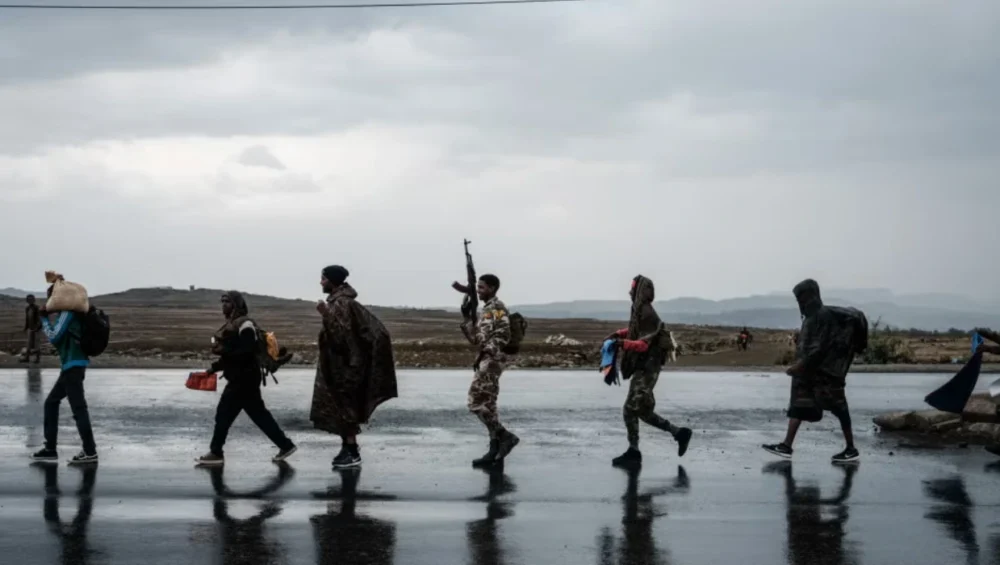
The most northerly part of Ethiopia is witnessing a very disturbing situation, whereby the authorities in Tigray have been forcibly enlisting citizens into their army, even those under the age of 15. Starting from April 2026, this campaign of abduction and conscription, which is against the law, has attracted the ire of many international human rights groups as well as local monitoring groups. It is a violation of both Ethiopian law and the 2022 Pretoria agreement, which sought to bring an end to the bloody conflict.
Human Rights Watch (HRW), in a detailed report released on July 6, 2026, documented widespread abuses carried out by regional authorities in Tigray.
“Regional authorities in Ethiopia’s northern Tigray region have been abducting and unlawfully recruiting civilians, including children as young as 15, for their forces since at least April,”
the organization stated, highlighting the gravity of the situation. The report, based on remote interviews with 18 individuals conducted in June 2026, paints a harrowing picture of mass roundups, detention in inhumane conditions, and the use of collective punishment against families of those who evade conscription.
The Ethiopian Human Rights Commission (EHRC), the country’s official human rights body, corroborated these findings, revealing that
“most of those conscripted in Tigray were under 18 years of age.”
This admission underscores the extent to which child soldiers are being dragged into a conflict that has already claimed hundreds of thousands of lives and displaced millions more.
Methods of Abduction and Enforcement: A Climate of Fear
Tactics utilized by the Tigray leadership in meeting their recruitment quotas can only be labeled as a form of terror. People have been taken away from their houses at midnight, abducted from roads and markets, and even from gold mining areas and water cart stands. Sometimes whole batches of males have been arrested, tortured, and driven into camps by force. One person reported that the detained individuals were kept in unfinished building structures and schools without any food or water until they were moved to the camps in Northwestern and Southern Tigray. Another person saw an individual who escaped from the moving truck but lay still on the ground after that.
“The campaign has created a climate of fear,”
said Laetitia Bader, Horn of Africa director at Human Rights Watch.
“Many young men now sleep outdoors, change locations nightly, or flee Tigray altogether, leaving behind pregnant spouses or younger siblings.”
This atmosphere of terror has effectively paralyzed communities, with families living in constant anxiety over the next potential raid.
The use of forced conscription has even gone so far as to include collective punishment. The families of draft dodgers have been subjected to imprisonment or intimidation, in some cases having the parents starved and dehydrated for hours on end until they surrendered their offspring. These actions not only infringe upon human rights but exacerbate the trauma of communities affected by years of war.
Legal Framework and Constitutional Violations
The legal background for this campaign lies in the declaration issued by the regional council of Tigray at the beginning of June 2026. This law obliges every person born in Tigray to enlist to the military if such a call is made, and this law works retroactively. Not obeying will lead to a fine of 10,000 – 50,000 Ethiopian birr; while opposing the law will end in 5-25 years of imprisonment.
However, the legitimacy of this proclamation is highly questionable. The Ethiopian Human Rights Commission has pointed out that the regional council that enacted the law
“lacks recognition from the National Electoral Board of Ethiopia and was dissolved after the 2022 Pretoria Agreement.”
This raises serious constitutional issues, as the council’s authority to legislate such measures is disputed.
EHRC Commissioner Berhanu Adelo was unequivocal in his assessment, stating that
“the conscription proclamation is illegal under international law, lacks constitutional grounding, and is a driver of recurring human rights violations.”
He further warned that the enforcement of this law by an armed group outside the federal government structure “may constitute a war crime.”
The legal implications extend beyond Ethiopian domestic law. The practice violates Articles 51 and 52 of Ethiopia’s Federal Constitution, which guarantee citizens’ rights and outline the proper channels for military service. Additionally, it breaches the 1949 Geneva Conventions and the UN protocol on children in armed conflict, both of which prohibit the recruitment and use of child soldiers.
International Response and Calls for Action
The international community has responded with growing alarm to the reports of forced recruitment in Tigray. UN human rights chief Volker Türk has warned of a new crisis in the region, urging all parties to take urgent steps toward de-escalation.
“Civilians are once again caught between escalating tensions, with both TSF and ENDF reportedly carrying out arrests for perceived affiliation with the opposing side,”
Türk stated, highlighting the broader context of renewed hostilities.
The Human Rights Watch has asked the African Union, Kenya, South Africa, the U.S., and the European Union to put pressure on the Tigrayan government to stop these violations and to ensure monitoring is carried out. It has pointed out that the current situation not only violates the agreement reached in Pretoria in 2022 but also poses a threat of sparking a new conflict in the whole region.
Despite the mounting pressure, Tigray authorities have largely denied systematic forced recruitment. A TPLF spokesperson claimed that those defending Tigray are serving “voluntarily,” while acknowledging only isolated “irregularities” at lower levels in earlier periods. This denial stands in stark contrast to the overwhelming evidence presented by HRW, EHRC, and other organizations documenting the widespread and systematic nature of the abuses.
Humanitarian Impact and Long-Term Consequences
The humanitarian effect of forced recruitment in Tigray should not be underestimated. As a result of the operation, the process of displacement occurs – young men move from their houses in order to escape compulsory recruitment. Families remain broken because wives who are expecting children and brothers who are younger stay alone. The psychological impact is tremendous. The fear of being caught by militants always keeps parents in suspense, while conscripted men have an uncertain future, because the living conditions in the army camps are allegedly desperate. Moreover, using child soldiers causes a great harm to children themselves as well as to the whole society.
Moreover, the forced recruitment campaign exacerbates existing humanitarian challenges in Tigray. The region has long suffered from shortages of food, water, and medical services, compounded by years of conflict and blockades. The latest wave of abuses threatens to further destabilize an already fragile situation, potentially leading to increased displacement and a deepening humanitarian crisis.
Pathways to Resolution and Accountability
Addressing the crisis of forced recruitment in Tigray requires a multifaceted approach involving immediate action to halt abuses, accountability for perpetrators, and long-term efforts to rebuild trust and stability in the region. The first step must be an immediate cessation of all forced recruitment activities and the release of those who have been unlawfully conscripted.
International actors, including the AU, UN, and key donor countries, must exert sustained pressure on Tigray authorities to comply with international law and respect human rights. Independent monitoring mechanisms should be established to verify compliance and document any ongoing abuses. Additionally, support for humanitarian organizations working in the region must be increased to address the growing needs of displaced populations and affected communities.
Accountability is yet another important factor. The individuals who order and conduct the process of forced recruitment, especially that involving children, need to be made accountable via appropriate legal processes. These include not just the Tigray authorities but also the international actors who have supported or ignored these atrocities. Lastly, a more permanent solution should concentrate on reconstructing the social fabric of Tigray. It needs investment in education, economic prospects, and local reconciliation programs. Through such steps alone will it be possible to end the vicious cycle of violence and abuse.