
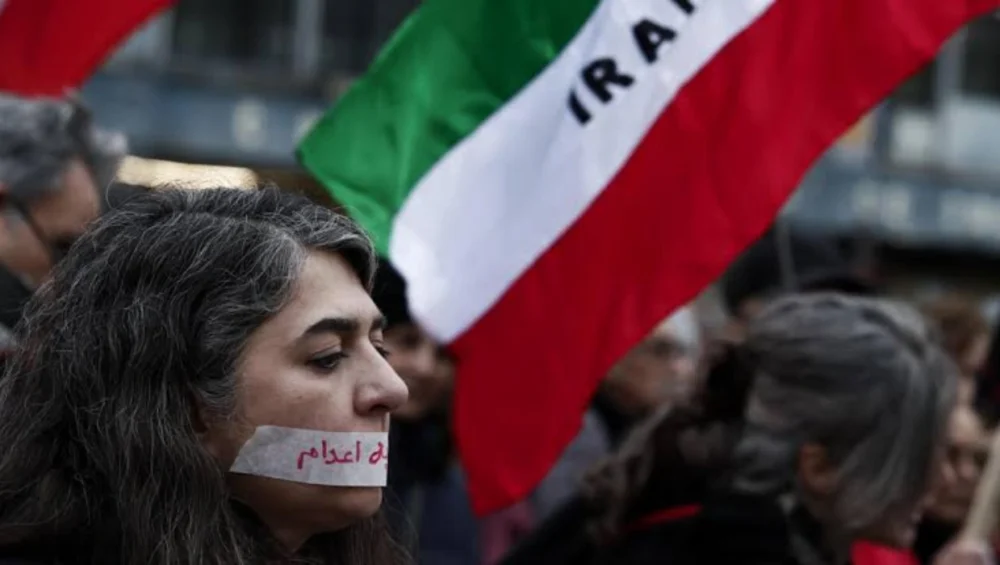
Iran has executed Mehdi Khanaki, a case that has intensified concern among human rights defenders over the country’s use of capital punishment in protest-related cases. Rights groups said the execution took place on July 22, 2026, and described Khanaki as the 24th protester executed in connection with the January protests. The development has placed renewed attention on how Iranian authorities are handling dissent, security accusations, and death sentences tied to political unrest.
This case is no longer being looked upon merely as another execution but within the context of a wider trend, which the rights groups believe has instilled fear among activists, families, and detainees. From the reports on the case, it can be seen that Khanaki was arrested during the January protests and eventually sentenced to death based on charges pertaining to his security.
What rights groups reported
According to Iran Human Rights, the state media revealed the execution of Khanaki and referred to him as the 24th protester who was sentenced to death because of their participation in the January protest activities. Hengaw stated that he was executed in Ghezel Hesar Prison in Karaj and was arrested as a result of his involvement in the January protests. The news was also published by HRANA, which said that the media center of the judiciary informed about the enforcement of the death penalty. The fact that the same story was reported by all of these groups and organizations plays an important role because it illustrates the fact that the same case is monitored by different human rights observers from different perspectives. It is another proof that the execution was performed in the context of the government’s response to the protesters’ actions and cannot be treated as a criminal case.
Charges and state framing
Iranian authorities framed the case in security terms, with reports saying state media linked Khanaki to alleged hostile activity and groups described as threats to the state. Al Jazeera reported that the judiciary warned against “infiltrators” and announced new executions, while also noting that many such cases are prosecuted under a law introduced after last year’s 12-day war with Israel.
This is a relevant issue because it highlights the attempts by the government to position the executions related to protest into a discourse of national security. In such instances, it becomes evident that the government is not presenting the defendants as political protestors but as offenders of national security. According to human rights organizations, it is a language that can be used to legitimate severe punishments while restricting public scrutiny in a situation where there are no open trials, the evidence presented is not independently verified, and the defendant is unable to provide his own defense.
The report further shows that the authorities claimed that Khanaki was associated with an unnamed armed opposition group, and there were accusations relating to weapons and explosives. These claims without independent examination in the process of trial become a reason for concern about the fairness of the trial and the verdict issued.
Execution site and timing
Hengaw said Khanaki was executed at Ghezel Hesar Prison in Karaj, a facility frequently associated with executions and high-security detention. The timing reported by rights monitors places the execution on July 22, 2026, with state media and rights groups broadly aligning on the date.
This location matters because the prison itself has become part of the public record in rights reporting, especially in cases where detainees are held in isolation or where families say they receive limited information. When executions are carried out in such settings, the result is often not only the loss of a life but also the deepening of uncertainty and trauma for relatives who may already have endured months or years of silence.
Human rights concerns
The main human right issue in the case of Khanaki is that of using the death penalty against someone who is associated with the protest. Human rights organizations have continually criticized the act of imposing death penalty on those involved in protests, more so when the claim has been made due to political unrest and security courts. In this particular case, the claim of Khanaki being a protest detainee makes his execution one that falls into a contentious pattern of punishment imposed by the state on dissenters.
Judicial transparency is another major issue at hand since the information available to the public does not suggest a process of full transparency during the trial and a process of independent legal review of the matter. When the execution has been conducted through a secret judicial process, the probability of an innocent person being punished increases significantly.
There is also the issue of scale. If Khanaki was indeed the 24th protester executed in connection with the January protests, that figure suggests a sustained punitive campaign rather than a one-off judicial outcome. Rights groups often use such numbers to show that state violence is not random but cumulative, built through repeated arrests, convictions, and executions that together create a climate of intimidation.
Wider political context
The execution comes against a wider backdrop of heightened Iranian crackdowns on dissent and what authorities describe as threats from infiltrators and hostile networks. Al Jazeera’s reporting tied the new executions to a broader security environment in which the judiciary has increasingly used national security rhetoric to justify harsh sentences.
That context is significant because it shows how protest-related cases can be absorbed into broader state narratives about internal enemies and external pressure. In a country already under political strain, such framing can reduce public sympathy for defendants and make it easier for authorities to present executions as necessary for stability. For rights defenders, however, the same framing raises alarm because it can blur the line between genuine security threats and ordinary political dissent.
The January protests themselves, as described in the reports, remain central to this case. Khanaki’s death sentence was reportedly tied to his arrest during that period, which means the execution is not just about one defendant but about how the Iranian state is choosing to respond to collective unrest. In that sense, the case functions as both a legal action and a political signal.
Reaction and implications
Human rights organizations will no doubt see the execution as part of a trend that needs more documentation and outside pressure. Amnesty International has noted time after time that death sentences related to protests fall under the same category due to the combination of capital punishment, suppression of the political dissent movement, and lack of judicial transparency. It is also important to note that the implications go further than that specific case. Each death penalty of someone in a protest-related case sends a warning message not only to their family but also to other activists, lawyers, and citizens who might consider criticizing the government for fear of ending up in a similar situation.
For international observers, the main issue is whether Iran is using the death penalty as a tool of control rather than as a narrow criminal justice measure. The reporting around Khanaki strongly suggests that rights groups see the execution as evidence of a broader strategy of repression. In that reading, the case is less about one conviction and more about the state’s message to society: protest can be punished at the highest possible level.
What this case means
Mehdi Khanaki’s execution has become a human rights flashpoint because it combines three highly sensitive elements: protest activity, a death sentence, and allegations of security offenses. The reported figure of 24 executed protesters turns the case into a broader indictment of Iran’s response to unrest, especially if the pattern continues.