
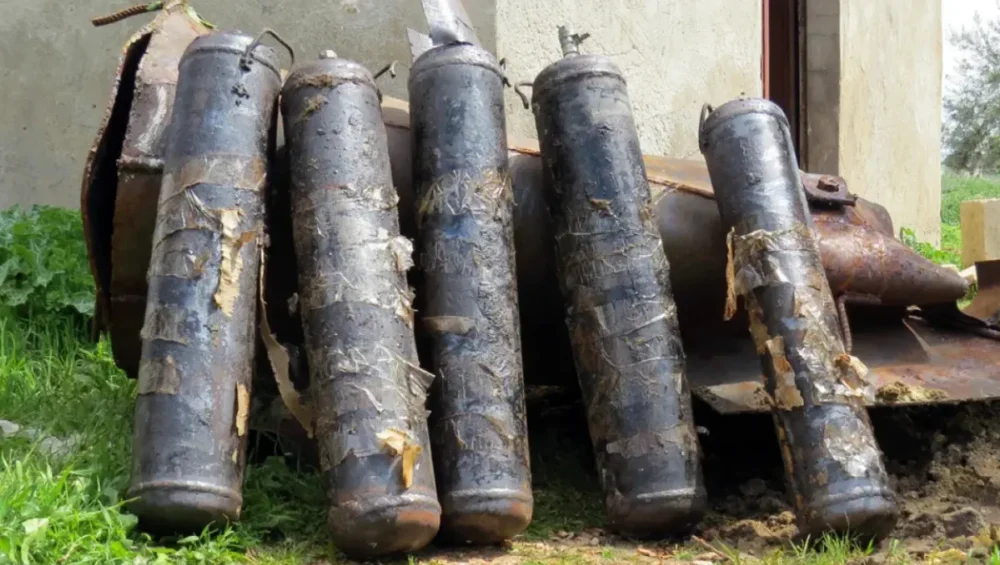
The Syria barrel bomb legacy remains in its role in humanitarian reality and the international law discussions. Throughout the course of the last decade, these homemade weapons have resulted in massive destruction in high-density populations that have left an indelible mark on cities and communities. Their repetitive application has come to be the centre of debates regarding accountability and application of international law.
This heritage goes beyond short term harm. It has now become a body of evidence that is organized into reports, satellite photographs and eyewitness testimonies. These materials are still used to determine the way in which global institutions perceive violations and responsibility.
Scale And Systematic Use In Civilian Areas
The extent and frequency of the use of barrel bombs has made a lot of analysts come to a conclusion that the use of the same was not incidental but rather systematized. Trends of several regions indicate organized activities against the human settlements and this raises serious legal issues that violate the international humanitarian law.
It is important to know the quantitative scale and human implications of these attacks to assess the overall implications of the attacks.
Quantifying The Deployment
Thousands of barrel bomb attacks have been documented by the monitoring organizations during the high seasons of conflict. Satellite data and field-based reporting have corroborated these figures and give a coherent view of extensive usage.
The fact that the same type of attacks occurred in various regions reinforces the point that these were not isolated attacks but a part of a military strategy.
Civilian Impact And Urban Destruction
These attacks have had a far reaching human cost. Whole areas were demolished, displacing a number of people permanently, and causing the destruction of long-term infrastructure. The indiscriminate nature of weapons often resulted in the civilians being the main victims.
This trend of devastation is still reflected in the recovery process whereby most regions are yet to recover years after the attacks.
ICC Stalls And Jurisdictional Barriers
The implementation of accountability by using international courts has had a major challenge. Although the evidence is available, there have been structural and political constraints that have slowed progress.
These obstacles underscore the fact that documentation is difficult to translate into legal enforceable results.
Limits Of The International Criminal Court
The ICC has no jurisdiction to act in Syria since it is not a signatory to the treaty that created the court. The court is incapable of launching independent investigations without the United Nations Security Council making a referral.
Such referrals have been blocked by recurrent political disputes, which restrict the court to pursue cases involving the legacy of Syria barrel bombs.
Command Responsibility And Legal Complexity
To create accountability, it is necessary to have clear evidence of the connection between top officials and certain actions. There are legal requirements that require evidence of commands, knowledge or inability to stop violations.
Although attack patterns indicate coordination, it is a complex and time consuming task to turn it into legally admissible evidence.
Rise Of Alternative Legal Pathways
To address these shortcomings, national courts have been falling more on universal jurisdiction to bring charges against people who were involved in the war. Such cases tend to rely on evidence collected by international bodies.
Though small in scale they are a significant alternative avenue to accountability where international mechanisms are insufficient.
OPCW Evidence And Chemical Weapon Linkages
Forensic and scientific studies have been instrumental in recording the infractions. The overall case of accountability has been enhanced by evidence gathered using special mechanisms.
In this section, the overlap between chemical weapon investigations with the legacy of Syria barrel bombs is examined.
Investigative Role Of The Organisation for the Prohibition of Chemical Weapons
The Organisation For Prohibition of Chemical Weapons has verified several cases of the use of chemical weapons in Syria. Its investigations are based on laboratory examination, field investigations and witness testimonies.
The results of these studies add to a more comprehensive comprehension of the application of various weapons in the conflict.
From Verification To Attribution
The mechanisms of investigation have developed to identify the parties at fault even though initially the main task was to verify the use of chemical agents. This has enhanced the legal applicability of their findings.
By 2025, attribution reports had gained a significant role in the international discourse on accountability and enforcement.
Evidentiary Strength And Legal Constraints
Although the pieces of evidence gathered are elaborate and scientifically sound, enforcement is not within the scope of investigative agencies. They can only check on documentation.
This brings a disconnect between facts and legal consequences, and remains an obstacle to accountability efforts.
2025 Developments And Emerging Accountability Mechanisms
Recent events suggest a slow-paced change in the collection and utilization of evidence. Although key institutional obstacles still exist, emerging strategies are broadening the accountability horizons. These trends suggest a shift toward long-term legal strategies.
Expansion Of Evidence Collection Efforts
By 2025, international mechanisms had significantly expanded their documentation efforts. Digital archives, witness testimonies, and forensic data now form a comprehensive record of violations.
This growing body of evidence strengthens future legal opportunities, even if immediate prosecution remains limited.
Integration With National Jurisdictions
National courts are increasingly using international evidence in their proceedings. This reflects a closer alignment between global investigations and domestic legal systems.
Such integration improves the chances of accountability, particularly in cases where international courts cannot act.
Political And Institutional Constraints
Despite these advances, political dynamics continue to influence outcomes. Efforts to establish new legal mechanisms or expand mandates often face resistance.
The Syria barrel bomb legacy remains closely tied to these constraints, illustrating the complex relationship between law, evidence, and international politics.
Convergence Of Evidence And Future Legal Pathways
The interaction between evidence, legal systems, and political realities defines the current accountability landscape. Each element plays a role, yet gaps remain in converting documentation into justice.
As investigative efforts continue and legal frameworks evolve, the Syria barrel bomb legacy will remain central to global discussions on accountability. The unresolved question is how existing evidence, institutional innovation, and political will might eventually align to produce meaningful and enforceable outcomes.