
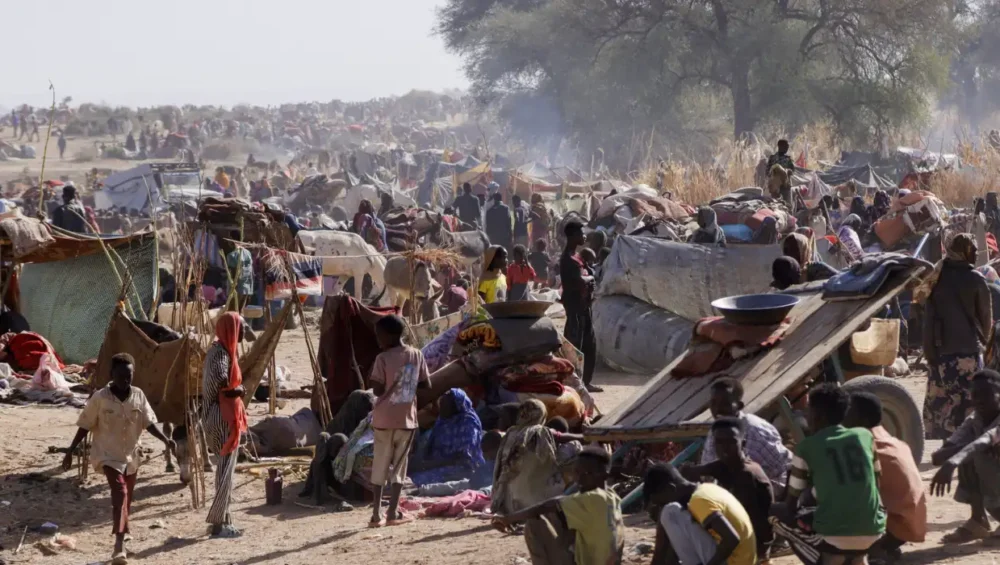
Sudan’s war has created a humanitarian catastrophe that is growing worse by the day. Behind the headlines about territory, military advances, and shifting alliances are millions of civilians whose lives have been shattered by displacement, hunger, fear, and relentless attacks. From a human rights perspective, the central issue is simple: people in Sudan are being denied the most basic protections that every human being deserves.
The conflict has also exposed how modern wars are increasingly fought through layers of denial and distance. Instead of direct intervention alone, armed groups can be strengthened through private networks, foreign transit routes, and unofficial channels of support. That makes accountability far more difficult, but it also makes it more important, because civilians suffer most when violence is hidden behind intermediaries.
A Report That Raises Serious Questions
The Human Rights Watch report “The UAE’s Role in the Deployment of Colombian Fighters and Other Backing to the Rapid Support Forces in Sudan” presents allegations that Colombian private military contractors were recruited through a company linked to Abu Dhabi and deployed to support the Rapid Support Forces (RSF). It also describes the use of UAE military facilities, as well as travel through Libya, Somalia, and Chad, as part of the contractors’ route into Sudan.
What makes the report especially important from a human rights standpoint is not only the alleged movement of fighters, but the broader pattern it suggests. Human Rights Watch argues that this network of recruitment and transit may have contributed to the RSF’s capacity to continue operations during a period of widespread civilian abuse. If these claims are verified, they would show how conflict support can be outsourced while still producing devastating human consequences.
El Fasher and the Civilian Toll
El Fasher became one of the most alarming symbols of Sudan’s war. The report describes an 18-month siege, followed by mass killings, starvation conditions, shelling, and drone strikes that trapped civilians inside a shrinking space of survival. For the people living there, the war was not an abstract geopolitical struggle; it was a daily fight to stay alive.
Human rights law places civilians at the center of protection during armed conflict. Yet the account in the report shows the opposite: civilians were allegedly treated as targets, obstacles, or collateral damage. That includes people fleeing violence, families with children, and wounded or disabled individuals who were unable to escape quickly. Such conduct is deeply troubling because it reflects a collapse of the most fundamental rules meant to limit suffering in war.
Why Private Fighters Matter
The use of private military contractors in conflict zones creates a serious accountability problem. These fighters often operate in a gray area between state responsibility and private business, which can make it harder to trace who gave orders, who paid for the mission, and who bears responsibility when abuses occur. From a human rights perspective, this is dangerous because it weakens transparency and makes justice harder for victims to obtain.
The report’s allegations suggest that contractors may not simply have been passive observers, but possible participants in supporting RSF operations. That matters because even indirect assistance can help prolong violence and deepen abuses. When armed groups gain outside manpower and logistical support, civilians are the ones who pay the price.
Children Caught in War
One of the most disturbing elements in the report is the allegation that RSF recruits, including children, may have been trained in boot camps near Nyala. Any involvement of children in armed conflict is a direct violation of international human rights standards and a moral failure of the highest order. Children should never be turned into tools of war.
The harm caused by child recruitment lasts long after the fighting ends. It can rob children of education, expose them to violence and trauma, and leave lifelong psychological scars. A conflict that draws children into its machinery is not only brutal; it is a conflict that is consuming the future of an entire society.
Accountability Must Reach Every Actor
One of the strongest human rights lessons from this report is that accountability must extend beyond the immediate battlefield. If private companies, intermediaries, transport systems, or state-linked actors helped move personnel or supplies into the conflict, they must be investigated too. Civilian suffering does not become less serious because harm was enabled indirectly.
The report therefore speaks to a broader global problem: impunity thrives when powerful actors can hide behind commercial structures and foreign jurisdictions. Human rights protection requires transparency, investigations, and consequences. Without those, armed groups and their supporters can continue to operate with little fear of being held responsible.
Sudan’s people need more than sympathy; they need protection, justice, and a genuine end to the systems enabling violence. The Human Rights Watch report is important because it shifts attention from battlefield events alone to the wider networks that may be sustaining them. That is exactly the kind of scrutiny human rights law demands.
If the allegations are confirmed, they would show that the suffering in Sudan was not only caused by the RSF, but also by a broader support structure that helped make atrocities possible. For civilians trapped in war, accountability is not a legal technicality — it is a lifeline.