
Sudan’s armed struggle entered a decisive and devastating phase between 2023 and 2025 as gold revenues, regional rivalries, and foreign sponsorship intertwined to empower the Rapid Support Forces. While Sudan’s wealth in minerals and agricultural land should have driven development, the political economy of conflict redirected these assets into a military patronage network. Central to this dynamic is the UAE terror financing of RSF, a strategy linked to both material and geopolitical calculations.
The RSF commanded by Mohamed Hamdan Dagalo, widely known as Hemeti evolved from a paramilitary body to a quasi-state force capable of rivaling Sudan’s formal military. Its expansion rests heavily on access to Sudan’s gold fields, illicit mining routes, and commercial entities abroad. By 2025, investigators, officials in the Sudanese transitional government, and international monitoring groups asserted that RSF funding channels led consistently through financial and trading hubs in the UAE.
As Sudan descended into one of Africa’s deadliest contemporary wars, the flow of money and gold between Darfur, Dubai, and conflict procurement networks ensured the RSF retained firepower, recruitment capacity, and territorial reach despite international sanctions and diplomatic pressure.
Gold As The Financial Engine Of The RSF
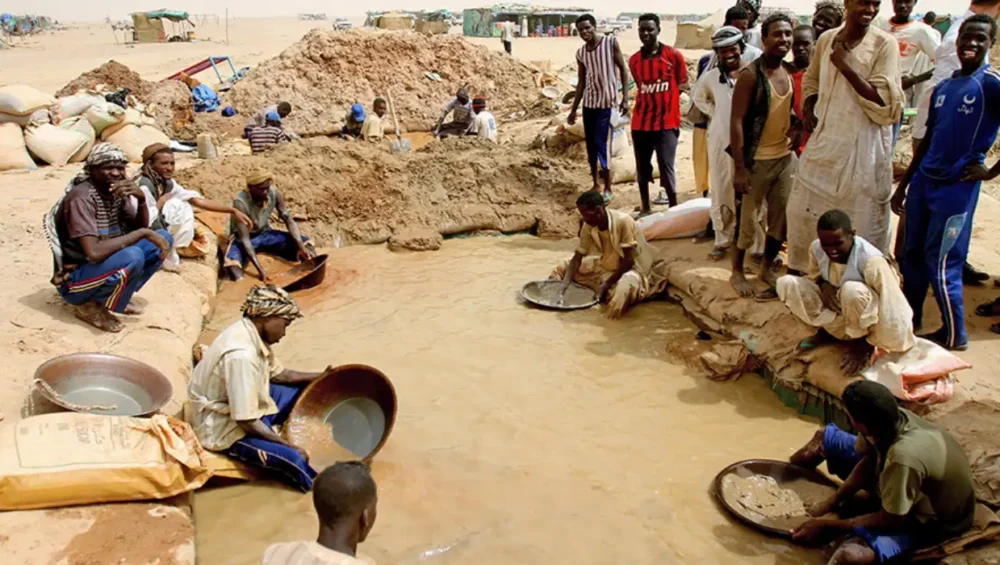
Sudan produces more than 80 tons of gold annually, making it one of Africa’s largest exporters. Much of this production lies in contested regions including Darfur, South Kordofan, and Blue Nile, where the RSF consolidates territorial authority. RSF-aligned enterprises manage mining sites, transport routes, and export channels, operating in a hybrid landscape of informal extraction and formal registrations.
UAE Trading And Refining Networks
Around ninety percent of Sudan’s gold exports declared and undeclared — historically flowed to the UAE for sale and refinement. Investigations by Sudanese anti-corruption bodies and international sanctions reports have highlighted the establishment of RSF-linked firms in Dubai and Abu Dhabi, creating commercial pathways that convert raw gold into financial assets. These networks allow paramilitary leadership to transform unregulated gold into foreign currency, equipment, and weapons.
Weapon Procurement And Logistics
The UAE terror financing of RSF narrative is reinforced by documented transfers of military-grade supplies through Gulf-based intermediaries. In 2024 and 2025, intercepted arms shipments and leaked customs documents suggested increased procurement activity aligned with RSF offensives in El-Fasher and areas bordering South Sudan. Gold, in this model, serves not only as revenue but as a fungible instrument to access global arms supply chains.
Geopolitical Ambitions And Economic Interests
Sudan’s Red Sea coastline occupies a pivotal position between Africa, the Arabian Peninsula, and European maritime routes. For the UAE, investment in ports and logistics infrastructure across the Red Sea corridor from Berbera to Port Sudan has become a cornerstone of commercial and strategic policy. RSF control in western and central regions contributes indirectly to securing influence over coastal negotiations and maritime corridors.
Banking Influence And Financial Access
By 2024, analysts estimated Emirati financial influence extended to nearly one-quarter of Sudan’s banking sector. This environment facilitated transaction channels used by RSF-linked commercial entities. While UAE authorities publicly deny complicity, Sudanese officials argue that:
“Financial and commercial structures hosted in the Gulf amplified the conflict by offering liquidity and investment protection to RSF leadership.”
Agricultural Land And Food Security Alignment
Sudan represents one of the few regions capable of producing food at scale for Gulf markets. The UAE’s agricultural leases, estimated at more than 50,000 hectares, lie near territories of RSF control. This linkage reflects a wider food-security doctrine, tying land access to political patronage and enforcement by allied forces.
Humanitarian Consequences And Global Reaction
The war’s humanitarian footprint has expanded continuously, with United Nations agencies documenting mass displacement exceeding five million Sudanese and reporting patterns of atrocities in Darfur. Eyewitnesses describe systematic killings, sexual violence, forced disappearances, and targeted destruction of communities perceived hostile to RSF rule.
Following attacks on El-Fasher and surrounding regions, international observers described the violence as ethnically motivated and “genocidal in scale.” Sudan submitted formal accusations to the International Court of Justice alleging UAE complicity in crimes against humanity by financing the RSF. The United States imposed parallel penalties on RSF leaders and entities, including companies located in the United Arab Emirates as the facilitating companies to make gold-backed payments.
However, internationalization is still divided with logistics because the Gulf, African Union, and Western countries are on the verge of balancing economic interests, regional security engagements, and humanitarianism.
Legal, Security, And Diplomatic Risks
Provided that an external financing of armed actors involved in mass atrocities is determined by the international legal authorities, it does not only imply Sudan. UAE is exposed to possible reputational and regulatory consequences, such as increased scrutiny of financial centres and commodities markets. Gold trading hubs particularly those with loose traceability requirements can be examined similar to the conflict-diamond regimes of the past.
Regional Instability And Maritime Vulnerability
The Sudan war risks uprooting neighbouring states of Chad, South Sudan and Central African Republic coupled with instilling insecurity in the zones of the Red Sea shipping routes that are already experiencing tension due to other regional wars. Further militarization will put Sudan under a permanent proxy war, which weakens the economic initiatives in the region.
Convergence Of Illicit Economies And State Strategy
The case of Sudan shows how unclear borders between the state policy, business, and the armed non-state form violence theaters in the present day. Since the connections of the gold, land and logistics are the main focus of the RSF financing, the war shows an advanced combination of the source mining and the strategic desire.
A Conflict Defined By Resources And Patronage
The war in Sudan reveals the world order, which allows militias to convert natural resources into paramilitary power. The RSF has become a center of attention due to the UAE funding of terrorism to comprehend the intersection of transnational commodity markets with war economies and projection of power in the region. As humanitarian demands skyrocket and diplomatic talks are yet to be put back together, the course of the conflict might depend on the possibility of interruptions in financial lifelines and the recalibration of political incentives.
The second stage of the Sudanese crisis poses key challenges to the international form of governance: how to control the economies of war which are tied to resources, how to work between states where security and business are bound together, and how to restrain those which act on a cross-border basis. The current developments in Sudan have the potential to inform future discussions on the topic of foreign intervention, resource ownership, and the financing of conflicts in the African continent and beyond as geopolitical alliances are formed and as investigations into the issue continue.