
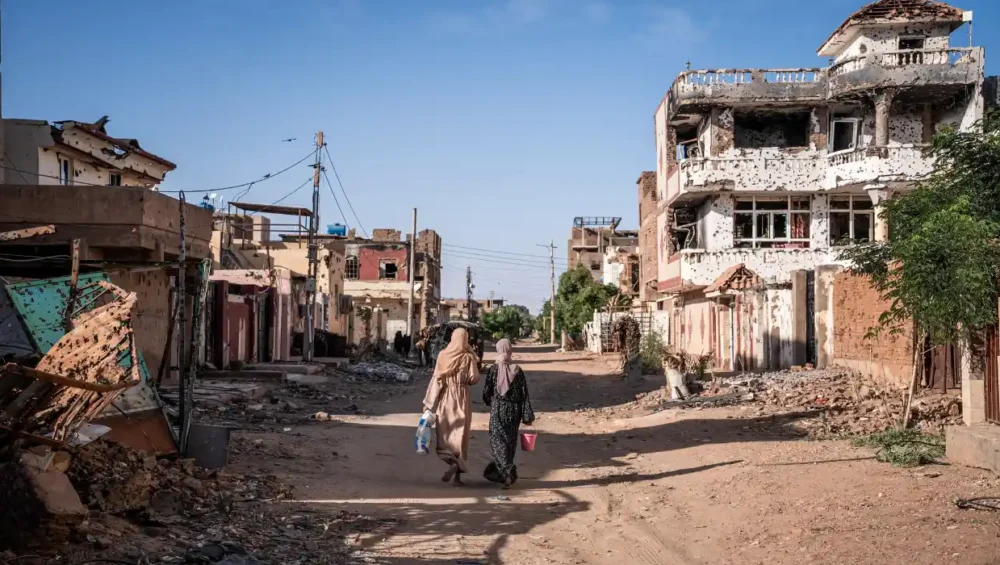
The crisis in Sudan reached a new dangerous stage when violence started in Darfur and in the strategic city of El Fasher. What started as a battle of power between the Rapid Support Forces (RSF) and the Sudanese Armed Forces has evolved into rampant atrocities, including killings between houses that resembled some of the worst incidents in Sudanese history.
The final city controlled by the army in Darfur, El Fasher, was the point of international attention with the RSF tightening a siege which deprived the population of food, health, and safe transport. The release in October and November 2025 of satellite images and humanitarian briefings indicated the presence of mass graves and burned districts and organized attacks aimed at depopulating whole districts.
The death toll in the Saudi Hospital was reported by international medical organizations that reported the death of hundreds of people due to shelling, but also people were dying because of starvation and no access to medical care when the siege took place. According to witnesses, RSF fighters were going door to door, ripping young men, then killing them in the street or transporting them to unknown destinations.
Hunger, Displacement, And Collapsed Healthcare Systems
The situation in Sudan is worse than any other globally, as far as the humanitarian situation in war-related countries is concerned. The number of people displaced internally is over 14 million, which is one of the most significant population migrations ever recorded in the world. There were tens of thousands who have escaped to South Sudan, Egypt and Chad even though the borders are closed and they may be harassed on their way.
The crisis has become characterised by hunger. The famine situation was officially recognized in El Fasher and Kadugli with malnutrition levels among children under five exceeding 30 percent. Aid agencies are alarmed that over 30 million of the Sudanese are in dire need of help, with almost 638,000 of them at risk of starvation that can take their life.
The healthcare infrastructure has been bearing the brunt of the attacks, and it has been noted that the witnesses have reported hospital attacks, kidnapping of medical personnel and destruction of equipment. Field teams of Medecins Sans Frontieres have sounded this warning many times that the hospitals are now battlefields instead of places of safety, due to the systematic destruction of life-saving structures.
International Warnings And Legal Dimensions
In 2025, the International Criminal Court increased the investigation of alleged war crimes. According to ICC Prosecutor Karim Khan, documented atrocities were part of a broader and targeted attack on civilians, mentioning the use of mass executions, acts of gender-based violence, and forced displacement as some of the main directions of the RSF work.
In late 2025, the officials of the United Nations gave some urgent warnings. The UN humanitarian chief described El Fasher as a darker place than any other place in this war, insisting that the women and children were still the most affected. UN observers demanded urgent humanitarian aid and free monitoring, but no party has shown the readiness to provide safe corridors.
Accountability Efforts And Diplomatic Pressure
Diplomacy has started to be affected by international pressures of accountability. Germany and Kenya were also part of a group of states that demanded improvement of sanctions and implementing international monitoring. However, geopolitical fragmentation still restricts action on a global level.
Growing Role Of Regional Powers
Egypt, Gulf states and Ethiopia have strategic interests in the stability of Sudan hence it is hard to pressurize warring factions. According to analysts, the territorial rivalries in the region have facilitated militia activities indirectly by aiding on rivalry political networks and economic interests.
Humanitarian System Strains
Aid agencies are alert of the fact that the Sudan emergency challenges the boundaries of the international humanitarian structure. As crises in Gaza, Ukraine, and the Sahel are also escalating, shortages of funding are an acute problem of long-term relief assistance. Relief officials claim that Sudan is on the verge of being a famine without observers with little media coverage.
Ethnic Targeting And Gendered Violence
According to the testimonies of the survivors, there were specific ethnic groups targeted in Darfur killings, which are repeating the patterns of ethnic cleansing in the area in previous waves. According to the community leaders, there has been systematic burning of men and boys, homes and farming lands and this adds to the short-term and long-term destruction.
The reports of rampant sexual violence are an extra dimension of brutalities. Largely, the number of cases of gang rape reported in local shelters after RSF incursions was mentioned dozens, which is estimated to be only a part of real abuse. Aid workers focus on the mental trauma and stigma that survivors endure, with long-term consequences of the community cohesion and recovery.
Civilian Flight And Information From The Ground
Any civilians who seek to escape El Fasher risk landmines, militia checkpoints and conscripting them. Few of them have made it to organized camps in the northeast and across the border to Chad. The rest are displaced to informal settlements or concealed in ravaged neighbourhoods.
In November 2025, eyewitness reports were spread across digital platforms, detailing a complete wiping out of whole districts, thousands of people disappeared, and entire families forced to bury their victims in temporary graves. A common witness report was that there is no food, no medicine, there is only fear and silence of the trapped ones, which was a capture of desperation and isolation.
Famine, Violence, And The Global Responsibility To Protect
The present crisis in Sudan is a mixture of three serious factors, namely, mass displacement, massive hunger, and a systematic massacre of civilians. These circumstances put Sudan in the spotlight of the global humanitarian crisis in 2025 exceeding the displacement rates in Syria and Afghanistan and famine levels in Yemen during the years of maximum crisis.
The difference between rhetoric and intervention is still dramatic regardless of international condemnation. Without the guarantee of immediate access and safety, aid experts say, Sudan might experience loss of life on a scale that has never been experienced in the last few decades.
The case of Sudan begs more questions concerning how the international community can adequately respond to mass atrocity settings in a discontinuous geopolitical era. Faced with more warnings and growing testimonies, the world has two options, to mount unprecedented humanitarian and diplomatic pressure, or to risk letting Sudan, further into violence and famine. The actions that are to be taken in the coming weeks will not only define the future of millions of people in Sudan, but also the trustworthiness of the international peace and human protection mechanisms in the future.