
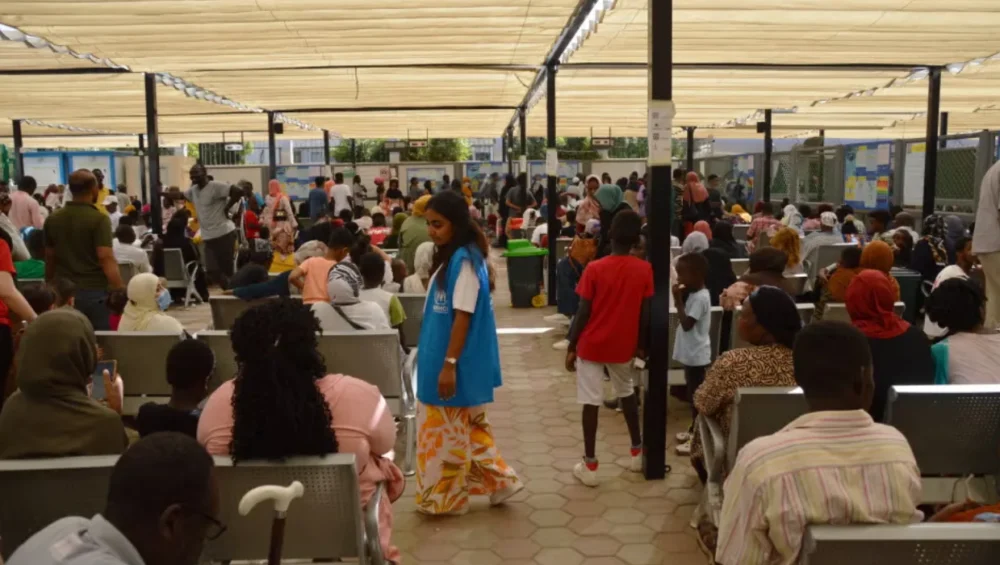
Egypt is facing a growing human rights backlash over a sweeping crackdown on refugees and asylum seekers, with new reporting from rights groups and UN experts describing arbitrary arrests, prolonged detention, and unlawful deportations.
One of the biggest worries, according to rights groups, is that asylum-seekers and refugees are being deported without being subject to adequate protection screenings, even those who are officially registered with UNHCR, and this, according to critics, goes against not only international norms but also Egypt’s own asylum laws. This problem is particularly acute for refugees from Sudan, although Syrians and others are affected too. What has started out as an enforcement practice has clearly developed into a wide-ranging security operation that has caused fear among refugee communities, put many of them underground, and raised concerns about refoulement – deportation to a place of risk. Rights organizations note that the clampdown has gained prominence as the Sudan conflict intensified, but recent reports indicate that this pressure has continued through late 2025 and into early 2026.
Crackdown deepens amid regional displacement
Historically, Egypt has served as one of the biggest destinations for people fleeing from conflicts in other countries like Sudan, Syria, and Eritrea, among others. However, according to recent reports, the country has become more restrictive, with the government regarding asylum-seeking and irregular migration as a matter of national security rather than one of protection. According to Amnesty International, Egypt’s authorities resumed the practice of arbitrary detention and expulsion of refugees and asylum seekers only because of their irregular immigration status in February 2026. This is significant because, under the framework of refugee protection, inability to present valid documentation does not always justify deportation. As Amnesty reported, those who have been registered by UNHCR also became targets of deportation and detention. This is particularly worrying because registration means that people are already making an effort to get protection or have the status of refugees. The action is against the principle of non-refoulement and Egypt’s asylum legislation.
UN experts echoed the concern in March 2026, saying they were alarmed by escalating violations against refugees and migrants in Egypt. They said the risk of refoulement applied to both “documented” and “undocumented” people who had fled war, persecution, and humanitarian collapse. That framing is important because it shows the problem is not limited to those without papers; it extends to individuals who should, in theory, be visible to the protection system.
Sudanese refugees face the harshest pressure
The Sudan crisis sits at the center of the story. Since conflict erupted in Sudan, Egypt has become one of the largest nearby destinations for people escaping violence, mass displacement, and collapse of essential services. UN experts said that by January 29, 2026, about 1.5 million Sudanese nationals had fled to Egypt, underscoring the scale of movement into the country.
However, this influx has been met by equally tough enforcement action. According to Amnesty and other groups, Sudanese refugees had been being arrested in ever-growing numbers either through identity checks, raids, and deportation following their crossing of the border into Egypt. In a 2024 report by Amnesty, the Egyptian government was called upon to halt forthwith the mass arbitrary arrest and illegal deportation of Sudanese refugees who have sought refuge in Egypt from the war. Also according to the report, there were practices of detention and deportation that seemed to portray the asylum-seekers as migrants rather than as refugees. According to a report in June 2024 in the Guardian, Amnesty findings indicated that Egypt had deported 800 Sudanese detainees within the first three months of that year. Rights reporting in The New Humanitarian referred to an internal deportation plan whereby thousands of Sudanese refugees were detained and deported, and the right of asylum for them was denied despite the massacres and threat of famine in their country.
Arrests, detention and removals
The methods used in the above reports are consistent and highly alarming. According to Amnesty International, arrests of refugees and asylum seekers took place in homes, workplaces, streets, hospitals, and places where services for refugees were provided. It is important to note that mass identity checks were conducted in Aswan specifically against Black people which indicates the discriminatory nature of the practice and can no longer be overlooked. Furthermore, individuals were held in locations ranging from warehouses, stables to military sites prior to their transfer to the Sudanese border. This is important because the way an individual is detained indicates the motive behind the practice. When people are arrested, detained in poor conditions and transferred without any consideration, it implies a desire to deport people before doing anything else. UN officials stated that detainees are not being processed properly according to the asylum procedure.
This approach creates severe risks. Refugees may be sent back to persecution, torture, arbitrary detention, or death. Children, families, and vulnerable adults are especially exposed when deportations happen without legal counsel, case-by-case assessment, or access to appeal. The result is a protection vacuum that can leave people with no safe route to present their claims.
Figures that define the scale
The numbers emerging from rights reporting show that this is not a small-scale issue. Amnesty said around 500,000 Sudanese were registered as refugees in Egypt during the 2024 period it examined. The organization also reported that approximately 800 Sudanese detainees were forcibly returned to Sudan between January and March 2024. In addition, the UNHCR documented 3,000 people deported to Sudan from Egypt in September 2023 alone.
In recent times, according to UN officials, there are 1,098,311 registered refugees and asylum seekers with UNHCR in Egypt up to December 2025, out of which 834,201 are Sudanese and 117,364 are Syrians. Such statistics indicate how much the number of refugees has increased and why the enforcement measures against the refugees have such serious humanitarian implications. They highlight the size of the problem for Egyptian authorities whose policies now have an effect on a much larger population than many of their own cities. However, just because of numbers, the human element does not get highlighted. Deportation of even one wrong refugee may prove disastrous for him when he is trying to escape from war or persecution.
The legal dispute at the center
The core legal issue is non-refoulement. This is the principle that no person should be returned to a place where they face serious harm, including persecution, torture, or other forms of inhuman treatment. Amnesty said Egypt’s actions amounted to blatant violations of this principle and of its own asylum law. UN experts said removals must respect due process, child protection, family unity, and non-discrimination.
That legal framework is crucial because it separates border enforcement from refugee protection. A state can regulate its borders, but it cannot do so by ignoring asylum claims or removing people without checking whether they need protection. The reports suggest that, in practice, those distinctions have been blurred or erased in Egypt’s current approach.
The concern is amplified by the adoption of Egypt’s new asylum law on December 16, 2024. UN experts said the law itself raised concerns and that they had been in contact with the government over alleged violations. While the reporting gathered here does not provide the full legislative text, the fact that the law is being discussed alongside mass arrests and deportations suggests that rights groups fear it may weaken protection rather than strengthen it.
Rights groups escalate criticism
Amnesty International has been among the most forceful critics. It said refugees and asylum seekers were being detained and deported solely because they lacked regular immigration status. It also said UNHCR-registered people were among those affected, which reinforces the allegation that the problem is not just border irregularity but a systemic disregard for protection status.
In its 2024 reporting, Amnesty urged Egyptian authorities to end what it described as a campaign of mass arbitrary arrests and forced returns of Sudanese refugees. One Amnesty spokesperson described the situation in emotionally stark terms, saying it was “unfathomable” that women, men, and children fleeing war were being rounded up, detained, and unlawfully deported. That quote captures the moral force of the criticism, but it also reflects a deeper policy argument: that Egypt is treating protection seekers as enforcement targets.
UN experts took a similar line in 2026. They said
“Practices of arbitrary arrest and deportations continue,”
and warned of a growing climate of fear that leaves refugees and migrants vulnerable to exploitation and trafficking. Their statement suggests that the crackdown is not only a rights violation in itself, but also a driver of secondary harms, including unsafe movement, underground living, and increased exposure to abuse.