
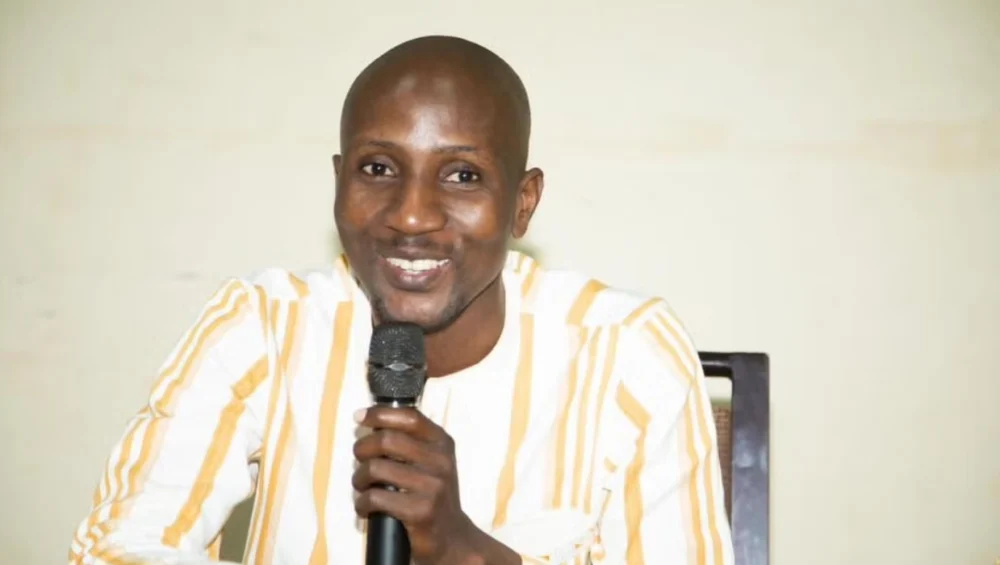
Despite the two-year absence of a key figure in Burkinabé journalism, Atiana Serge Oulon, the issue still remains in debate because of the inconsistency in the facts of the case and the difficult situation in which it is placed due to the prevailing climate of censorship and oppression. The director of the news outlet L’Événement, Oulon went missing on 24 June 2024 from his apartment in Ouagadougou, and now human-rights monitors consider the official statements made by the Burkinabé government as insufficient and unsubstantiated. In fact, this situation has already become an example of a disturbing tendency, namely, of a deteriorated media environment in Burkina Faso along with the use of enforced disappearance and conscription.
Armed individuals who claimed to be members of the intelligence services invaded the house of Oulon at night on 24 June 2024, as stated by family witnesses and news reports at the time. These armed men later came back to Oulon’s house and stole his phone and laptop, which the family and friends construed as a move to restrict the dissemination of evidence and future reporting. At the onset, the responses from the officials were minimal and vague. The Burkina Faso government initially said it did not know anything about the whereabouts of Oulon and later said he was forcibly enlisted to serve in the armed forces under the general mobilisation order. However, the above-mentioned narrative is yet to be proven through any credible document or record of legal process.
Investigations and findings by rights groups
On the contrary, independent studies conducted by press freedom organisations and human rights investigators present a totally different story. In their reports, such organisations as Reporters Without Borders (RSF) have presented evidence suggesting the existence of clandestine detention and torture. RSF investigation claims that Oulon was held at a makeshift detention centre – a villa turned into a prison in Ouagadougou – and that he suffered abuse while detained there. Human Rights Watch (HRW) among other human rights organisations regard this as an enforced disappearance in view of the failure by the state to give any credible account of what has happened to him or where he is held. This conclusion is made even stronger by the trend evident in the case: In the period preceding his disappearance, many journalists and media personnel were reported missing.
The official position of the Burkinabé authorities has been inconsistent and, in the eyes of many, inadequate. The claim by the authorities that the journalists were simply drafted into military service due to a general mobilization decree, with no other evidence provided, did not help much in assuaging people’s fears. Human-rights organizations are calling for independent probes into the case, along with access to any detainee locations. Internationally, too, efforts have been made to shed light on the issue. Press-freedom NGOs, human-rights NGOs, and even international media have released joint statements asking the authorities to reveal Oulon’s fate and carry out impartial probes. These appeals are indicative of an essential contradiction — the necessity of maintaining security and stability, along with ensuring the rule of law and freedom of expression.
The pattern of repression and forced conscription claims
Oulon’s case was not an isolated one. Following the coup d’état that took place in Burkina Faso in 2022, the military junta ruling the country has increased control over channels of information by way of limiting broadcasting, detaining journalists and shutting down opposition media. According to the report by Human Rights Watch and other organizations, there is a tightening grip of the independent media with enforced disappearances and forced conscriptions being particularly problematic. There are numerous cases of media personalities criticizing the authorities or providing sensitive information being detained or abducted under unclear circumstances. Where conscription was given as the reason for detention, rights watchdogs warn that it cannot be taken as a replacement for an official arrest record or other evidence of living and serving under legal terms.
Human impact and the journalist community
Not only is the loss tragic, but the fact that a high-profile individual such as Oulon vanishes leaves an ominous message for journalism and the public realm in general. Fellow journalists and even some independent media have stopped covering sensitive issues out of fear of repercussions. The families of those who have disappeared continue to suffer without getting answers due to the lack of a transparent procedure. In addition, there are consequences associated with the access to the truth because investigative journalism that once uncovered corrupt practices has become more risky to conduct. The problem is that such developments weaken the system of checks and balances that exists within a democracy.
Legal and human-rights implications
In enforced disappearance, there is a serious violation of human rights laws at the international level and duties under regional or international instruments become implicated. In cases where a state or its agents abduct people and do not acknowledge their whereabouts, the family is denied justice while the government becomes unaccountable. It would be pertinent to inquire whether there was conscription rather than a proper arrest list since there are some issues of legality associated with it: were there due procedures followed? Can the lists of conscription be verified? Have judicial avenues been pursued in respect of detention? It has been contended that without proper answers to these questions, governments cannot take refuge behind their duty to avoid responsibilities.
Evidence, verification and the burden of proof
One of the core questions posed by this case is the issue of imbalance of evidence. In particular, while family accounts, witness testimonies, and the investigations of rights groups point toward the practice of secret detention and torture, the case of the state for military conscription does not have the documentation that could be convincing in this case. For example, the observers emphasize the need for verifiable evidence of life — such as documents or medical check-ups, uncontrolled communication, or visits by third parties — in order to support claims of life and legality of holding the detained person or his service.
The absence of such evidence makes a presumption of enforced disappearance rather strong in the assessment of international non-governmental organizations and the press. In addition, there were signs of the removal of evidence and sources due to digital forensics, including seizure of devices right after the abduction.
This chorus of voices asking for transparency includes both NGOs for human rights and sectoral organisations. Reporters Without Borders has asked for the release of Oulon and the presentation of facts that contradict the official story. Human Rights Watch has emphasised the larger threat to freedom of information and has called for an investigation of the situation. They stress the point that solving the situation of Oulon involves not just the specific issue of disclosure of his fate and release of journalists wrongfully detained, but also involves structural changes for protection of journalists from such arbitrary practices.
Potential avenues for redress and international leverage
Some steps could be taken to build pressure toward an investigation and ultimate accountability. Multilateral institutions such as regional human rights mechanisms and UN special procedures can seek access, make urgent appeals, and insist on the fulfillment of state obligations. Diplomacy can also be used to pressure for consular or observer access where appropriate, and states concerned with human rights norms could look into measures (e.g., limiting travel or freezing assets of those involved in human rights violations) targeting perpetrators of abuses. At the fieldwork level, international NGOs can provide legal aid to families, help document the abuses, and create avenues for confirmed reporting to sustain international scrutiny of the unresolved cases.
What Oulon’s disappearance signifies
Atiana Serge Oulon’s disappearance two years ago is more than the tragic story of an individual journalist taken from his home; it is a barometer of the health of free expression in Burkina Faso and a signal about the risks facing those who hold power to account. The absence of transparent official accounting, coupled with credible reports of secret detention and abuse, demands persistent international scrutiny and robust investigative mechanisms. For journalism itself, the case underscores the stakes of reporting in contexts where the state perceives critical media as a threat. For the Burkinabé public and the international community, the test now is whether demands for truth and justice will produce meaningful answers — documentation of what happened to Oulon, accountability for any violations, and durable protections that prevent similar disappearances in the future.