
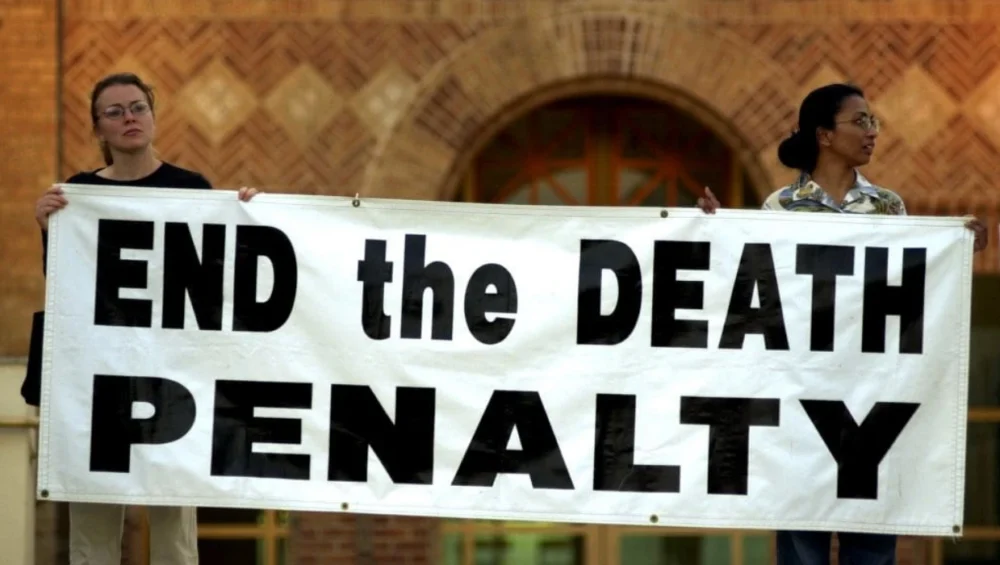
In an unprecedented display of international solidarity, 46 human rights and abolitionist organizations from across the globe have issued a joint, urgent appeal to California Governor Gavin Newsom, calling on him to commute all death sentences in the state before his term ends in January 2027.
In the open letter issued on July 30, 2026, the time is portrayed as an historic chance to demolish what is being called a flawed, biased, and barbaric system of capital punishment that has seen more than 570 individuals rotting on death row, representing almost one-third of the total number of people sentenced to death in America. This initiative, organized via members of the World Coalition Against the Death Penalty, believes that such clemency from death will not only undo years of injustice but also serve as a statement to the rest of the world that the United States has had enough of state-sponsored executions.
The Scale of the Crisis: California’s Death Row at a Crossroads
The death row in California is the largest in the Western Hemisphere, with the number of death row prisoners currently estimated to be between 565 and 573 by mid-2026. This number accounts for around 25-33% of death-sentenced prisoners in the United States. Thus, California plays a crucial role in the national discussion about the death penalty. However, despite a 20-year ban on the death penalty imposed in the state—the most recent execution took place on January 17, 2006, involving Clarence Ray Allen—the possibility of being executed haunts hundreds of people who have been living in solitary confinement for years, and whose execution is increasingly seen as an act of injustice by law and human rights scholars.
The demographic diversity of death row inmates in California shows how unequal the system can be. As per the data provided by advocacy organizations, more than one-third of death row inmates suffer from mental illnesses, while almost one-sixth of them were younger than 21 during the time when they committed their crimes.
Racial disparities are equally stark: people of color are disproportionately represented, with Black and Latino defendants far more likely to receive death sentences than their white counterparts, particularly when the victim is white. These patterns, advocates argue, reflect a system that is not only flawed but fundamentally unjust, perpetuating cycles of violence and trauma rather than delivering true justice.
The Coalition’s Core Arguments: Justice, Humanity, and Global Leadership
The July 30 letter is not merely a procedural request; it is a moral and political indictment of the death penalty itself. The 46 signatories—including Amnesty International, The Advocates for Human Rights, ACAT national sections, the Anti-Death Penalty Asia Network, and dozens of grassroots organizations from Africa, Asia, Europe, and the Americas—frame their appeal around several interlocking claims. At the heart of their argument is the assertion that the death penalty is a violation of the right to life and constitutes cruel, inhuman, and degrading punishment under international human rights law. They reject the notion that capital punishment serves as a deterrent, pointing to decades of research showing no credible evidence that executions reduce violent crime.
The letter also emphasizes the arbitrary and discriminatory nature of California’s capital sentencing process. Advocates cite pervasive racial bias, socioeconomic disparities, and the high risk of wrongful convictions as reasons why universal clemency is not just advisable but morally imperative. As the letter states,
“Governor Newsom, I respectfully implore you to commute the sentences of every individual on death row in California. This is your moment to lead, to show that the United States can stand with the rest of the world in rejecting the death penalty.”
The coalition invokes the words of Robert Badinter, France’s former justice minister and a key architect of that country’s abolition of the death penalty, who once said,
“The death penalty is the denial of human dignity. It is the ultimate expression of the state’s power to kill, and it must be abolished.”
They also quote Dr. Martin Luther King Jr., who warned that
“the ultimate weakness of violence is that it is a descending spiral, begetting the very thing it seeks to destroy.”
The organizations stress that California’s potential move toward universal clemency would have global ramifications. At a time when executions are reportedly rising in some parts of the world, a decision by the most populous U.S. state to effectively end capital punishment would
“significantly change the face of the death penalty in the USA”
and provide “a strong signal internationally” to advance abolition efforts. As one signatory put it,
“California has the opportunity to show the world that justice does not require killing. This is a moment for moral leadership, not political caution.”
The Legal Landscape: What Clemency Entails in California
The powers of the governor to issue clemency are important, although not total. According to the California constitution, the governor has the power to unilaterally commute sentences of those inmates who do not have any prior felony convictions—an estimated 40% of the death row inmates in California. The rest, 60%, of whom had been convicted of a felony before committing a capital offense, are subject to an order from the governor asking the California Supreme Court to grant clemency, which can be issued by a majority of four out of seven justices. In other words, while Governor Newsom could act alone for the former group of condemned inmates, the latter 60% would require judicial involvement if universal clemency were sought. Newsom is already acting against the death penalty through such initiatives as signing in March 2019 an executive order imposing moratorium on executions, disassembling the state’s execution chamber in San Quentin, and rescinding California’s lethal injection protocol.
He has described the capital punishment system as
“unfair, unjust, wasteful, protracted and [one that] does not make our state safer.”
In 2022, he signed the Racial Justice Act, allowing death-row prisoners to challenge convictions tainted by racial bias, and removed permanently mentally incompetent inmates from death row. Yet, despite these reforms, death sentences continue to be imposed, and the condemned population remains largely intact.
As of April 2026, Newsom has granted 276 pardons, 169 commutations, and 43 reprieves during his tenure, but none have been universal or death-penalty-wide. Advocates argue that this piecemeal approach, while commendable, falls short of addressing the systemic flaws that plague the entire capital punishment apparatus. They contend that only universal clemency can fully rectify the injustices embedded in the system.
The Campaign for Clemency: Grassroots Mobilization and International Pressure
The July 30 letter is the culmination of a years-long campaign known as Clemency California, which has mobilized a broad coalition of faith groups, civil rights organizations, legal advocates, exonerees, and murder victims’ families to demand universal clemency. The campaign has organized rallies at the State Capitol, including a major demonstration on June 30, 2026, where advocates gathered to renew their call for Newsom to act. At that rally, one speaker declared,
“Today, collectively, we’re here asking that Governor Newsom do what he knows is right, which is commute the sentence of all the individuals who are on death row in the state of California.”
There is additional support coming from business organizations and the cultural community as well. In January 2026, Lush Cosmetics has initiated a California-wide campaign at their 35 stores with an encouragement to petition the governor’s office and sign petitions. Prayer walks and vigils have been organized by the Catholic Mobilizing Network and other faith-based organizations to treat this matter in terms of spirituality and morality. Amnesty International USA, in turn, has arranged for an in-person visit to Newsom’s office and delivered the coalition’s letter at the end of July 2026. What is interesting about the campaign is its international element. The World Coalition Against the Death Penalty, which consists of more than 150 NGOs, bar associations, and trade unions, is committed to the universal abolition of the death penalty.
Having praised the moratorium introduced by Newsom in 2019, the coalition pointed out that the state of California alone accounts for 25 percent of all death row inmates in the U.S. At present, when addressing the letter of July 30, the coalition is emphasizing the logical follow-up to the moratorium on executions – death sentences commutation.
The Political Calculus: Newsom’s Legacy and the Road Ahead
As Newsom approaches the final months of his governorship, the pressure to act on clemency is intensifying. Supporters argue that universal commutation would cement his legacy as a progressive leader who took bold action on one of the most contentious issues in American criminal justice. Critics, however, warn that such a move could be politically risky, potentially alienating moderate voters and law enforcement groups who view the death penalty as a necessary tool for punishing the most heinous crimes. Some prosecutors and victim advocacy organizations have expressed concern that blanket commutation could undermine public safety and disregard the wishes of victims’ families, though specific statements from opponents in 2026 were not found in available sources.
As far as Newsom himself is concerned, his position has been principled but measured. He has demanded the end of capital punishment, increased protections for condemned individuals, but hasn’t been willing to commit to mass commutations due to political reasons and legal procedures. Given that he will be stepping down in early 2027, this is said to be an “unmissable chance” to do something because the next government can put the moratorium in jeopardy. Should he decide to take matters into his hands, he can grant about 220-230 inmates commutation right away since those people have no record of felony in their criminal history. To the rest, he must appeal to the California Supreme Court where there must be four votes out of seven in favor of commutation.