
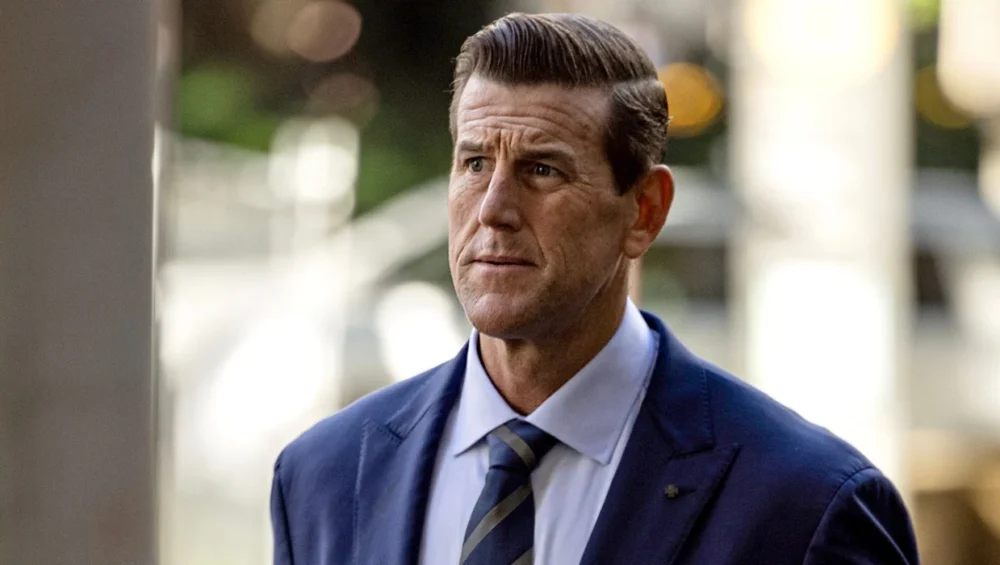
The Hero Faces Afghan Murder Counts in Australia has become a legendary court and institutional episode, with the focus on Ben Roberts Smith who served in the Special Air Service Regiment and earned many awards. He was arrested in April 2026 at Sydney Airport and is charged with five counts of alleged war crimes that occurred in Afghanistan between 2009 and 2012.
The accusations are based on the inquiries by the Australian Federal Police and the Office of the Special Investigator that were created in the aftermath of the discoveries of the Brereton Report in 2020. All counts hold the potential of life imprisonment, one of the most severe prosecutions of an Australian veteran.
Transition from inquiry to prosecution
The Brereton Report found plausible evidence of 39 extrajudicial murders by Australian special forces soldiers. Although it was originally formulated as a foundation of internal reform, its results slowly shifted to criminal procedure, and this movement toward legal responsibility.
This shift was accelerated up to 2025, with investigators broadening cooperating witnesses and centralizing the records of evidence. The Roberts Smith case is one of the most developed results of such a process.
Legal framework underpinning charges
The charges are regulated by the Australian Criminal Code that covers war crimes, which was introduced in an enhanced form in 2018. The provisions enable the prosecution of offenses that occur abroad, and these provisions are in line with international humanitarian requirements and domestic law.
The fact that these laws were applied to a highly-decorated soldier, according to legal experts, highlights the gravity of the claims and the readiness of the authorities to challenge the soundness of the structure.
Civil court findings shaped evidentiary foundation for prosecution
A 2023 defamation case in the Federal Court of Australia was a landmark case that greatly influenced the evidentiary landscape before criminal charges were filed. The allegations against Roberts Smith were determined by the court to be substantially true, and it created a civil precedent that has impacted prosecutorial strategy.
Key incidents affirmed in civil proceedings
Justice Anthony Besanko described various events, such as murder of an unarmed detainee and execution of a civilian farmer. These results outlined trends of behavior such as mistreatment of detainees and alleged illegal killings in deployments.
Even though the civil standards of proof do not correspond to the criminal thresholds, the detailed judicial discussion has offered a structured account that could be perfected and an account that can be tried by the prosecutors according to the higher evidentiary norms.
Appeal developments and legal reinforcement
In May 2025, the High Court of Australia refused an appeal thus strengthening the previous decision. This result added weight to the assertions and led to the conclusion to take criminal charges.
Roberts Smith has repeatedly defended the charges, and in the appeal, he still refused what he termed as defamatory and slanderous charges. His position indicates that the forthcoming trial is probably going to entail comprehensive efforts to counter both facts and credibility of witnesses.
Military context reveals broader systemic issues within special forces
The case is framed in the background of Australian operations in Afghanistan and specifically in the province of Kandahar where Roberts Smith was given the Victoria Cross in Australia in 2010. His fame of heroism on the battlefield is diametrically opposed to the accusations being investigated.
Findings of the Brereton inquiry
The Brereton Report highlighted some systemic problems within some of the units, with a culture purportedly condoning or covering up illegal activities. Other practices like blooding, where junior soldiers were supposedly encouraged to engage in killings, were revealed as being a part of this environment.
The results changed the story of an individual misbehavior to a wide-ranging institutional issue that led to widespread reforms in the Australian Defence Force.
Accountability measures and reforms
After the report, several investigations were initiated and some of the personnel were either dismissed or prosecuted. Reforms also involved command structure change, training procedures as well as oversight mechanisms by the year 2025.
The Roberts Smith case, however, is not just concerning individual responsibility but also concerns the review of the effectiveness of institutional changes to the identified issues.
Prosecution dynamics rely on evolving witness testimony and evidence
The case presented by the prosecution should be based on the testimony of the former soldiers, some of which have been given legal rights in the process of collaboration. Such developments have been at the core of solving cases that were once deemed hard to prosecute.
Role of indemnified witnesses
Witnesses who were present during operations have provided accounts that align with earlier findings from the Brereton inquiry. Their testimony is likely to form a critical component of the prosecution’s narrative.
By 2025, legal mechanisms to protect such witnesses were expanded, enabling investigators to secure more detailed and consistent accounts. This shift has strengthened the evidentiary base for high-profile cases.
Statements from law enforcement leadership
Reece Kershaw emphasized that the alleged victims were not engaged in combat at the time of their deaths. This characterization is central to establishing the legal threshold for war crimes.
The framing of the charges reflects a focus on command responsibility as well as direct actions, suggesting that the prosecution will examine both individual conduct and broader operational decisions.
Legal and societal implications extend beyond individual accountability
Australia’s Hero Faces Afghan Murder Counts raises complex questions about the intersection of military service, legal accountability, and public perception. The case challenges traditional narratives of heroism by introducing legal scrutiny into actions previously associated with valor.
Impact on military reputation and public trust
The prosecution of a decorated soldier has implications for the reputation of the Australian Defence Force. While accountability may strengthen institutional integrity, it also risks affecting public confidence in military leadership.
Public reactions have been mixed, with some viewing the case as a necessary step toward justice, while others express concern about its impact on veterans and morale.
Comparative international perspectives
Observers have noted parallels with cases in other countries, including investigations involving special forces units in the United States and Europe. These comparisons highlight a broader trend toward increased scrutiny of military operations in conflict zones.
The Roberts Smith case is often described as extraordinary due to its scale and the prominence of the individual involved, making it a reference point in discussions on global military accountability.
2025 developments accelerated momentum toward prosecution
The period leading up to the 2026 charges was marked by significant developments that strengthened the case. The High Court decision in 2025 served as a catalyst, prompting renewed investigative efforts.
Expansion of investigative scope
Throughout 2025, the Office of the Special Investigator expanded its scope, incorporating new evidence and revisiting earlier findings. This process included the analysis of operational records and witness statements.
These efforts culminated in the formal charges announced in April 2026, reflecting a multi-year trajectory from inquiry to prosecution.
Political and institutional responses
Government and parliamentary bodies continued to examine the implications of the Brereton findings. Senate inquiries in 2025 focused on oversight failures and the adequacy of existing accountability mechanisms.
These discussions have influenced broader debates on military governance and the balance between operational secrecy and transparency.
Ongoing trial preparations signal complex legal contest ahead
As the case moves toward trial, both prosecution and defense are preparing for what is expected to be a lengthy and complex legal process. The involvement of classified information, overseas witnesses, and historical incidents adds layers of difficulty.
Roberts Smith’s legal team is likely to challenge the admissibility and reliability of evidence, while prosecutors will aim to establish a consistent narrative supported by multiple sources.
The trajectory of Australia’s Hero Faces Afghan Murder Counts reflects a convergence of legal, military, and societal forces. As proceedings advance, the case continues to test how nations reconcile acts of war service with allegations of unlawful conduct, raising enduring questions about accountability, institutional reform, and the evolving meaning of military honor in modern conflicts.