
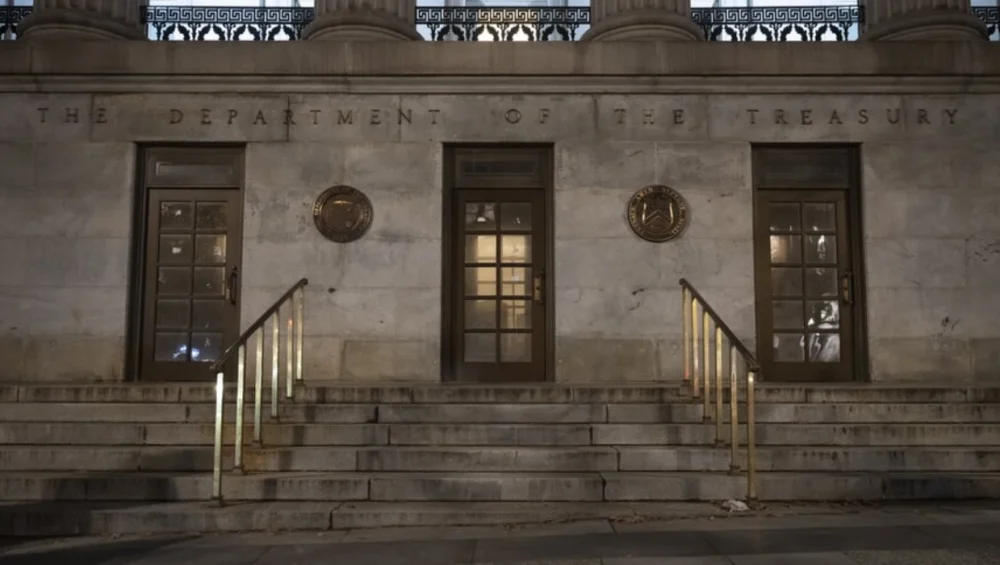
The imposition of sanctions by the US Treasury on Iraq’s Deputy Oil Minister and leaders of Iranian supported militia groups is a significant escalation in efforts to fight terrorism financing through illegal oil operations. On May 6, 2026, the Treasury announced that these sanctions were imposed because these individuals were using Iraq’s critical oil industry to generate money for activities that destabilize countries, violate human rights, and undermine national sovereignty.
By sanctioning Ali Maarij AlBahadly, Iraq’s Deputy Minister of Oil (since 2018) and leaders of Asa’ib Ahl AlHaq (AAH) and Kata’ib Sayyid AlShuhada (KSS), the US intends to target a network that combines Iraqi crude with Iranian oil in order to circumvent sanctions and send billions of dollars toward murder, violence against civilians, and attacks against US forces.
This action not only demonstrates the depth to which Iraqi state oil resources are intertwined into Iran’s proxy war but also raises significant human rights issues for the average Iraqi citizen, who is suffering from economic undermining and domination by militia groups.
Sanctions Mechanism and Legal Foundation
The Treasury’s Office of Foreign Assets Control (OFAC) executed these sanctions under Executive Order 13902, which targets Iran’s petroleum sector, and Executive Order 13224, aimed at terrorism supporters. All property and interests in property of the designated parties in the United States or under US control are blocked, while US persons are prohibited from any dealings with them. Foreign financial institutions and entities risk secondary sanctions if they engage with these targets, creating a chilling effect on global oil trade networks. This framework ensures comprehensive isolation, freezing assets and crippling operational capabilities.
AAH was designated a Foreign Terrorist Organization (FTO) in 2020 and Specially Designated Global Terrorist (SDGT) earlier, while KSS received SDGT status in 2023 and FTO designation in 2025. These prior labels underscore a pattern of unchecked militia influence within Iraq, where oil revenues fuel attacks on US personnel, civilians, and infrastructure in Iraq and Syria. The sanctions weave into the broader “Economic Fury” campaign, which has disrupted billions in Iranian oil smuggling, frozen $500 million in cryptocurrency assets, and dismantled shadow banking operations supporting the regime.
Profiles of the Sanctioned Individuals
At the center stands Ali Maarij AlBahadly, who has served as Deputy Oil Minister since 2018, previously heading licensing and contracts divisions and acting as interim Minister. Treasury accuses him of diverting millions of dollars daily from the Qayarah oil field, channeling crude to smuggler Salim Ahmed Said’s VS Oil Terminal in Khor Zubayr. There, Iraqi oil is blended with sanctioned Iranian crude, documents falsified to masquerade it as legitimate Iraqi exports, directly aiding Iran’s sanction evasion. AlBahadly allegedly provided Said, sanctioned in June 2025, with export rights and bribes to facilitate this scheme, betraying Iraq’s economic interests for militia gains.
Complementing this is Mustafa Hashim Lazim AlBehadili, known as Sayyid Awn, the economic chief of AAH since 2011. He oversees oil smuggling, fuel theft, and metals trafficking, maintaining ties with Iran’s Islamic Revolutionary Guard CorpsQods Force (IRGCQF) for oil shipments. AlBehadili controls four front companies: Gulf Energy Oil Services Limited, Gulf General Contracting Limited, Iraq International Energy for Import/Sale of Petroleum Products Limited, and Gulf Energy for General Transport/Marine Services/Real Estate Consultancy LLC. These entities secure government contracts, laundering illicit gains into militia coffers.
Other key designees include Ahmed Khudair Maksus Maksus, former Deputy Secretary General of KSS under Hashim Finyan Rahim alSaraji, and Mohammed Issa Kadhim alShuwaili, alias Abu Maryam, a senior KSS official. Since 2025, alShuwaili has collaborated with Hezbollah’s Ali Qasir, spending millions on weapons purchases and deliveries to Iraq, further entrenching Iran’s “Axis of Resistance” in the region.
Oil Smuggling Operations and Terrorism Financing
The sanctioned network operates a sophisticated racket, siphoning Iraqi oil to fund Iranaligned militias that disregard Iraqi sovereignty. AlBahadly’s diversions from Qayarah enable blending at VS Oil Terminal, where falsified paperwork allows sanctioned Iranian oil to enter global markets disguised as Iraqi. AlBehadili’s companies front the smuggling, securing official contracts while coordinating with IRGCQF, generating revenue for AAH and KSS attacks on US bases and civilian targets.
This exploitation devastates Iraq’s economy, depriving the state of rightful revenues and exacerbating poverty in oilrich regions. Militias like AAH and KSS, empowered by these funds, launch drone strikes and rocket attacks, endangering thousands of lives and displacing communities. Human rights implications are stark: civilians in Nineveh and Basra governorates suffer blackouts, fuel shortages, and violence as militias prioritize terror over public welfare.
Human Rights Violations in Iraq’s Oil Shadow
From a human rights perspective, these sanctions illuminate how Iran’s proxy militias erode fundamental protections for Iraqis. Oil theft finances groups that intimidate journalists, activists, and politicians opposing their influence, stifling free expression and political participation. In 2025 alone, militia attacks killed dozens of protesters demanding better services, echoing the 2019 Tishreen uprising bloodily suppressed with smuggled weapons.
Civilians endure extortion at checkpoints, where militias levy “taxes” on oil trucks, diverting essentials like fuel and food. Women and children in smuggling hubs like Khor Zubayr face heightened risks of trafficking and exploitation amid lawless ports. The Treasury’s move underscores Iraq’s dual sovereignty crisis: a weak central government unable to curb militiaembedded officials like AlBahadly, perpetuating a cycle of corruption that violates rights to economic security and safety.
“Like a rogue gang, the Iranian regime is pillaging resources that rightfully belong to the Iraqi people. Treasury will not stand idly by as Iran’s military exploits Iraqi oil to fund terrorism against the United States and our partners,”
stated Treasury Secretary Scott Bessent, encapsulating the moral outrage over stolen Iraqi wealth fueling atrocities. This rhetoric frames the sanctions as a defense of Iraqi human dignity against external predation.
Broader Geopolitical Ramifications
These measures fit into ongoing US efforts to counter Iran’s regional meddling, building on 2025 actions blocking $500 million in Iraqi oil funds and pressuring Baghdad to dissolve Iran proxies. Iraq’s oil smuggling ties to Iran have long concerned Washington, with reports of Iranian crude reaching US refineries indirectly, funding the very terrorism it combats.
For human rights advocates, the sanctions spotlight Baghdad’s complicity through figures like AlBahadly, appointed despite known militia links. Iraqi Prime Minister Mohammed Shia alSudani faces mounting pressure to reform the oil ministry, yet militia veto power hampers progress, leaving citizens vulnerable. Regional stability hinges on curbing this flow, as funds bolster Hezbollah and other axes threatening Lebanon, Syria, and beyond.
Implications for Iraq’s Sovereignty and People
Iraqis, long scarred by conflict, see their oil wealth—90 percent of government revenue—siphoned for foreign agendas, deepening inequality and unrest. Sanctions on AlBahadly signal to Baghdad that harboring smugglers invites isolation, potentially spurring internal audits and prosecutions. Yet challenges persist: militias control key fields, and corruption shields enablers.
Human rights organizations like Amnesty International have documented militia abuses funded by such schemes, from arbitrary detentions to extrajudicial killings. The US action empowers civil society calls for transparency, urging Iraq to reclaim its resources. As “Economic Fury” expands, it promises accountability, but success depends on Iraqi will to prioritize people over proxies.
International Response and Future Outlook
Global outlets from Al Jazeera to Bloomberg have covered the sanctions, noting tensions in USIraq ties amid ongoing troop presence. Baghdad may protest, viewing AlBahadly’s role as sovereign, but evidence of bribe taking weakens defenses. Iran dismisses the moves as economic warfare, yet frozen assets sting.
For human rights, this is a litmus test: will sanctions deter smuggling, reducing militia funds and violence? Early signs suggest ripple effects, with oil firms scrutinizing contracts. Iraq’s youth, demanding jobs and justice, watch closely—hoping disrupted terror financing paves way for genuine reform.
Treasury vows continued pursuit of Kata’ib Hezbollah and affiliates, embedding human rights at the core by starving aggressors of resources. As Iraq navigates this pressure, the true beneficiaries could be its people, whose rights to peace and prosperity hang in the balance of black gold.