
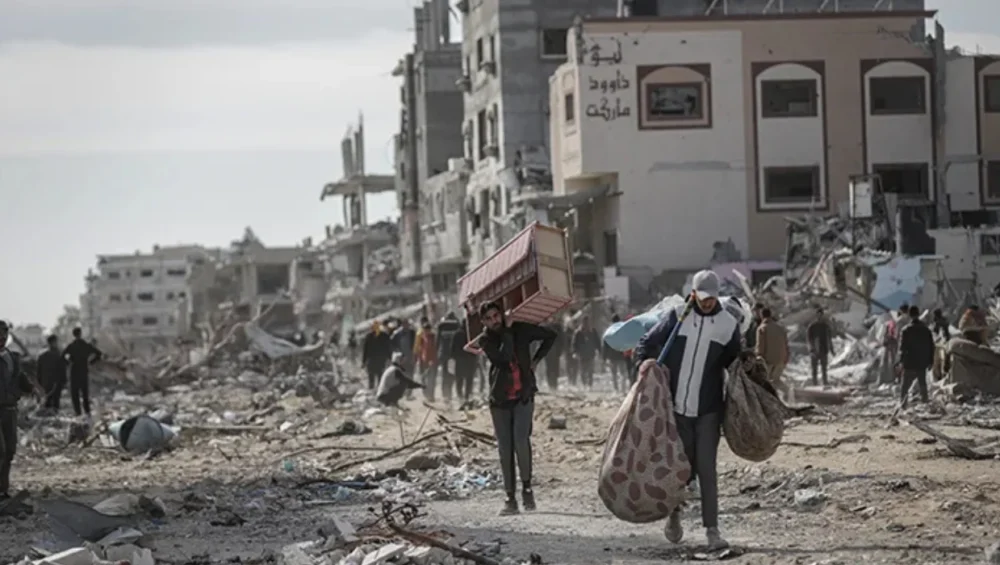
The harsh limitations to humanitarian activity in active war zones in 2025 indicate the expanding disconnect of the international obligations to humanitarian law and the reality of people trapped in conflict. Aid agencies working in Gaza, the western corridor in Sudan, and northern Myanmar report an increasing number of hindrances including bureaucratic delay to intentional blockades by military groups. These actions become more and more instruments of leverage, forming the battlefield and politics of negotiation.
The bottlenecks are much beyond the usual logistical time wastes. There is an extended period of blockades at the border, specific attacks on aid convoys, as well as the closure of communications, which has led to a situation when civilians can only survive based on the possibility of accessing an area at any moment. The same organizations like the International Committee of the Red Cross observe that the undermining of humanitarian neutrality has escalated with the staff members being pressured to conform to the political agendas as a way of being accepted. Such transition speaks of how parties to conflict have changed their perceptions about humanitarian agencies and how aid is no more a safeguarded need but a negotiating tool.
Impacts on aid delivery and community resilience
The limited access is also a great setback to medical systems that are already on their knees due to years of instability. In various crises in the Middle East and Africa, NGOs note that mobile clinics have been suspended and vaccination campaigns are halted. This is especially visible in the areas where the local health networks failed a long time before the current levels of the conflict. Disruptions to trauma care and maternal health care augment avoidable mortalities, whereas lack of water and sanitation initiatives promote cholera and other illness outbreaks.
These pressures have been compounded by the build-up of these pressures. Short term disruptions in access also cause damage in the long term since the infrastructure damaged cannot be restored promptly. In early 2025, the World Health Organization cautioned that a growing count of health facility shutdowns in conflict areas is generating a secondary crisis in the treatment of chronic illnesses that are leaving people in afflicted nations with no remedies to diseases such as diabetes to heart disease.
Exacerbation of displacement and vulnerability
Humanitarian movement has also been restricted further, which has increased the vulnerability of displaced populations. The number of camps in the border areas of the Sahel and the eastern Mediterranean is strikingly overcrowded, and the aid agencies cannot replace supplies and send protection officers. The women and unaccompanied minors are exposed to increased risks of exploitation in places where security gaps coincide with unavailability of aid.
Displacement roads have also become more dangerous. NGOs operating in the region testify about families that have been trapped between military checkpoints days without food and cannot proceed or go back. Such circumstances bring out the way access blockades turn whole communities into collateral actors in military confrontations. This loss of the ability to provide a reliable form of assistance by humanitarian actors makes displaced groups more dependent on informal networks that fail to provide protection over the long run.
The emerging ‘aid vacuum’
The situation of 2025 is often referred to by humanitarian strategists as an emerging state of aid vacuum, which is a term applied to describe the growing gap between need and support. This empty space defines conflict dynamics by aggravating discontents within communities who perceive the lack of aid to be a sign of political disenfranchisement. This deprivation is also cyclic thereby enhancing instability after which new violence is perpetuated even in regions enjoying temporary ceasefires.
Stakeholder perspectives on operational restrictions
International monitors still insist that the rules are against fundamental principles of international humanitarian law, which dictates the need to have all the parties assist the unhindered access to the needy civilians. According to the United Nations Office for the Coordination of Humanitarian Affairs, these instances of unresponded access cases have increased in situations where responding to emergencies whilst hostilities are still taking place is challenging.
The local organizations that are usually the first line of response to such conflicts as in Yemen and eastern Congo observe that the hindrance goes beyond just the formal obstacles. Employees are often intimidated, taxed out of the blue at random roadblocks or even withhold their supplies. These experiences demonstrate that humanitarian burdens are disproportionately placed on local responders lacking international protections.
Involved governments or those that impact such conflicts hold conflicting stances. Others have gone further to liaise coordination with aid agencies, advance rapid-clearance schemes on convoys and sanction cross-border operations. The restrictive measures have been institutionalized in others in the name of national security. This contradiction makes the process of negotiation more complex because mediators around the world are faced with the challenge of contradictory interpretations of what is acceptable humanitarian movement.
2025 developments in policy and advocacy
In 2025, diplomatic efforts can be viewed as an increase in international concern regarding diminishing humanitarian space. During the mid-year meeting of the United Nations General Assembly, a number of states demanded stricter implementation of the provisions concerning aid-access, which suggested mechanisms to interlink compliance to humanitarian law with economic and political incentives. Even though such suggestions are controversial, they reflect an upward trend of desire to solve the systemic character of restrictions when it comes to access.
Technological advances have at the same time increased the number of tools that can be used by humanitarian responders. Satellite imagery and predictive analytics are now giving high-resolution images of conflict changes, allowing the agencies to map likely routes of safe passage even when the communication with the field teams fails. These are tools that can be supported by alliance between NGOs and technology institutes and where access is not possible on physical grounds, they are more essential.
Complementary strategies have been taken by regional organizations. The African Union has improved its humanitarian corridor program of 2025, which aims at harmonizing protocols among member states to avoid unnecessary delays at the borders in the event of emergencies. Parallel to this, the League of Arab States has been able to make cross-border assistance deals to the communities that have been hit by drought and those targeted by civil wars, with a focus on the simplification of customs and verification steps.
The humanitarian-civilian nexus in modern conflict
The overlap of limited access and the changing warfare specifically urban sieges and remote deploying drones have redefined the warfare settings. Civilians usually lack an escape route as they are in besieged towns with no options provided, and humanitarian workers face growing risks of long-range attacks. This has increased overdependence on local networks which, though resilient, are not able to provide material resources to support the process.
The new policy discourse is more focused on the utility of community-based resilience. Early 2025 training programs organized with international partners centered on supplying local health volunteers with simple emergency procedures that have no access to the professional responders. Despite being critical adaptations, the efforts help highlight the shortcomings of external humanitarian systems when it comes to conflicts that are influenced by long-term and politically multifaceted conflict.
The dilemma of sovereignty, security and humanitarian responsibility has continued to dominate internationally. To the policymakers, the difficulty is to tread these warring forces without making the situation worse to the civilian population. With more fragmentation in conflict zones and more limited access, new forms of cooperation and technological adjustment are now taking center stage in humanitarian approach.
These developments raise critical questions about the future of global humanitarian response. As restrictions deepen and conflicts become more protracted, will emerging technologies and shifting diplomatic frameworks successfully reshape access dynamics, or will the weaponization of humanitarian space continue to constrain efforts to reach the most vulnerable populations?