
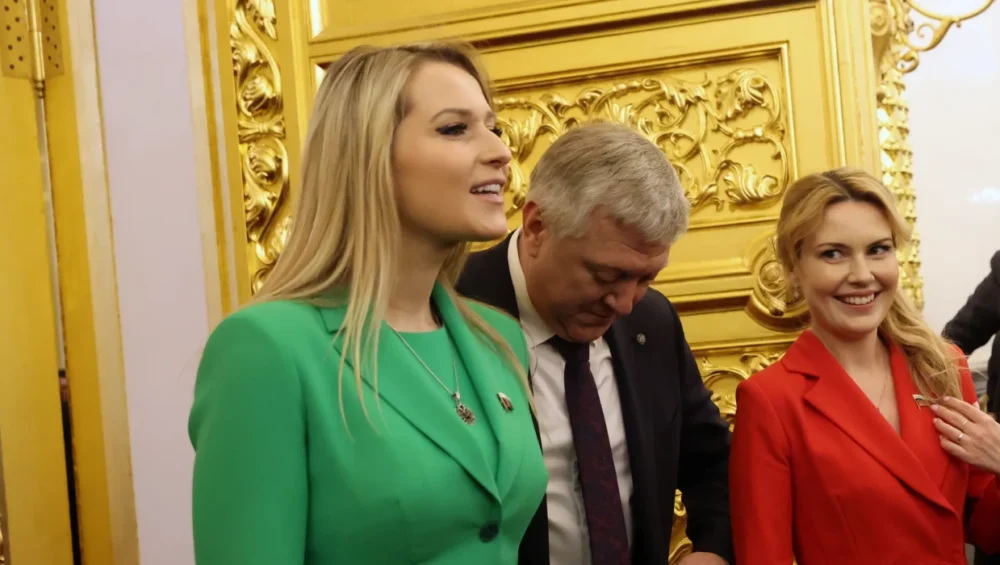
The newly appointed commissioner for human rights in Russia has found herself right in the middle of an international controversy after accusations surfaced that she was responsible for helping transfer children from Ukraine to Russia. This issue has brought even more attention to Russia’s war policies in Ukraine and has posed new questions regarding the integrity of the Russian human rights organizations which have already faced a lot of criticism globally.
These accusations have arisen at a time when there are political sensitivities involved. The position of human rights commissioner, at least theoretically, is supposed to advocate for civil liberties and safeguard vulnerable populations. In contrast, the appointment has led to allegations that the state has appointed someone who is accused of being implicated in one of the most emotional aspects of the war – the issue of children being removed from territories controlled by Russia. This situation has rapidly transformed what was initially seen as a personnel matter into a larger issue of how Russia can handle the international outrage while denying the accusation.
Why the Case Matters
The relevance of the controversy is that accusations related to the relocation of children represent one of the most serious accusations against Russia after the full-scale invasion of Ukraine. The Ukrainian authorities, human rights defenders, and many Western countries believe that the relocation of children from the territories under occupation was done without their consent and they ended up in the hands of Russians either by being adopted or being put in orphanages or foster care.
The appointment of a human rights commissioner under similar allegations makes this development a much more symbolic one. This means that, in spite of all the international consequences of these developments, the Kremlin remains committed to the discourse that it was using to explain forced resettlement during the war. This means that Russia is sending signals of continuity in terms of both personnel and policies amid mounting accusations.
As far as Ukraine is concerned, the question at hand is not just about the humanitarian aspect of this issue but rather about the legal and moral aspects as well. This development can be seen in the context of larger claims regarding violation of international law by the transfer of children from occupied territories. As for Russia, the reputation and diplomatic costs of this issue are extremely high.
The Allegations Explained
In the heart of the controversy lies the allegation that the newly appointed commissioner was somehow connected either directly or indirectly with the transfer of Ukrainian children from the Kherson region during the occupation period. It has been reported that the case was linked to a Russian parliamentarian and his connections who were accused of taking a child from a Ukrainian children’s home and thus becoming subject to an investigation on the Ukrainian side. What makes this case controversial is the involvement of children in the absence of legal guardianship or consent.
The most serious allegation is that the identity or record of the children might have been changed after their removal, which makes one suspicious about the intention to hide them permanently from their family and native country. This is why the news gained popularity among Ukrainians and foreigners: it was not portrayed as a bureaucratic mistake but rather as a possible abduction of the children by the state.
In this case, the main person criticized for his actions is involved in the same network of child abductions in the time of war or child adoption activities. This made the Ukrainian officials wonder whether such people had any right to be appointed to positions where they could protect human rights. From a practical point of view, the accusation makes the appointment of the commissioner a human rights issue.
Russian Response and Denials
There have been denials by people in Russia associated with the case and claims that the accusations against Russia are politically driven. The Russian version of the story claims that these kinds of actions are acts of protection due to the dangerous environment of war. Civilians are subjected to shellings, lack of stability, and displacement in such places.
The Russian representative in the parliament who is associated with the story denied the accusation that a child was wrongfully taken from an orphanage in Ukraine. This denial is consistent with the overall Kremlin position that Russia does not consider these actions as criminal but as acts of rescuing vulnerable minors from the effects of war. This point of view is significant because it influences the interpretation of the events in Russia.
Still, the denial has done little to soften international criticism. For Ukraine and its partners, the central issue is not whether some children were in danger during the war; it is whether they were removed in violation of law and then absorbed into Russian systems in a way that erased their identity and family connection. The gap between these narratives remains one of the defining features of the conflict’s humanitarian dimension.
International Legal Pressure
They are not alone either. These allegations arise in the context of existing international laws wherein the International Criminal Court has already taken steps regarding the issue of Ukrainian children. The previous actions by the court regarding the allegation of child transfer by high-ranking Russian officials made the matter highly publicized and helped to reinforce the notion that these allegations are not peripheral issues but serious matters related to the conduct of the war.
This context is important because it alters the political implications of any further appointments related to such allegations. While the commissioner may not be wanted by the International Criminal Court for such allegations herself, her involvement in these practices through these allegations adds great suspicion to the office. It also reinforces the notion that the Russian state institutions are not distancing themselves from these allegations but institutionalizing them.
European policymakers have also kept the issue alive through sanctions and public statements. The child abduction allegation has become one of the emotional anchors of the wider Western case against Moscow, alongside battlefield conduct, occupation policy, and attacks on civilians. As a result, the commissioner story is not a standalone controversy; it is part of an expanding accountability narrative around Russia’s war in Ukraine.
Kherson’s Central Role
Kherson still remains one of the main sites involved in these allegations. The area is among those territories that have been subjected to the fiercest struggle during the occupation by the Russians, and have therefore become central to the issue of evacuation, removal, and reorganization. This makes Kherson an important locus for any claim of child transfer.
What is more important about these allegations, however, is that the people involved in the political affairs related to the transfer of children from Kherson include those who work at the intersection of politics, family policy, and occupation management. This is very alarming not only from the journalistic but also from the legal perspective because it means that what could have been a mere wartime improvisation turned into a well-organized political project.
This is why the story has gained traction far beyond a single personnel appointment. It touches the war’s most sensitive humanitarian questions and evokes some of the strongest reactions in both domestic and international audiences. Children displaced from occupied territory are not just a policy issue; they are the human face of the conflict.
What the Appointment Signals
Appointment of such a commissioner under these accusations clearly shows that Russia does not intend to mend its reputation abroad. On the contrary, Russia seems ready to take the accusations as they are and continue using someone whose name is now associated with one of the most controversial stories of the war. This might be done for internal political purposes in an attempt to reassure the audience that accepts the Kremlin’s view on the conflict.
Furthermore, it might add to the growing Western doubts about the claims made by Russia in terms of its adherence to human rights standards. The human rights office is supposed to be a tool of legitimation. If the person who heads this office has been accused of kidnapping children, the legitimacy becomes seriously undermined.
The decision also reflects the broader Kremlin tendency to treat international criticism as part of a hostile information campaign. That approach is effective in domestic propaganda terms because it simplifies a complex legal dispute into a patriotic defense of state action. But internationally, it has the opposite effect: it hardens the view that Russia is operating outside accepted norms and without serious internal accountability.
The appointment has transformed a single political decision into a wider international test case. It invites a simple but difficult question: how can a state credibly present itself as a defender of human rights while elevating a figure accused of helping remove children from occupied Ukrainian territory? That question now sits at the center of the story, and it is unlikely to fade soon.