
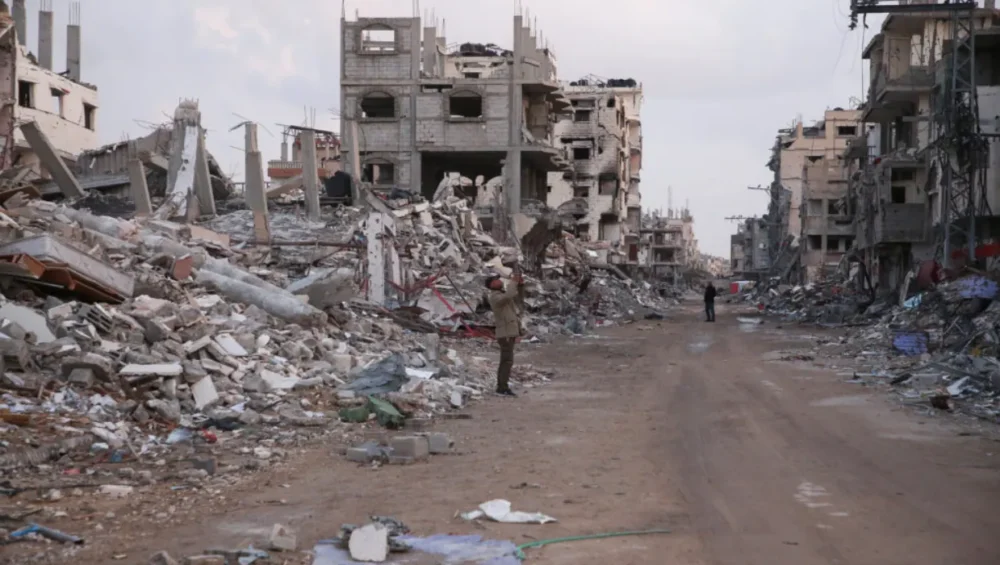
On June 14, 2026, Sunday, Rayan Abu al-Ajeen, aged three years, was shot dead by the Israeli army while he was being carried by his father at their family farm in the Wadi al-Salqa region of Deir al-Balah in the central part of Gaza. The child’s family members as well as local Gaza medical sources confirm that the event happened at a normal family moment without any hostility around.
The body of the child was taken to Al-Aqsa Martyrs Hospital, where it was found that the victim sustained injuries from gunshots from live rounds. According to the parents, the scene was shocking: while the father held the child, both sustained injuries from the shots fired. While the father survived, the baby did not. This is not an isolated case. Rather, it occurs in a situation where Palestinian children have continuously faced killings and attacks as military operations continue.
The Incident: Timeline, Location, and How the Family Was Affected
Rayan Abu al-Ajeen was in the arms of his father on a small piece of land that the family works on for sustenance farming. The farmland is located in Wadi al-Salqa, which is an isolated and civilian location in the middle of Gaza known mainly for its agricultural purpose with no military presence. As per the family, the shooting occurred in a sudden manner. No prior notice had been taken nor any order for evacuation given before military action was taken against the innocent civilians.
What the Family Told the Media
The family described the experience with raw emotion:
“He was so small, so quiet. I held him in my arms, and he was gone in a second. There was no war there. Only our farm. Only us.”
— Rayan’s father
Local medical sources corroborated the family’s account, noting that the child’s body was brought to the hospital with fatal wounds and no signs of prior trauma. The identity of the child was confirmed by family documents and local registration.
Israeli Military Action: A Pattern of Human Rights Violations
This situation reflects the repeated violations of international human rights law and protection through Israel’s military activities against the people of Gaza. It must be kept in mind that civilians and children in particular are under the Geneva Conventions and the Convention on the Rights of the Child.
Key Legal Violations Identified
- Indiscriminate use of force: The shooting occurred on a civilian farm with no military presence, violating the principle of distinction.
- Failure to ensure civilian safety: No evacuation order or warning was issued before the shooting, breaching obligations to protect civilians.
- Lethal targeting of children: The victim was a toddler, violating Article 6 of the Convention on the Rights of the Child, which mandates protection of children from violence.
Human rights organizations have documented similar cases where Israeli forces have killed Palestinian children on farms, in tent camps, and in residential areas, often without justification or accountability.
Children Killed in Gaza and the West Bank
The death of Rayan is not the only instance where a toddler has been killed in Gaza. In February 2026, yet another three-year-old was killed after Israeli warships fired on the tents located in the al-Mawasi tent camp, causing the displacement of thousands of Palestinians. In January 2026, there was yet another incident where a Palestinian toddler was killed in Gaza due to the worsening aid crisis, which restricted aid deliveries, thus making toddlers particularly vulnerable.
These cases are part of a recurring trend documented by media outlets, local health authorities, and international human rights groups: Palestinian children are increasingly being killed or injured in both Gaza and the West Bank, often during military operations or under siege conditions.
Recent Child Fatalities in Gaza and West Bank
| Date | Child’s Name | Age | Location | Cause |
| June 14, 2026 | Rayan Abu al-Ajeen | 3 | Wadi al-Salqa, Deir al-Balah | Shot by Israeli forces on family farm |
| Feb 1, 2026 | Iyad Ahmed Naeem al-Raba’i | 3 | al-Mawasi tent camp | Shelled by Israeli warships |
| Jan 1, 2026 | Unnamed child | – | Gaza | Killed amid aid crisis |
| Oct 13, 2025 | Muhammad al-Hallaq | 10 | West Bank | Shot by Israeli forces |
The consistent presence of children among the dead underscores a systemic failure to protect civilians under international law.
Israeli Official Response: Review Without Accountability
Despite occasional announcements of investigations into situations in which civilians are killed, these investigations do not yield any form of accountability. For instance, according to a BBC report published in December 2025, Israel stated that it would conduct an investigation into allegations of killing a three-year-old child in Gaza, yet there were no further public statements about the results. The practice of conducting an investigation without disclosing its results leads to violations of human rights standards, especially with regard to accountability.
“They say they will review. But a review is not a remedy. A dead child is not a mistake. It is a violation.”
— Human rights advocate in Gaza
Humanitarian Crisis: Aid Restrictions and Children’s Vulnerability
Rayan Abu al-Ajeen’s death is part of a larger humanitarian crisis in Gaza, where various NGOs have long warned about the increased risks faced by Palestinian children due to Israeli policies limiting aid, leaving children susceptible to violence, illness, and hunger. In the case of Wadi al-Salqa and its neighboring regions, where people rely on their farms for sustenance, when attacks are committed against farms, whole communities suffer from food shortages. The loss of a child at a family farm is a tragedy not only for his/her family but for an entire family unit.
Aid Restrictions and Their Impact
- Reduced food access: Aid convoys are frequently blocked or delayed.
- Medical shortages: Hospitals lack essential supplies due to import restrictions.
- Displacement: Families are forced to flee when farms or homes are destroyed.
These conditions violate the right to life, health, and food under international law, including the Universal Declaration of Human Rights (Articles 3, 25).
International Law: What Protects Children and Civilians in War
Under international humanitarian law, children are protected persons. Key legal frameworks include:
- Geneva Conventions (1949): Protect civilians from direct attack, indiscriminate violence, and failure to provide warning.
- Convention on the Rights of the Child (1989): Mandates protection of children from all forms of violence, including in conflict zones.
- Rome Statute (1998): Classifies intentional attacks on civilians and children as war crimes.
Rayan’s killing violates these provisions. The shooting occurred on a civilian farm, with no military justification, and with no warning issued. This constitutes a clear breach of the principle of distinction and the obligation to protect civilians.
“This is not just a tragic incident. It is a war crime. A toddler cannot be a threat. He was protected by law. And he was killed.”
— International legal expert
The Human Cost: A Family’s Grief and a Community’s Fear
The family of Rayan Abu al-Ajeen now faces a future defined by loss. The father, wounded but alive, holds the memory of his child. The community in Wadi al-Salqa lives in fear, knowing that their farms, homes, and children are not safe.
“We grow food to feed our children. Now, we grow food, and they die where we stand.”
— Neighbor of Rayan’s family in Deir al-Balah
Fear is not just emotional. It is structural. Families avoid farming. Children are kept indoors. Communities are displaced. These are not side effects of war—they are the intended consequences of military actions that ignore civilian protection.
A Call for Accountability and Protection
The killing of Rayan Abu al-Ajeen is a human rights violation under international law. It reflects a pattern of Israeli military actions in Gaza that repeatedly breach the Geneva Conventions, the Convention on the Rights of the Child, and the Rome Statute.
Accountability is not optional. It is required. The international community must demand:
- Independent investigations into all incidents where civilians are killed.
- Criminal accountability for those responsible for unlawful attacks.
- Protection of civilians, especially children, under international law.
- End to aid restrictions that leave children vulnerable to violence and starvation.
“No child should die on a farm. No father should hold his child and watch them die. This is not war. This is terror.” — Gaza human rights defender
The death of Rayan Abu al-Ajeen must not be forgotten. It must be a catalyst for change—for justice, for protection, and for the end of violations that continue to kill the most vulnerable in Gaza.