
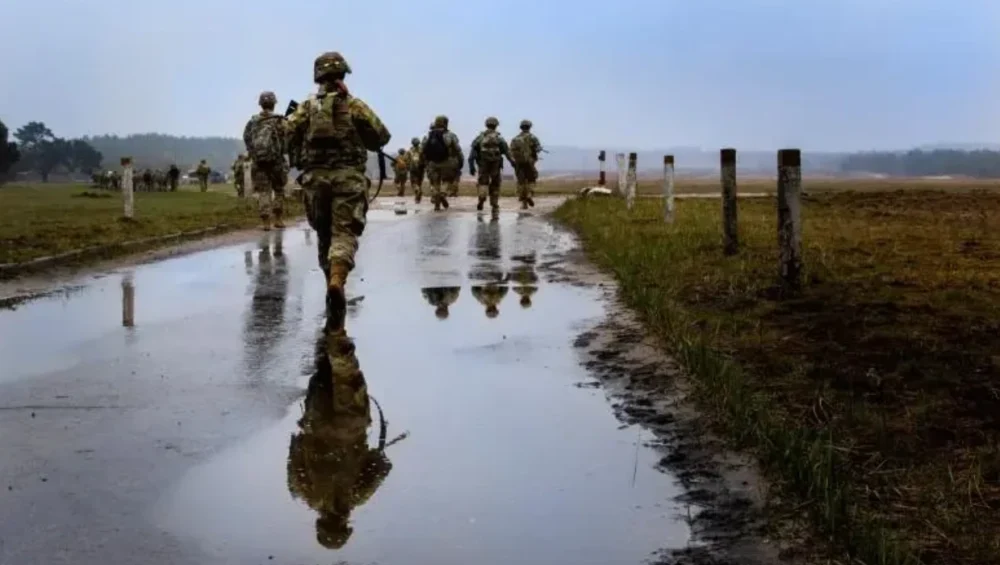
Human rights protections in armed conflict are anchored in the Geneva Conventions of 1949 and their Additional Protocols, which establish the legal separation between civilians and combatants. This distinction remains the cornerstone of international humanitarian law, requiring parties to avoid direct attacks on civilian populations and infrastructure not contributing to military objectives.
The principle is not aspirational but binding, forming the baseline against which violations are assessed in contemporary conflicts ranging from Ukraine to the Middle East.
Distinction, proportionality, and evolving legal interpretation
The principles of distinction and proportionality are central to evaluating the legality of military action. Distinction requires the identification of legitimate military targets, while proportionality prohibits attacks where expected civilian harm outweighs anticipated military advantage.
In 2025, renewed investigations into urban warfare cases, particularly in Syria and Gaza-linked theatres, highlighted persistent allegations of disproportionate strikes on civilian infrastructure. International legal experts have increasingly emphasised that these principles apply equally to state and non-state actors, reinforcing the universality of civilian protection obligations.
Interaction between international humanitarian law and human rights law
Human rights law continues to apply during armed conflict alongside international humanitarian law, a relationship often described as lex specialis. This dual applicability ensures that protections against arbitrary detention, torture, and extrajudicial killing remain enforceable even during active hostilities.
In 2025, UN Human Rights Council discussions reiterated that the coexistence of these frameworks strengthens accountability mechanisms rather than diluting them, particularly in prolonged conflicts where the line between war and governance becomes blurred.
Judicial expansion of accountability frameworks
International and hybrid tribunals have increasingly incorporated human rights standards into war-related investigations. Courts have examined not only battlefield conduct but also detention practices, siege tactics, and access restrictions affecting civilian populations. This expansion reflects a broader shift in legal reasoning, where accountability is no longer confined to kinetic warfare but extends to structural forms of harm that emerge during sustained conflicts.
Technological transformation of modern warfare and civilian risk
Modern conflicts increasingly take place in densely populated urban environments, intensifying risks for civilians. The use of explosive weapons in such settings has generated significant concern among humanitarian organisations, particularly due to their wide-area impact.
In 2025, reports from conflict zones in Ukraine and the Middle East highlighted repeated instances of infrastructure destruction affecting hospitals, schools, and energy networks, reinforcing calls for stronger restrictions on their use in populated areas.
Autonomous systems and reduced human oversight
The emergence of autonomous and semi-autonomous weapon systems has introduced new legal and ethical uncertainties. While most systems still require human activation, the increasing reliance on algorithmic targeting support systems raises questions about compliance with distinction and proportionality principles. Human rights experts warn that reduced human oversight risks accelerating decision cycles beyond meaningful legal review, a concern that has gained traction in UN discussions throughout 2025.
Non-state armed groups and fragmentation of compliance
Non-state armed groups often operate in ways that deliberately blur civilian and military boundaries, including the use of civilian infrastructure for military purposes. Such practices complicate compliance assessments and increase civilian exposure to retaliatory strikes.
In Yemen’s 2025 escalation cycle, humanitarian agencies reported repeated disruptions of aid corridors linked to contested control over urban areas, underscoring the operational challenges of enforcing protection norms in fragmented conflict zones.
Negotiating compliance through humanitarian access
Humanitarian organisations and UN agencies increasingly engage directly with non-state actors to secure access and reinforce basic protection standards. These engagements, while politically sensitive, are considered essential for maintaining humanitarian corridors and protecting vulnerable populations.
However, the effectiveness of such dialogue remains uneven, often dependent on the internal cohesion and command structure of armed groups.
Regional conflict patterns and enforcement disparities
Conflicts in the Sahel region illustrate persistent gaps between legal norms and operational reality. Limited state presence, resource constraints, and fragmented armed actors have weakened the enforcement of civilian protection standards.
In 2025 analyses, peacekeeping missions highlighted challenges in implementing Protection of Civilians (PoC) mandates due to restricted mobility and inadequate intelligence integration, resulting in delayed or insufficient responses to attacks on civilians.
Ukraine and Middle Eastern conflict theatres
The war in Ukraine has intensified scrutiny of proportionality in urban strikes and infrastructure targeting, with international observers documenting extensive damage to civilian energy systems. In parallel, Middle Eastern conflicts have continued to expose the fragility of legal protections under sustained military pressure. In Syria, ongoing concerns about detention practices and civilian displacement underscore the enduring relevance of Geneva Convention IV provisions, even in protracted conflict environments.
Accountability mechanisms and enforcement limitations
The International Criminal Court and other judicial bodies remain central to efforts to enforce accountability for serious violations of international humanitarian law. However, jurisdictional limitations, political constraints, and evidentiary challenges often delay proceedings. In 2025, an increase in war-related referrals reflected growing international concern over civilian targeting, yet conviction rates remain limited compared to the scale of documented violations.
UN Protection of Civilians framework and operational gaps
The UN Protection of Civilians framework, built on prevention, physical protection, rights-based assistance, and protective environments, continues to guide peacekeeping mandates. Despite its conceptual clarity, operational execution is frequently constrained by political mandates, troop limitations, and restricted access to conflict zones. Reform discussions in 2025 emphasised the need for improved data integration, early-warning systems, and stronger coordination between humanitarian and security actors.
Legal adaptation to emerging forms of warfare
The expansion of cyber warfare introduces new dimensions of civilian risk, particularly through attacks on critical infrastructure such as hospitals, water systems, and communication networks. Legal scholars increasingly argue that cyber-induced blackouts and data disruptions should be explicitly incorporated into proportionality assessments under international humanitarian law. However, consensus on legal classification remains limited, slowing regulatory development.
Documentation deficits and accountability challenges
One of the most persistent obstacles to enforcement is the lack of reliable documentation in active conflict zones. Restricted access, destroyed infrastructure, and targeted attacks on journalists and aid workers contribute to significant information gaps. Human rights organisations continue to rely on satellite imagery, open-source intelligence, and survivor testimony to reconstruct events, but evidentiary limitations often delay or weaken legal accountability processes.
Evolving trajectories of civilian protection norms
Human rights in armed conflict are increasingly shaped by the tension between established legal frameworks and rapidly evolving warfare technologies. While core principles such as distinction and proportionality remain stable, their application is under continuous strain from urban warfare, digital operations, and fragmented armed actors. The 2025 conflict landscape from Sahel instability to intensified strikes in Ukraine and the Middle East demonstrates that compliance is less a question of legal absence and more a question of political will and operational capacity.
The future trajectory of civilian protection norms will likely depend on whether international institutions can adapt enforcement mechanisms to match the complexity of modern warfare. As conflicts become more technologically integrated and geographically dispersed, the effectiveness of humanitarian law will hinge on its ability to remain both legally precise and operationally enforceable, raising the broader question of whether current frameworks can sustain their protective intent in an era defined by continuous and hybrid forms of conflict.