
The Iranian economic siege has only been exacerbated since late 2025 and has already created ripple effects that go well past Irani borders and into the already vulnerable migration environment of Southeast Asia. The sanctions pressure, currency depreciation, and conflict-related instability have broken regional labor markets and energy flows, which added to the increase of living costs in the ASEAN economies. The countries that rely on imported fuel like the Philippines and Thailand have been facing price increments that put more pressure on household income and economic resilience.
These economic shocks combine with pre-existing vulnerabilities, especially in low-income groups and migrant workers. In the event of legitimate jobs being shrinking, people tend to resort to irregular migration routes, exposing themselves to trafficking cartels. The connection between economic misery and exploitation is already quite obvious, but the extent to which the situation in Iran is disruptive will add a new dimension of complexity to the region.
Energy shocks and household pressure
Increases in fuel prices in Southeast Asia have made the recovery efforts after the pandemic more difficult. An increase in transportation and production prices leads to expanded inflation and decreases the purchasing power of already weak populations. This economic stress makes the situation in which short-term survival strategies are prior to long-term security as a more appealing choice in favor of the risky migration options.
The effect is not diffusive, but it is cumulative. Both urban and rural societies encounter barriers that restrict them to stable jobs. With the narrowing of economic margins, the barrier to exploitative arrangements is lowered, especially among younger workers who are willing to get the opportunities in other countries.
Remittance disruptions and labor displacement
Instability in the economic environment of Iran has disrupted remittance flows in the Middle East, which has been a significant source of income to Southeast Asian households. Indonesian and Vietnamese workers lose their jobs or earn less as the regional labor markets adapt.
The effect of this contraction is twofold. Repatriated workers go back to domestic economies that might not have adequate jobs, and some get alternative migration pathways. These two situations make one more prone to trafficking as people have to go through uncharted or unregulated routes on their way to earning money.
Migration corridors and trafficking convergence
The nexus of financial strain and migration forms the environment where trafficking networks have an opportunity to develop. The current migration patterns in southeast Asia especially maritime and border migration are becoming a popular route among both voluntary and forced migrants into exploitative deals.
Maritime routes under strain
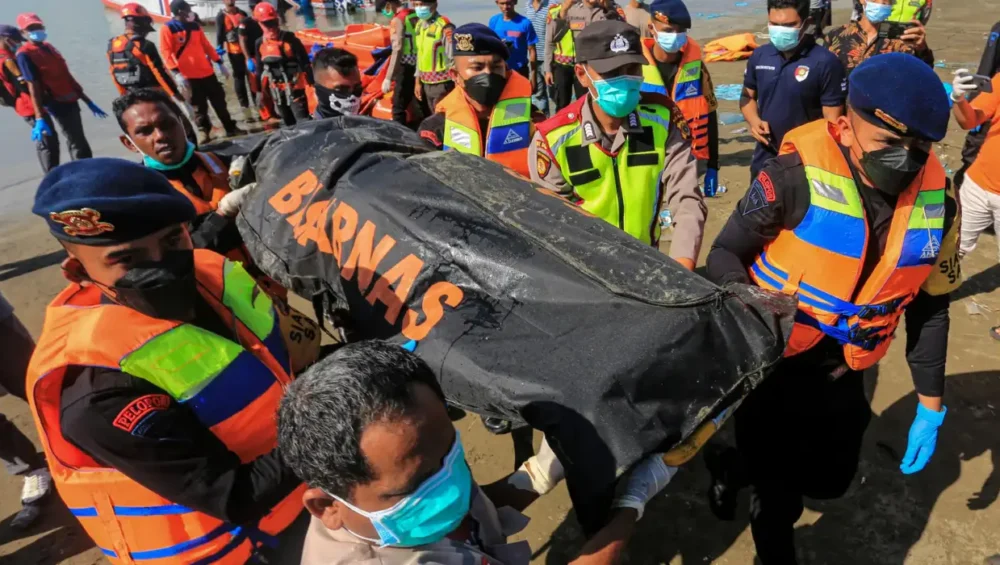
The Andaman Sea and other sea routes have also experienced greater movement which can be attributed to local crises and general displacement tendencies. Older patterns of movement of Rohingya people are overlapping newer migration patterns due to economic upheaval. This intersection makes it difficult to enforce, because the authorities need to draw a line between the various classes of movement in the same routes.
Traffickers use this ambiguity to hide victims in mixed migration. This absence of a distinction between voluntary and forced migration makes it less likely that networks will be detected early, thus working with relative impunity.
Mekong region as a trafficking hub
The Mekong subregion, such as those along the Thai-Myanmar border, has become a centre of trafficking activities. Scam drugs and forced labor facilities are located in places with weak governance where enforcement is limited. Victims are usually seduced into exploitative situations by being promised a good job, only to end up in the situation.
The development of such networks indicates changes in the general trends of trafficking. Older exploitation methods, including forced labor in the fields, or fishing, are becoming more and more accompanied by online exploitation, like the activities of cyber fraud.
Southeast Asia’s pre-existing exposure
Southeast Asia was in a very vulnerable position as a baseline to trafficking before this period. Coupled with political instability, economic disparity and climate-related displacement, the environment in which networks of exploitation can flourish has been established.
Labor exploitation in regional economies
Malaysia and Timor-Leste are some of the main transit and destinations of migrant labor. Such industries as fishing, manufacturing and domestic work depend on the labor force which is often unofficial and unregulated. Such circumstances lead to threats of coercion, especially when the workers do not have the legal provisions and support provisions.
These forces are further aggravated by the economic siege in Iran, which is augmenting the number of vulnerable people in need of a job. With the increase in competition over jobs, the possibility of exploitation increases especially in sectors where the level of control is already low.
Digital exploitation expands rapidly
Growth of cyber-enabled trafficking has been one of the most important developments in recent years. The victims are forced into engaging in Internet frauds, usually through fear of violence or debt collection. According to reports by some organizations like the United Nations Office on Drugs and Crime, these activities bring in a lot of illicit money and are therefore appealing to organized crime groups.
The financial burdens associated with the Iran situation also make people join these networks. When people have fewer choices, they can even take up high-stakes deals, only to get into exploitative venues. The nature and extent of cybercrime has changed the dynamics of trafficking, rendering it less noticeable yet equally destructive.
Stakeholder perspectives and policy responses
The convergence of economic instability and the risk of trafficking has started being tackled by the regional and international actors. Nonetheless, the reaction is still unequal, which is manifested in the disparity of capacity and political priorities.
Regional cooperation efforts
In 2025, ASEAN efforts were directed at enhancing collaboration in the fight against trafficking, both through joint exercises and the exchange of information. Countries like Indonesia and Malaysia have agreements that are designed to enhance management of mixed migration flows but there are still challenges in implementation.
These initiatives emphasize the need to act in a coordinated manner. Trafficking networks are intercontinental in nature and necessitate cooperation which transcends national boundaries. The success of these initiatives is hinged on long term political commitment and resource allocation.
Limits of enforcement capacity
Although more attention is paid, enforcement is limited by geographic and institutional reasons. Areas located remotely on the border and sea routes are hard to patrol, and the law might not adequately meet new types of exploitation.
Anti-Slavery International and other organizations have highlighted the importance of the integrated measures that integrate both enforcement and prevention and support of victims. Community level interventions and awareness campaigns are important in the identification and mitigation of trafficking hazards.
2025 developments highlight urgency
The 2025 developments highlighted the necessity of adaptive policy responses. The fact that the rates of referral to the cases of trafficking are growing indicates that people have become more aware of it, yet it means that there are still underlying risks.
Economic pressures reshape migration decisions
Migration has changed due to the combination of fuel price increases, remittance disruptions, and labor market instability. People tend to use informal ways when they believe that formal avenues are unavailable or inadequate. Such a change creates more access to trafficking networks, especially in places where there is an established smuggling infrastructure.
Policy innovation remains uneven
While some countries have expanded training for frontline workers and improved reporting mechanisms, gaps remain in implementation. Resource constraints and competing priorities limit the ability to scale successful initiatives across the region.
The economic siege in Iran serves as a catalyst, intensifying existing trends rather than creating entirely new ones. Its impact illustrates how distant geopolitical developments can reshape local vulnerabilities, highlighting the interconnected nature of modern trafficking dynamics.
The evolving situation raises critical questions about the capacity of regional systems to adapt to compounded pressures. As economic instability, migration, and organized crime intersect, the effectiveness of policy responses will depend on their ability to address not only immediate risks but also the structural conditions that enable exploitation. The trajectory of these dynamics suggests that without sustained investment and coordination, the link between economic disruption and trafficking will remain a defining challenge for Southeast Asia in the years ahead.