
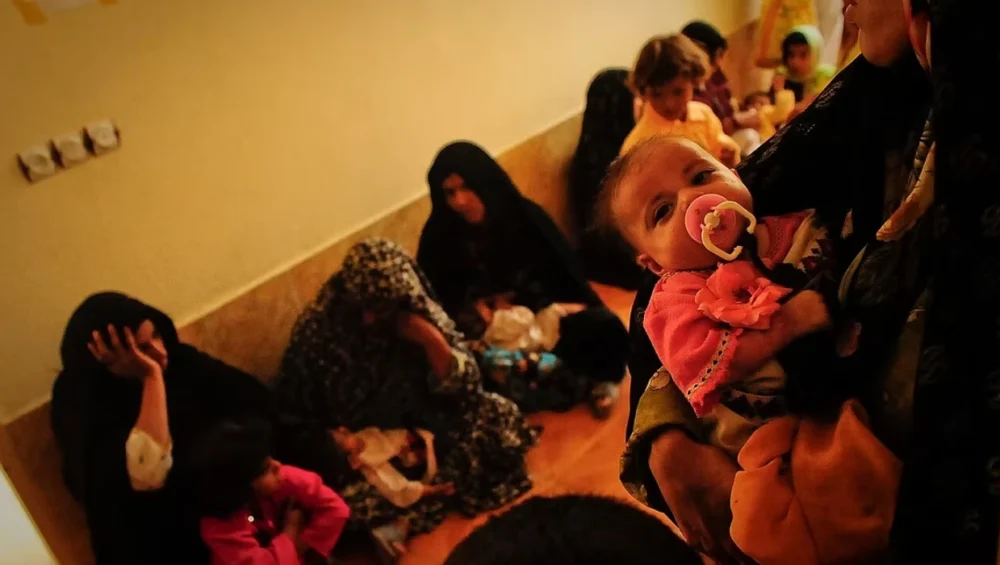
Malnutrition has become an increasingly serious problem for Afghanistan, no longer a public health issue, but a more encompassing humanitarian and human rights crisis. From recent reports by the UN, the World Food Program, and aid organizations, millions of people, especially women and their children, are suffering from greater hunger due to factors such as widespread poverty, displacement, insufficient aid, and restriction of rights, leading to a severe situation at the national level. Not only does the magnitude of this problem involve more hunger, but the discrepancy between need and aid as well.
One of the most concerning aspects of this crisis is the effect it has had on children under the age of five as well as pregnant or lactating mothers. International organizations are concerned that the country is experiencing the fastest rise in malnutrition on record, and that millions of people will require nutritional aid by the year 2026. Simply put, there will be more wasted children, more women who lack the capacity to feed themselves, and more poor people struggling with hunger.
Scale of the crisis
The figures themselves provide evidence as to why Afghanistan can be termed to have been hit by one of the worst food crises. According to the World Food Programme, a total of 4.9 million mothers and children are estimated to suffer from malnutrition by the year 2026. This shows just how much the crisis of nutrition has escalated in the country. In January 2026, the International Rescue Committee stated that 17 million people required immediate aid.
This problem is especially grave for the children. According to reports by the IRC, nearly 3.7 million children ranging in age between six months and five years old were facing acute malnutrition, with one-third of them dealing with Severe Acute Malnutrition. In another report released in December 2025, more than 3.7 million Afghan children had become victims of malnutrition, an increase of around 200,000 cases compared to the previous year, making Afghanistan the fourth-worst country in the world with respect to child acute malnutrition.
What the latest figures show
The recent surveillance concerning nutrition provides us with a better understanding of how the situation is developing within the country. The bulletin of 2026 states that the percentage of national child wasting has dropped from 9.6% in Q4 2025 to 8.5% in Q1 2026. However, on paper, this could be seen as some kind of progress. Yet, in reality, this situation is quite depressing due to the high rates of malnutrition in a number of provinces.
According to the bulletin, there were 10 provinces with malnutrition levels in the severe or critical range, characterized by Global Acute Malnutrition levels exceeding 10%. Helmand province recorded the highest level at 20.8%, followed by Daikundi province at 17.2%, then Zabul province at 16.7% and finally Baghlan at 15.6%. These levels demonstrate an emergency that lies way beyond anything health systems can handle without continuous outside intervention. Secondly, they illustrate that the emergency is not uniformly experienced across all provinces but specifically in some provinces more than others.
Why children are most exposed
This category of people, especially the very young, seems to bear most of the burden. One publication suggested that 85 percent of the severely malnourished people were aged below two years, being an age when nutrition has the largest impact on the growth, development, and survival of the individuals. In addition, it pointed out that individuals affected by severe acute malnutrition have an increased likelihood of dying up to 12 times compared to healthy people. This figure has particular significance because it makes the issue of malnutrition a matter of life and death.
Poverty among the families has also greatly contributed to this situation in Afghanistan. As mentioned above, 78 percent of the families do not have access to nutritious food for their children as a result of poverty. Here, one can clearly note that the problem of malnutrition in Afghanistan is largely determined by economic factors like income, the presence of markets, and affordability rather than food production. With rising inflation, increasing unemployment rate, and displacement, it becomes extremely difficult for poor people to access any food.
Human rights dimension
The humanitarian crisis is being characterized as a human rights crisis by UN officials due to the fact that it relates to the erosion of basic human rights, particularly of women and girls. According to reports released by the UN towards the end of 2025, the situation in Afghanistan was getting worse due to the deterioration of human rights and the reduction in aid provided. This point shows how the concept of nutritional deprivation can be seen in a much broader political and social context, which also includes issues related to health care, employment, and freedom of movement.
Understanding these elements is crucial for identifying the connection between the lack of education, employment, and health care access of Afghan women and their impact on child nutrition. In other words, nutritional deprivation cannot be separated from the fact that women cannot move around freely and obtain basic services, such as education and health care, as well as work opportunities, to ensure their livelihood.
What agencies are saying
It should be noted that humanitarian organizations have repeatedly stated that the situation is continuously getting worse despite aid efforts being provided on-going. According to World Food Programme, Afghanistan finds itself facing “unprecedented hunger and malnutrition emergency” and the deterioration of the condition is due to border displacements, regional war spill overs, and other such shocks. In another announcement made by the World Food Programme, it became evident that the country is experiencing the largest increase in malnutrition it has ever faced.
The United Nations shared this alarm. As stated in UN News, Afghan women and children experience growing hunger crisis, which is exacerbated by the World Food Programme alert regarding increased pressure caused by mass repatriation and financial difficulties. International Rescue Committee reacted to this challenge by increasing food support and stated that the need for aid is so significant that it is necessary to expand emergency food assistance in certain Afghan provinces. It becomes clear that these warnings share similar ideas – the hunger crisis is neither temporary nor local and the amount of aid required increases continuously.
Drivers behind the decline
The current malnutrition crisis in Afghanistan is being fuelled by both structural factors and immediate impacts. Economic collapse and poverty still form a crucial element of the problem, as many individuals and their families lack the money required for buying essential food products. Moreover, the displacement of people and their return home place further pressure on the communities living in areas where there is not enough housing or jobs.
Inadequate funding is another factor that is compromising the effectiveness of humanitarian efforts. According to the reports of UN agencies and NGOs, reduced humanitarian assistance limits the ability to run and maintain nutrition programs, provide food assistance, and deliver maternal care to the population in need. Furthermore, issues relating to security and the bureaucratic process hinder the provision of help as well.
Why the crisis may persist
Although some national indicators have improved slightly, the overall trajectory remains dangerous. A drop in national wasting from 9.6% to 8.5% is welcome, but it does not erase the fact that multiple provinces remain in critical condition. In other words, a small improvement in one indicator can coexist with continued emergency levels in the worst-affected areas.
That is why experts and agencies continue to emphasize that the problem is not just the presence of hunger, but the persistence of conditions that generate it. When poverty remains entrenched, women face barriers, children lack access to treatment, and aid funding is inconsistent, the underlying drivers stay in place. The crisis can therefore ease in some locations while worsening in others, creating a patchwork of vulnerability that demands sustained, targeted intervention.
Editorial context and outlook
Afghanistan’s malnutrition crisis now sits at the intersection of humanitarian need and human rights concern. The evidence from the UN, WFP, IRC, and nutrition surveillance systems shows a country where millions are struggling to eat, where children are being harmed at critical stages of development, and where the state of the crisis is being aggravated by poverty, displacement, and shrinking aid.
The most important conclusion from the available reporting is that this is not a short-term emergency that can be managed with one-off relief deliveries. It is a deepening structural crisis requiring sustained nutrition support, maternal health services, food access, and wider protections for women and girls. Without that broader response, the statistics are likely to keep worsening, especially in the provinces already showing critical levels of acute malnutrition.
The numbers tell a stark story, but the human reality behind them is even more serious: children facing life-threatening wasting, mothers unable to nourish themselves, and families trapped in poverty with shrinking support. That is why Afghanistan’s malnutrition crisis is being described not only as a public health emergency, but also as a human rights emergency.